O-1 Visa, your entry ticket to work in the United States

Do you dream of working in the US but think the O-1 Visa is only for showbiz stars? It's time to change that perspective! The O-1 Visa is your passport to a professional life full of possibilities. Imagine living and working in the US indefinitely, building your future without limits. You only have to meet three or more specific criteria, and best of all, we will guide you every step of the way.

What is the O-1 Visa?
The O visa is designed for individuals who have outstanding achievements in the sciences, arts, education, business, or sports, or who have achieved extraordinary accomplishments in the film and television industry. These individuals have also received national or international recognition. If you are a leader in your field and ready to take your career to the next level, this is your opportunity.

O-1 Visa Subcategories

O- 1A: For people with extraordinary ability in the sciences, education, business, or athletics (excluding the arts, film, or television industry).

O- 1B: For people with extraordinary ability in the arts or extraordinary achievements in the film or television industry.

O-2: For individuals accompanying an artist or athlete under an O-1 visa to assist at a specific event or performance. To accompany an individual under an O-1A visa, the assistance provided by the O-2 visa applicant must be an integral part of the activity of the individual under the O-1A visa. .

To accompany an individual under an O-1B visa, the assistance provided by the O-2 visa holder must be “essential” to the completion of the O-1B visa holder’s production. The O-2 worker must possess critical skills and experience with the O-1 visa holder that cannot be readily performed by a U.S. worker and are essential to the successful development of the O-1 visa holder.

O-3: For people who are spouses or children of the person applying for the O-1 visa or the O-2 visa.

How to become eligible for the O-1 Visa?
There are two ways to qualify for this visa. First, you can qualify with evidence that you have won a major award, such as a Grammy, Nobel Prize, or Olympic medal. For all other applicants, extraordinary ability is demonstrated by evidence of at least three (3) of the following factors:

  1. You have participated as a judge of other professionals' work in your field on panels, in competitions, or at awards ceremonies. For example: peer reviewing articles, serving on a judging panel in a business competition, or judging a topic within your area of expertise.
  2. Material published about your work in professional publications, major trade publications, or other significant media outlets. For example: articles in the New York Times, CNN, Forbes, etc. However, you can also meet this criterion with articles in smaller media outlets.
  3. Membership in associations that require outstanding achievements from their members, as judged by international experts. Example: An entrepreneur who is part of an exclusive organization for executives.
  4. You have made significant original contributions to your field. For example, you patented something your employer is using, or you initiated a new business process that has impacted your field.
  5. You hold or have held key or critical positions within a company with a distinguished reputation.
  6. You have authored academic articles in professional journals or other major media outlets.
  7. You have earned a high salary or other significantly high compensation. For example, a director who receives a significantly higher salary than the industry average due to their experience and unique skills.
  8. Awards or recognitions for excellence in their field, recognized nationally or internationally. Example: A journalist receives the “Simón Bolívar National Journalism Prize” in Colombia.

Benefits of the O Visa

  • There is no annual limit associated with the O-1 visa, meaning there are no restrictions on the number of visas that can be issued each year.
  • You can speed up the processing time to 15 days by paying an additional fee of $2.805 USD.
  • You can sponsor your spouse and children with the O-3 visa: Your spouse will not have work authorization, but will be able to go to school in the U.S. without needing an F-1 visa.
  • The O-1 visa allows for "dual intent," which offers the possibility of applying for permanent residence in the United States while holding an O-1 visa.

How long is an O-1 visa valid?
The O-1 visa is initially approved for up to three years, during which you can work in the U.S. and travel within and outside the country. After your first visa expires, you can continue to extend your status indefinitely in one-year increments.

The O-1 visa offers an incredible opportunity for those who have achieved great merit in their fields and wish to expand their horizons in the United States. While the process may seem challenging, proper guidance can simplify it.

Would you like guidance on your visa application process? Follow us on social media @asisvisa or message us on WhatsApp at +1 (786) 619 5937

TPS for Venezuelans: Everything you need to know

If you are Venezuelan and are in the United States without permanent immigration status, Temporary Protected Status (TPS) may be an option for you. This program gives you the opportunity to legally reside and work in the US for as long as your country is designated for this benefit.

Here we provide you with a complete guide on what you need to know about TPS.

What is TPS?
Temporary Protected Status (TPS) is a status granted by the United States government that allows foreign nationals to live and work legally in the country. This status is valid for 18 months and allows you to apply for a work permit and a Social Security number. Furthermore, you can renew it for as long as Venezuela remains designated as a recipient of this benefit.

When can I apply for TPS?
The timing for applying for TPS depends on whether you have had this status previously or if this is your first time applying.

If you already had TPS according to the March 9, 2021 announcement for Venezuelans, you can apply during the 60-day period between January 10, 2024 and March 10, 2024.

If this is your first time applying based on the announcement of October 3, 2023 (Venezuela 2023), you can do so during the 18-month period from October 3, 2023 to April 2, 2025.

How long will TPS be valid for if I am approved?
The validity period of TPS depends on when you submit your application.

If you renew under Venezuela 2021, TPS will be valid until September 10, 2025.

If you apply under Venezuela 2023, TPS will be valid until April 2, 2025.

It's important to note that the government may extend TPS for Venezuela. If you are an approved beneficiary during the current registration periods, you will need to renew your registration during the next available period.

What happens when my current work permit expires?
If you are a beneficiary of TPS Venezuela 2021 and your current work permit is about to expire, the Department of Homeland Security is automatically extending your permit until March 10, 2025. However, to maintain your TPS and your authorization to work, you must renew your TPS Venezuela 2021.

What makes you ineligible for TPS?
Not to reside continuously in the U.S. since March 8, 2021 (for Venezuela 2021) or since July 31, 2023 (for Venezuela 2023).

Not having been convicted of any serious crime or multiple misdemeanors in the U.S.
If you have had any run-ins with the law, it is important to obtain a Certificate of Disposition for each case and consult with an immigration law expert before applying for TPS.

Temporary Protected Status (TPS) offers an invaluable opportunity for Venezuelans in the United States without permanent immigration status. However, understanding the requirements and procedures is essential to effectively access this benefit. If you meet the established criteria, TPS can provide the stability and security you need at a crucial time in your life.

Types of Political Asylum in the US: How to Apply Correctly?

If you are or have faced persecution or serious threats in your country of origin due to your race, religion, nationality, membership in a particular social group or for having different political opinions, the Political Asylum process in the United States becomes a resource invaluable legal for you.

In the United States, there are two main procedures for applying for asylum: the affirmative process and the defensive process.

Affirmative Asylum:

This type of asylum is for people who are not facing removal or deportation proceedings. To qualify, you must have entered the U.S. with valid status or not have been inspected at the border. Additionally, you must file your asylum claim within one year of your last arrival in the country.

Defensive Asylum:

On the other hand, defensive asylum is requested when you are under removal or deportation proceedings. This means you are in removal proceedings before the Immigration Court with the Executive Office for Immigration Review (EOIR).

When is it classified as defensive asylum?

There are two main situations:

If you are referred by USCIS to an immigration judge after your affirmative asylum application has been determined to be ineligible.
If you have been arrested at a U.S. port of entry without proper legal documentation, in violation of your immigration status, or if you have been arrested by CBP attempting to enter the U.S. without proper documentation and are in deportation proceedings.

Credible Fear:

When an individual faces expedited removal proceedings and declares their intention to seek asylum due to a fear of persecution, torture, or return to their country, they will be referred to USCIS for a credible fear assessment. In this assessment, an officer will conduct an interview to determine whether the applicant truly faces a credible fear of persecution or torture.

If a credible fear is determined, USCIS may withhold the asylum application to consider the applicant's eligibility for withholding of removal and protection under the Convention Against Torture (CAT) in a second interview, known as an asylum merits interview. Otherwise, USCIS may issue a Notice to Appear before an immigration judge for consideration of the asylum case, withholding of removal, and CAT protection claims.

In short, the political asylum process in the United States is a vital legal resource for those facing persecution or serious threats in their home countries. We hope this information is helpful in your immigration process. For more content on this and related topics, follow us on Instagram @asisvisa.

Step-by-Step Guide for the Family Petition

Transform the Dream of Permanent Residency into Reality

Imagine having your loved ones close by, sharing life in the United States with you. Would you like to make this dream a reality? All you need to do is file a Family Petition, and this guide will walk you through each crucial step.

Step 1 – Eligibility:

Verifying eligibility is the first crucial step. If you are a U.S. citizen, you can petition for your spouse, unmarried children under 21, parents, and siblings. For permanent residents, the petition can be filed for spouses and unmarried children under 21.

Step 2 – Inside or Outside the U.S.:

Depending on the location of the beneficiary family member, the process may vary. If they are within the United States, they can adjust their status; if they are outside, they will need to complete a consular process.

Step 3 – Forms: Essential Documentation

Complete Form I-130, making sure it is properly filled out and signed. For adjustment of status, Form I-485 is essential. For consular processing, Form DS-160 is required.

Step 4 – Evidence:

Submit documents that support the family relationship, such as birth certificates, marriage certificates, and, for permanent residents, a copy of the Green Card. Add financial evidence such as tax returns, bank statements, and employment letters.

Step 5 – Submit the Petition:

The citizen or legal permanent resident must submit the completed forms along with all required evidence.

Step 6 – Assessment and Interview:

Prepare for a possible interview, where the information you provided will be reviewed and your eligibility verified. This step will determine whether your case is approved or denied.

Step 7 – Obtaining the Green Card: A New Chapter in Your Life

If your petition is approved, an immigrant visa will be issued. Once in the U.S., the beneficiary can obtain a Green Card, marking the beginning of their new life. After five years, they will be eligible to apply for U.S. citizenship.

With this step-by-step guide, you're ready to embark on the Family Petition process and reunite with your loved ones in the United States. With perseverance and diligence, you can transform that cherished dream into a lifelong reality. Onward to a future filled with family reunions in the USA!

Keys to a successful immigration process in the United States

The decision to begin the immigration process to the United States is exciting, but it can also be overwhelming due to the complexity of the procedures and legal requirements. At AsisVisa, we understand the importance of providing you with the right tools to ensure a successful and smooth experience. Here are some key points to guarantee a successful immigration process:

  1. Identification of the Appropriate Program or Visa:
    The variety of programs and visas available can be confusing at first. On our social media and website, you'll find valuable information to help you identify the program or visa that's right for you. If you still have questions, contact us! We're here to schedule a free call or video call and provide you with personalized guidance.
  2. Personalized Assistance with AsisVisa:
    At AsisVisa, we understand that every case is unique. That's why we offer personalized support to address all your questions and concerns. Our commitment goes beyond simply providing information; we also offer support throughout the entire immigration process until your application is approved.
  3. Use Our App to Make the Process Easier:
    We've developed an app that lets you prepare your immigration forms securely, quickly, and effectively, all in Spanish. If you have any questions during the process, don't hesitate to contact us; we're here to help. With AsisVisa, you significantly increase your chances of success, as we offer three document reviews before submitting your application, translation of up to three documents, declaration drafting, and ongoing support.
  4. Prior Research and Knowledge of the Laws:
    Before taking the first step, we recommend you conduct thorough research on U.S. immigration laws and requirements related to the visa or program you're interested in. This information will provide you with a solid foundation for scheduling a personalized consultation with us.
  5. Financial Planning:
    Financial planning is key. Establish a savings plan based on the program or visa you want. Consider processing fees, federal fees, and prepare for potential emergencies. This will ensure you have the necessary resources to complete your immigration process smoothly and without financial setbacks.
  6. Reliable Legal Advice:
    Seek reliable legal advice. Find specialists who can guide you transparently and clearly. Make sure you understand your legal rights and responsibilities so you can make informed decisions throughout the process.

At AsisVisa, we are committed to making your dream of migrating to the United States a successful reality. Contact us and let us guide you on this exciting journey toward a new horizon!

Conquer the US Job Market in 2024: Key Tips for Your Professional Success!

Working in the United States could be the next big step in your career, and we're here to help you make it happen! Here are valuable tips to guide you in your job search and provide crucial information about temporary and permanent work options in this fascinating country.

Optimize your resume and LinkedIn profile:

A well-structured resume and a strong LinkedIn profile are essential for standing out in the competitive U.S. job market. Be sure to highlight relevant achievements and skills, and incorporate industry keywords to improve your visibility in candidate tracking systems. On LinkedIn, actively participate, join relevant groups, and connect with professionals to strengthen your online presence.

Research and Select Companies:

Before submitting applications, thoroughly research the companies you're interested in. Understand their culture, values, and job requirements. Use job search websites like Indeed, LinkedIn, Glassdoor, and Monster to identify opportunities at these companies. Tailor each application by highlighting how your skills and experience align with each employer's specific needs.

Expand your network:

Attend networking events, job fairs, and industry conferences to meet professionals and recruiters. Join professional groups on LinkedIn and participate in relevant conversations. Don't underestimate the power of personal connections: ask friends, family, and former colleagues to inform you about job opportunities or recommend you to their networks.

Temporary work in the USA:

Temporary work is a common way to enter the U.S. job market. An employer can file an application on your behalf with USCIS. Familiarize yourself with the E-1, E-2, L-1A, L-1B, O-1, and O-2 visa categories, depending on your skills and circumstances.

Permanent work in the USA:

If you're looking for a long-term job option, there are approximately 140,000 immigrant visas available each fiscal year. Learn about the EB-1, EB-2, and EB-3 categories:

EB-1: For individuals with extraordinary abilities in various areas. No job certification is required.

EB-2: For professionals with postgraduate degrees or exceptional skills in the arts, sciences, or business. Labor certification is required unless a national interest waiver is obtained.

EB-3: For professionals, skilled workers, and others. Labor certification is required.

Get ready to achieve your career goals in the United States in 2024! Follow these tips, stay informed about opportunities and regulations, and make your dream of working in the U.S. a reality!

O-1A Visa: A Passport to Excellence in the United States for People with Extraordinary Achievements

In a world where excellence and talent are valued, the O-1A visa shines like a beacon for those who have excelled in fields such as business, sports, education, and science. If you are someone who makes an impact with your skills and achievements, this visa can be your passport to the United States and a future filled with extraordinary opportunities.

If you've won international awards, such as a Pulitzer Prize or an Olympic medal, if your national or international achievements have stood out in your field, if your research is globally recognized, or if you've been a member of distinguished associations, the O-1A visa is designed for you. With this visa, you can collaborate with industry leaders and leverage your unique skills in an environment that values excellence.

To ensure your eligibility for the O-1A Visa, it is essential to meet certain key requirements:

  • Having a job offer in the United States sponsored by an employer.
  • Having won internationally recognized awards.
  • Possess national or international awards that highlight your excellence.
  • Publish internationally recognized articles.
  • To conduct original and globally recognized research.
  • Being a member of highly distinguished associations.
  • Having received a high salary for your skills and contributions.

The O-1A visa application process involves the following steps:

  • Your employer submits a petition to USCIS (United States Citizenship and Immigration Services).
  • Complete the DS-160 form and pay the visa fee
  • Schedule an interview to obtain a visa.
  • Gather the required documents to support your application.

Duration of the O-1A Visa
An O-1A visa is generally granted for a period of three years, during which you can work in the United States and travel in and out of the country as needed. If you wish to continue working in the United States after three years, your employer can petition to extend your visa.

Migrating with Your Family
The good news is that you can bring your spouse and children under 21 with you. If your family qualifies, they can apply for an O-3 visa, designed specifically for family members of O-1A, O-1B, and O-2 visa holders.

The O-1A visa is a gateway to a world of possibilities, where your extraordinary achievements find their home. Embark on your journey to the United States and a new dimension of professional and personal opportunities!

The Political Asylum Clock in the United States: Everything You Need to Know

Political asylum represents a vital opportunity for those fleeing persecution and violence in their home countries. But what is the Asylum Clock and how can it affect your process? Below, we offer relevant information and tips to keep your clock ticking and protect your chances of obtaining political asylum.


What is the Asylum Clock?
The Asylum Clock is a crucial tool for asylum seekers in the United States. It is used to count the days that have passed since you filed your asylum application. This timeframe is critical, as it determines how long you must wait before applying for certain immigration benefits.


Application for a Work Permit:

When your Asylum Clock reaches 150 days, you have the opportunity to apply for a Work Permit, which will allow you to work legally in the country while you await a final decision on your asylum. It's important to note that, under normal circumstances, the process for obtaining a work permit takes up to 180 days.


How to Check the Asylum Clock?
Tracking your Asylum Clock is essential to stay on top of deadlines and necessary actions throughout the process. Fortunately, immigrants can check the status of their asylum case online through the U.S. Citizenship and Immigration Services (USCIS) website.


Additionally, you can obtain information about your asylum case by contacting
Call +1 (800) 989 71 80 and select option 2 to continue in Spanish. Then, you will need to provide your Alien Number, also known as your A-Number. With this information, you will be able to receive updates and track the progress of your application.


Take care of your Asylum Clock: Keeping your Asylum Clock moving is crucial to protecting your chances of obtaining political asylum.

Here are some tips to prevent it from stopping:

  • Attendance at Scheduled Appointments: It is vital to attend all appointments scheduled by immigration authorities on time. Missing an appointment can delay the process and negatively affect your case.
  • Address Update: If you move during the asylum process, you must inform USCIS of your change of address. This ensures that you receive important mail and that immigration authorities are aware of your whereabouts.
  • Attorney at your First Hearing: Attending your first asylum hearing with a lawyer is crucial. An immigration attorney can provide legal advice, increasing your chances of success.
  • Submission of Additional Documentation: If USCIS requires additional documentation to support your asylum claim, be sure to provide it promptly. Meeting the requirements strengthens your case and prevents unnecessary delays.


Remember that the Asylum Clock starts ticking the day the U.S. government receives your asylum application and stops when an immigration judge orders your deportation. Protect your chance of receiving political asylum by being diligent and keeping the clock ticking.

Marriage Petition: Adjustment of Status vs. Consular Process

If your dream is to become a Permanent Resident through marriage, whether to a U.S. citizen or a Permanent Resident, it's essential to understand the differences between marriage-based petitions for Adjustment of Status and consular processing. This article will explain the key points so you can make the best decision for your situation.

Adjustment of Status is a viable option if the foreign spouse is already in the United States with a valid visa, such as a student or work visa. It is also important to note that this process is available as long as the sponsoring spouse is a U.S. citizen or permanent resident. One of the main advantages of this process is that it allows the foreign spouse to apply for a change of status to become a permanent resident without leaving the country.

On the other hand, the Consular Process is applicable when the foreign spouse is outside the United States. In this case, the sponsoring spouse must be a U.S. citizen. However, this option requires the foreign spouse to attend an interview at a U.S. consulate in their country of origin or residence to obtain an immigrant visa.

It's important to know that the adjustment of status process can be faster than the consular process, since the foreign spouse is already in the country and only needs to change their status within the United States. In contrast, the consular process can take longer because it involves obtaining an immigrant visa abroad and may be subject to consular processing times and potential delays.

Regardless of the process you choose, both will require strong evidence that the marriage is genuine and was not entered into solely for immigration purposes. This evidence may vary, but generally includes marriage certificates, photographs of the couple together, proof of cohabitation, letters of support from friends and family, and other documents.

Given the complexity of these procedures, it is highly recommended to seek legal advice in both cases. An immigration attorney will guide you through the requirements and help you file a strong petition, thus increasing your chances of success.

If you know someone who might be interested in this information, please tag them in the comments. Sharing this knowledge can make a difference for those who dream of building their future in the United States through marriage.

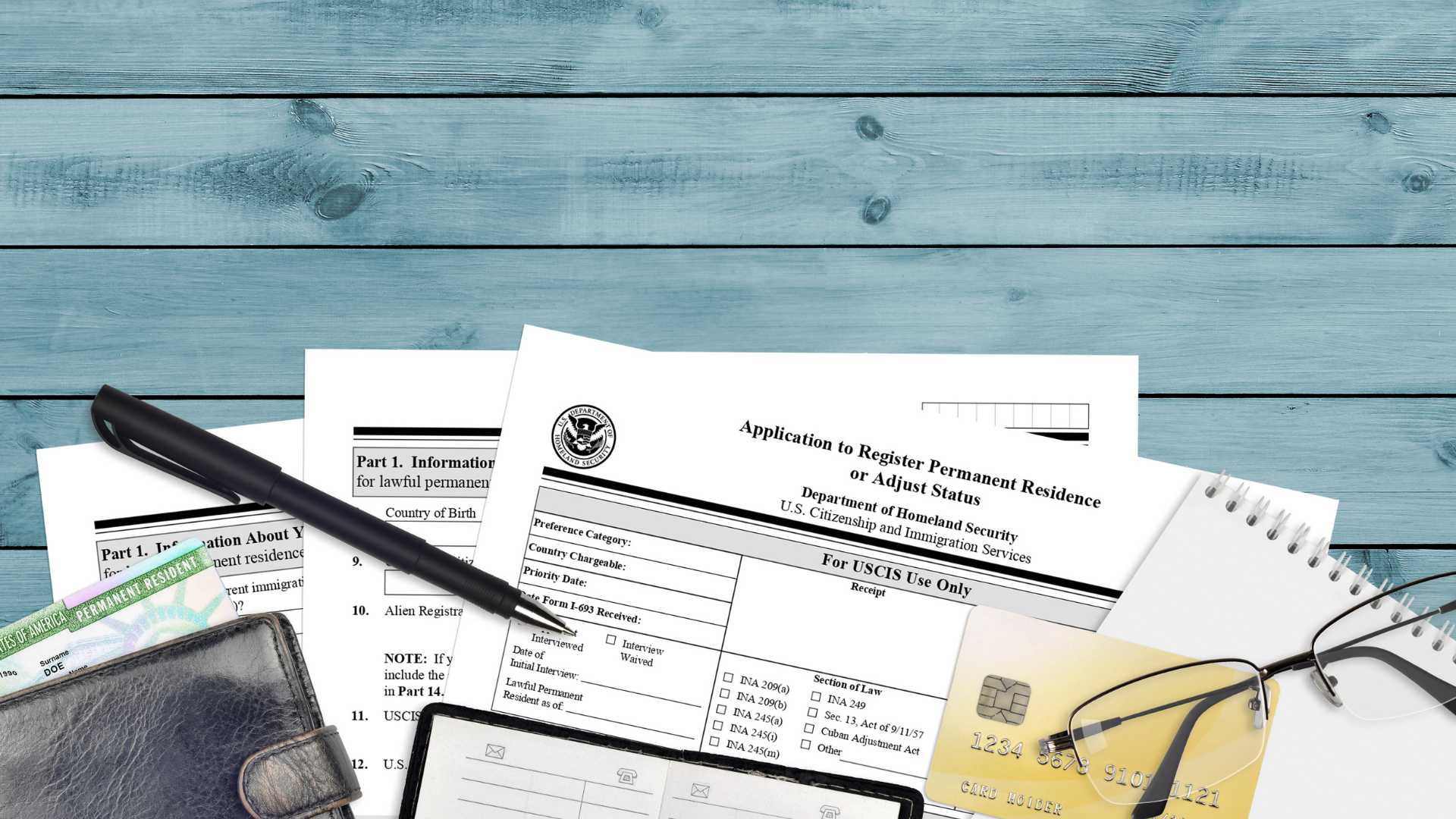
Get a Green Card without leaving the United States

If you dream of living and working in the United States, Adjustment of Status may be your path to achieving it. In this guide, we'll tell you the details and requirements to fulfill your American dreams.

What is Status Adjustment?
Adjustment of Status is a process that allows certain individuals already in the USA to apply for lawful permanent resident status without leaving the country. It is also known as applying for a Green Card. Below are the steps you must follow:

Who is eligible?
Not everyone is eligible to apply for Adjustment of Status. The main eligible groups are:

  • Holders of work visas.
  • Student visa holders.
  • People with Temporary Protected Status (TPS).
  • Asylum seekers and refugees.
  • Certain family members of U.S. citizens or permanent residents.

Here's what I'll tell you.

  • Verify that you are eligible for an Adjustment of Status process.
  • Submit an application.
  • Check visa availability.
  • Gather and present the necessary evidence.
  • Please attend your appointment at the Application Support Center.
  • Track your progress.
  • Wait for the response regarding your case.

Basic requirements
To be successful in your Adjustment of Status application, make sure you meet these requirements:

  • Maintain a valid and current immigration status in the United States.
  • Do not be in an illegal situation.
  • You have not committed serious crimes or serious immigration violations.
  • Have a sponsor (in certain cases) or an approved petition.

Process and Times
Patience is key in Adjusting Status. The process can take months or even years. But don't worry, during the process, you can work and live legally in the United States! 🕰️

Benefits of Status Adjustment

  • Living and working in the United States legally.
  • Access to social services and education.
  • Possibility of applying for citizenship after meeting the requirements.
  • Travel outside the United States without losing status (with travel authorization).

Final Recommendations
Before embarking on the process, consult with an immigration attorney to ensure you meet all the requirements and submit a strong application. Don't let obstacles stop you—pursue your American dreams!

We hope this guide has provided you with helpful information about Adjustment of Status in the United States. If you know someone who might benefit from this content, please share it!