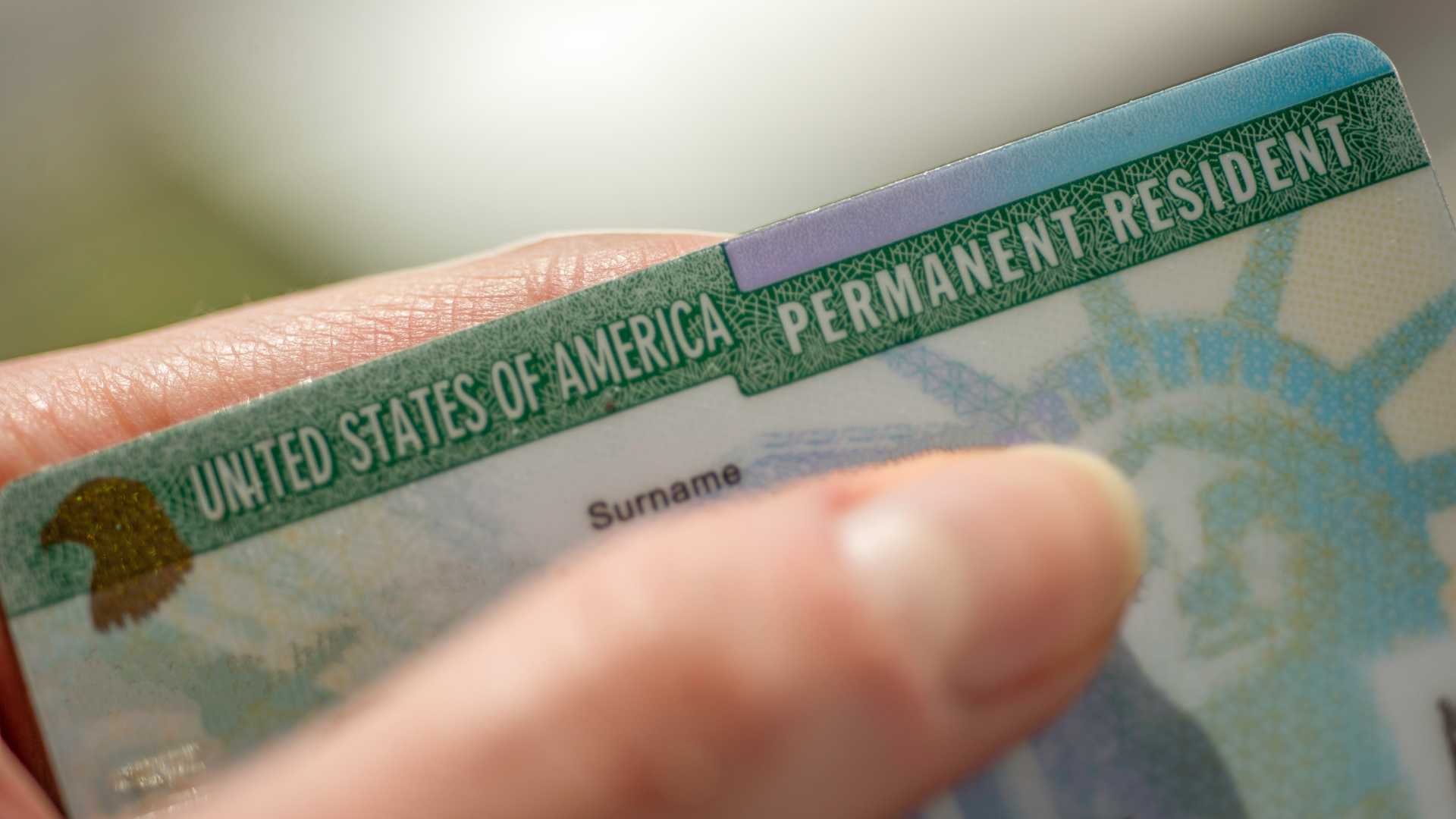
Key Questions to Obtain a Green Card Through Marriage

Obtaining permanent residency through marriage is a path filled with patience and attention to detail. The process may seem intimidating, but Being prepared for the questions you might face will give you confidence and peace of mind. Immigration authorities will want to ensure your marriage is genuine, so during the interviews, they will likely ask you a series of detailed questions about your relationship and life together. Below are some of the most common questions you should anticipate when preparing your application.

  1. Is marriage genuine?
    This is the foundation of the entire process. The authorities want to ensure that your marriage isn't just for convenience or to obtain immigration benefits. You'll need to demonstrate a genuine loving relationship and mutual commitment.
  2. How did they meet?
    The details about how and when the relationship began are crucial. Be prepared to tell the story of how they met, from the place to the context of their first encounter.
  3. When did they decide to get married?
    Immigration officials will want to know how the relationship evolved leading up to marriage. It's helpful to share important dates and key moments that led to the decision to get married.
  4. How did they celebrate their wedding?
    It's not just the wedding date that matters, but also how they celebrated. Details about the ceremony, the guests, and the reception can be helpful in demonstrating the authenticity of the relationship.
  5. Do they live together? Where is their shared residence?
    It's essential that you can demonstrate you have a life together, which includes sharing a home. You'll likely be asked about your address and daily routine at home.
  6. Do you have proof of living together (rental agreements, mortgages, joint bills)?
    Proof of shared residence is crucial in the process. Make sure you have documents showing that you are both registered at the same address, such as rental agreements, mortgages, or joint utility bills.
  7. What is their daily life like? What activities do they do together?
    Besides sharing a home, they'll also want to know about how they interact in their daily lives. Talking about activities they enjoy doing together can help provide a more complete picture of their relationship.
  8. Do they have a joint bank account? How do they manage their finances?
    Sharing financial responsibilities is an indicator of a strong relationship. Authorities might ask if you have a joint bank account or how you manage your finances in general.
  9. Do they know each other's families and friends?
    A genuine relationship involves integration with the partner's loved ones. Questions about whether they know each other's families and friends, and whether they have attended family events together, are common.
  10. Do they have long-term plans?
    Talking about the future is a way to demonstrate that the marriage is genuine. Questions such as whether they plan to have children, buy a house, or how they envision their life together in the long term are key in the interview.
  11. How do they handle cultural or linguistic differences?
    If they come from different cultures or speak different languages, they'll likely ask you how you've handled these differences. Explaining how you've adapted and communicated can be important to the process.
  12. What was their relationship like before marriage?
    Officials may inquire about the relationship before the marriage: how and when it began, what their courtship was like, and whether they had any breakups or separations. These details help verify the authenticity of the relationship.


While the process of obtaining a Green Card through marriage may seem overwhelming, being prepared for these questions will help you feel more confident and demonstrate the genuineness of your relationship. Remember that transparency and details about your life together will be key to success in this process.

Divorce: How does it affect your immigration status in the United States?

If you're in the process of filing a Family Petition based on marriage in the United States and would like to know what might happen if you get divorced, here's what you need to know!

What happens if you get divorced before obtaining your Green Card?
The impact of a divorce between an immigrant and a citizen or permanent resident depends on the stage of the immigration process the marriage is in. If you divorce before obtaining permanent residency, this could have a significant impact on your immigration status and your future in the United States.

Cases and exceptions

  1. Divorce before obtaining a Green CardIf you are currently in the process of a marriage petition, but you have not yet been scheduled for an interview, and the beneficiary does not have permanent residency, your immigration process will be halted. This means you will lose eligibility to apply for a green card, which could lead to your deportation.
  2. Divorce after obtaining a Green Card If you divorce after obtaining permanent residency, the risk of deportation is lower. However, there may still be consequences for obtaining citizenship, or the waiting time for permanent residency if you are a conditional resident may increase from 3 to 5 years because you are not married.
  3. Divorce and Conditional Green CardIf you get divorced while you're on conditional residency, your immigration process will likely be affected. To avoid the consequences, you can:
  • Submit Form I-751 to USCIS to request the removal of conditional residency due to marriage.
  • Submit an exemption from the joint filing requirement.
  • To prove that the marriage was in good faith.

    Divorce and Green Card for dependents
    Divorce can affect the immigration status of other family members who depend on the same immigration process as the immigrant spouse.

    Exceptions for appealing a deportation
    Demonstrate that they entered into a marriage in good faith and it was terminated due to a cause unrelated to the immigrant spouse.
    The immigrant spouse could face extreme hardship if deported to their country of origin.
    The immigrant spouse was a victim of extreme cruelty, physical or psychological abuse by the U.S. citizen or lawful permanent resident spouse.

    Need help? Contact us! +1 (786) 619 5937

    Myths and truths about the EB-2 PERM Visa

    We've seen that there are many myths surrounding employer-sponsored employment visas. Today I'll debunk the most common ones. Take note!

    Myth: Only geniuses or experts in their field can qualify for the EB-2 with Labor Certification.

    TRUE: While the EB-2 requires a high level of skill or achievement, you don't need to be a genius. Professionals with advanced skills, academic degrees, or relevant work experience may also qualify.

    Myth: Employment certification automatically guarantees Green Card approval.

    TRUE: While labor certification is an important step, it does not guarantee visa approval. USCIS must still review and approve the petition, and additional issues may arise during that process.

    Myth: The EB-2 is only for highly specialized workers in technology or science.

    TRUE: While many EB-2 recipients are in STEM (science, technology, engineering, and mathematics) fields, you can also apply to fields such as education, business, arts, and more, as long as you demonstrate exceptional skills or an advanced degree.

    Myth: Only large employers can sponsor EB-2.

    TRUE: Employers of any size can sponsor an employee for EB-2, as long as they meet the labor and financial requirements set by the U.S. Department of Labor.

    Do you know which degrees qualify for this type of visa? I'll tell you in the description!

    Green Card without marriage: Learn about the EB2 NIW visa for professionals

    You no longer need a job offer or to get married in the U.S. to obtain a U.S. Green Card. If you are a professional with five years of experience, a master's degree, a PhD, or the equivalent of one of these qualifications, you can apply for an EB-2 visa for national interest purposes, which will allow you to obtain permanent residency in the United States.

    Who applies?
    To apply, you must complete one of these two steps

    To achieve an Advanced Grade, that is:
    – Have a master's degree or a higher education (PhD) or an equivalent qualification.
    – Hold a professional degree, bachelor's degree or equivalent, and more than 5 years of consecutive work experience related to your profession.

    Demonstrate exceptional skill.

    To apply at this stage, you must meet at least 3 of the following criteria:
    – Earn a salary above the average for the population in your area.
    – To be considered an authority or judge in their area of expertise.
    – Have original contributions in academic or specialized journals.
    – To belong to a select group of individuals who share the same merit in the area of performance.
    – To have held a decisive position within an organization.
    – To have published indexed academic or commercial material in their area of expertise.

    Submitting the application inside or outside the U.S. Let me explain!
    There are two ways to submit the application: through Adjustment of Status and Consular Processing.

    Status Adjustment: This procedure is done when you are inside the United States, and you have a valid status that you can maintain while you make your application.

    Costs: $715.00 USD + ($1,440.00 USD per applicant) + $300 (If it is a company with less than 25 employees) or $600 (if it has more than 25 employees) Federal Costs Status Adjustment.
    Waiting time: 8 to 12 months approximately
    Optional additional value: Premium Processing: $2,805.00 USD to have your application processed in 15 days.

    Consular Process: This procedure is performed from your country of origin.

    Costs: $715.00 USD + ($560.00 USD per applicant) + $300 (If it is a company with less than 25 employees) or $600 (if it has more than 25 employees) Federal Consular Processing Costs.
    Waiting time: 2-3 years approx.
    Optional additional value: Premium Processing: $2,805.00 USD to have your application processed in 15 days.

    If you're eligible, you can get a Green Card for you and your family. Want to learn more? Find us on social media as @asisvisa

    Green Card through Marriage in the United States

    If you're considering marrying a U.S. citizen or permanent resident, you may have considered the path to the coveted Green Card. This is one of the most common ways to obtain permanent residency in the United States and, eventually, citizenship. But how exactly does this process work? Is it legal to marry for the sole purpose of obtaining immigration benefits? Here's everything you need to know to make an informed decision.

    Marriage in Good Faith: The First Crucial Step

    Before even considering applying for a Green Card through marriage, you must be certain that your union is genuine and in good faith. This means your marriage must be real and cannot be solely for immigration purposes. Marrying for the sole purpose of obtaining a Green Card is considered fraud and can have serious legal consequences, including deportation from the United States. It is crucial to be able to demonstrate that your relationship is authentic and based on love and mutual commitment.

    Benefits of the Green Card

    The Green Card provides a number of significant benefits, including the ability to travel outside the country, work anywhere you want within the United States, and even apply for U.S. citizenship after a certain period of time.

    Conditional Green Card

    If you have been married for less than two years when you receive your Green Card through marriage, it will be "conditional." This means you can maintain your permanent resident status as long as you remain married to your spouse and your circumstances do not change in a way that makes you ineligible. It's important to note that you cannot renew a conditional Green Card based on marriage, but you can petition the government to remove these conditions within 90 days before your conditional Green Card expires. If you do not, you will no longer be considered a lawful permanent resident and could face deportation.

    Requirements to Apply

    Some of the fundamental requirements for applying for a Green Card through marriage include:

    • The petitioner must be a U.S. citizen and reside in the United States.
    • Marriage must be in good faith and genuine.
    • The couple must be legally married, either in the United States or abroad.
      The petitioner must have sufficient financial means to support the beneficiary spouse.
      It's important to keep in mind that these are just some of the basic requirements and that the process can vary depending on individual circumstances. It's advisable to seek legal advice or consult with an immigration expert for specific guidance on your situation.

    Obtaining a Green Card through marriage can be a complex but rewarding process for those seeking permanent residency in the United States. However, it is crucial that the marriage be genuine and based on love and mutual commitment, and not simply a means to obtain immigration benefits.

    Green Card for Professionals: An Opportunity Without Marriage

    Discover the EB-2 NIW Visa and Obtain Your Permanent Residency

    In the past, obtaining a Green Card in the United States was largely tied to marriage to a U.S. citizen. However, today, if you are a professional with a master's degree or five years of experience in your field, there is an option specifically designed for you: the EB-2 National Interest Worker (NIW) visa. In this blog, we will explore the benefits of this visa and the process for obtaining your Permanent Residency.

    You Don't Need a Sponsor: A Significant Change in the Process

    Unlike most employment-based visas, the EB-2 NIW visa does not require a job offer from a U.S. employer or sponsor. This change significantly simplifies the process and gives professionals more freedom to pursue opportunities in their field.

    Essential Requirements to Qualify

    To be eligible, you must demonstrate that you are a specialized professional or possess exceptional skills in the sciences, arts, or business. Furthermore, it is crucial to demonstrate how your project will contribute to American society. Tangible evidence is required, such as letters of recommendation from experts in your field, publications, patents, or media coverage related to your work.

    Step-by-Step Process: From Initial Assessment to Case Award

    1. Initial Assessment: An initial evaluation of your professional profile is carried out to determine your eligibility.
    2. Deposit and Contract Signing: Once viability is confirmed, you proceed to make a deposit and sign the contract with AsisVisa, the agency specializing in immigration advice.
    3. Professional Adjustment: We work on professional adjustment, preparing your profile to meet the requirements of the EB-2 NIW visa.
    4. Document Reception and Application Preparation: The necessary documents are collected and the application is prepared.
    5. Application Review and Submission: A thorough review of the application is carried out before it is submitted.

    Processing Time: Speed and Efficiency

    The EB-2 NIW visa, because it doesn't require the standard labor certification process, typically has faster processing times compared to other employment-based visas. Furthermore, there's the option to expedite the process even further with the Premium processing service, which guarantees case adjudication in as little as 15 days.

    If you're an experienced professional or possess exceptional skills, the EB-2 NIW visa offers a unique opportunity to obtain permanent residency in the United States without being married. Start your application today, discover the possibilities that await you, and take the first step toward your future in the United States. Your Green Card is waiting for you!

    Family Petition: Which relatives can you petition for in the United States?

    Have you ever wondered who you can petition to bring your loved ones to live with you in the United States? Don't worry, we're here to answer those questions and guide you through the different family petition options!

    First you need to understand this:

    American CitizensPermanent Residents
    American citizens have visas UNLIMITED for their immediate family members.Permanent Residents have visas LIMITED for their immediate family members.*
    Immediate family members:
    - Spouse.
    – Civil or biological parents,
    – Stepfather for those who married the biological father of the citizen before the American citizen turned 18. (Only applies to stepfathers or until the child turns 18 years old).
    – Unmarried biological or civil children under 21 years of age.
    Immediate family members.
    – Single children under 21 years of age.
    - Spouse.

    NOTE: Having accumulated irregular presence makes you inadmissible for applying for Permanent Resident status.
    Non-immediate relatives: (Only applies to citizens)
    - Siblings.
    – Married children.
    *If the visa is not listed in the visa bulletin, it cannot be requested.
    Adjustment of Status, which is done within the United States, cannot be requested if there is a backlog in the visa bulletin.

    Now that we have that information clear, I'm going to tell you about the different family requests:

    Request for Parents:
    If you are a U.S. citizen and at least 21 years old, you can apply for permanent residence (Green Card) for your parents (mother or father).
    Please note that permanent residents cannot make this request.

    Marriage Proposal:

    Both citizens and residents can apply to marry their partner.
    In the case of citizens, couples will be able to adjust their status (within the USA) or go through consular processing (outside the USA) without any problem.
    Meanwhile, resident couples will have to choose whether to adjust their status or go through consular processing, depending on the waiting list.

    Petition for Children:
    Both U.S. citizens and permanent residents can sponsor their children to live and work in the United States as permanent residents.

    Remember that children of residents must be under 21 years of age.

    Children's Request:
    To bring your sibling to live in the USA and become a permanent resident, you must be a US citizen and over 21 years of age.

    Note: Permanent Residents cannot petition for siblings to be beneficiaries of the Green Card.

    Parents' Request:
    If you are a U.S. citizen and at least 21 years old, you can apply for permanent residency (Green Card) for your parents.

    Please note that permanent residents cannot make this request.

    This is the perfect opportunity to get the family together. Ready to get started?

    Permanent Residency through Marriage: How to Prove It is a Boa Faith Marriage

    If you're embarking on the marriage petition process, you know that the key to success lies in demonstrating that your marriage is genuine and not just an immigration formality. Here, we'll guide you through the steps to submit a strong and compelling application that maximizes your chances of approval.


    More than a Certificate: The Importance of Additional Evidence
    USCIS looks beyond the marriage certificate. Recognizing that some people marry for legal reasons, they seek additional evidence to support the genuine commitment. Be sure to emphasize the authenticity of your union both in the documents submitted with your application and during your green card interview.


    Evidence = Success: Key Documents That Strengthen Your Case
    Lack of evidence is the main reason for rejection. Include documents covering various categories to strengthen the demonstration of the sincerity of your marriage. What documents are essential? Take note:


    Relationship over Time: Chronology as Witness
    Don't underestimate the power of time. Presenting a comprehensive view of your relationship over time is essential. Five photos spanning five years carry more weight than ten photos from last month. Discover how to effectively present your love story.
    Evidence of Financial Union: Beyond Emotions
    The authenticity of your marriage is also demonstrated through shared assets and debts. From joint bank accounts to shared insurance policies, these documents support your financial union and strengthen your case.


    Living Together: Key Documents for Cohabitation
    If you live together, provide supporting documentation such as a lease agreement, utility bills in both your names, and more. What if you don't live together? Don't worry, we offer solid strategies to overcome this obstacle.


    Complications of Not Living Together: Strategies and Solutions
    The lack of cohabitation doesn't have to be an insurmountable obstacle. We offer practical solutions, including a letter signed by both spouses explaining the situation and outlining their future together.


    Do you know someone who could benefit from this information? Share it!

    Guide to the Green Card Lottery – Win Your Permanent Residency in the United States!

    Do you dream of living permanently in the United States? This is your chance! The 2025 Diversity Visa Lottery (DV-2025) is now open, and here's a complete guide on how to apply and what you need to know to increase your chances of getting a Green Card. Don't delay—the deadline to register is November 7, 2023!

    55,000 Reasons to Apply

    Each year, the DV-2025 program awards 55,000 diversity visas, also known as "Green Cards." These visas allow you to live and work permanently in the United States. What makes this lottery unique is that winners are selected randomly through a computerized process, giving people from all over the world the opportunity to fulfill their dream of living in the United States.

    Who Can Apply?

    To be eligible to participate in the Green Card Lottery, you must meet two fundamental requirements:

    Native of a country with low immigration rates to the United States: Not all countries are eligible to participate, as some already have a high number of immigrants in the United States. Consult the official list of eligible countries on the State Department website.

    Education and work experience: You must have a high school diploma or have worked in a job that requires at least two years of training. English is not required to participate.

    How to Apply?

    The registration period for the Green Card Lottery begins on October 4, 2023, and ends on November 7, 2023. Don't risk missing this opportunity, as the State Department will not accept late registrations.

    The application process is simple and free:

    1. Visit the official Diversity Visa Program website at dvprogram.state.gov.
    2. Complete the DV Registration Form (DS-5501) online. Be sure to provide accurate and truthful information.
    3. Save the confirmation number you will receive when you submit your application. This number is essential to verify if you have been selected.

    Important: Do not submit multiple applications. Doing so will disqualify your participation in the process.

    Lottery Results

    The results of the Green Card Lottery for the DV-2025 program will be announced on May 4, 2024. To check if you have been selected, you will need to use the participant status checker tool on the U.S. Department of State website. Be sure to have your confirmation number handy and check the official website for your status.

    If you are interested in learning more about the Green Card Lottery, we are happy to provide you with additional tips and details to increase your chances of success.

    5 Ways to Get a Green Card in the United States

    Often, when people think about obtaining the coveted Permanent Residency in the United States, the first option that comes to mind is a "Marriage Petition." While this is a common path, there are other lesser-known but equally effective options to achieve your goal of settling in this land of opportunity. In this article, we'll explore some of these alternatives that could open the doors to a life in the United States.

    Marriage to a U.S. Citizen

    One of the most traditional and well-known ways to obtain a Green Card is through marriage to a U.S. citizen. This route allows you to apply for a Green Card through the adjustment of status process. However, it is important to remember that the marriage must be genuine and cannot be used solely for immigration purposes.

    Close Relatives

    Another valuable option is to leverage family ties. Close relatives of U.S. citizens and lawful permanent residents can also apply for a Green Card through a qualifying family member. This includes spouses, minor children, and parents of U.S. citizens, as well as spouses and children of lawful permanent residents.

    Investment (EB-5)

    If you're a foreign investor with a business interest and are willing to make a financial commitment, the EB-5 investor visa might be the right option for you. This visa allows foreign investors to obtain a Green Card by investing a specific amount of money in a business project that creates jobs in the United States. It's a way to contribute to the country's economic development while securing your future here.

    Asylum or Refuge

    For those who have sought asylum or obtained refugee status in the United States, there is the possibility of applying for a Green Card after a certain period of time. This pathway offers stability and security to those who have fled difficult situations in their home countries.

    Community Links or Investment in Rural Areas

    Finally, specific programs such as the E-2 visa for investors or the EB-4 visa for religious workers may be viable paths to obtaining permanent residency in the United States. These options are designed for individuals with strong ties to the community or who wish to invest in rural areas of the country.

    Remember: Each of these visas has different requirements and processes. The best way to determine if you are eligible and which option is right for you is to seek personalized advice from our immigration attorney.

    What can you expect from a consultation with a lawyer?

    • A detailed diagnosis regarding the visa you wish to obtain.
    • An assessment of the likelihood of success in your application.
    • Access to our application platform for the process.
    • Telephone or email support to answer your questions after the consultation.
    • Please remember that all our legal consultations have an associated cost. If you are determined to obtain permanent residency in the United States, these options can offer you a variety of paths forward. Don't hesitate to contact us to begin your journey toward life in this country full of opportunities!