U.S. Customs and Border Protection (CBP) launched a digital advertising campaign Wednesday to discourage migrants from the Northern Triangle (Guatemala, Honduras, and El Salvador) from undertaking the dangerous journey to the U.S. border.
The ads aim to convey a clear message: smugglers are lying; illegally entering the United States is a crime. They also emphasize that smugglers, known as "coyotes," exploit and profit from vulnerable migrants.
“Smugglers use lies to lure vulnerable people into embarking on a dangerous journey that often ends with their deportation or death,” said CBP Commissioner Chris Magnus. “This public awareness campaign is an important component of the U.S. government’s efforts to prevent tragedies and reduce irregular migration.”.
The message warns that those who attempt to cross the U.S. border without authorization will be immediately expelled from the country or subjected to immigration deportation proceedings. Furthermore, they will receive information about the thousands of migrants who end up imprisoned, kidnapped, extorted, or even left to die by unscrupulous transnational criminal organizations.
In fiscal year 2021, the northern Central American countries accounted for 44% of migrant encounters along the southwest border.
Finally, this campaign has emerged from the joint work of the Department of Homeland Security (DHS) working closely with the State Department to track trends, share research, and coordinate messaging to counter the tactics used by smugglers to victimize vulnerable migrants.
These messages are an effort to counter the many lies spread by human traffickers and warn migrants about the dangers of being scammed and dying at the hands of these criminal organizations.
News report based on information from: U.S. Customs and Border Protection (CBP)
It is estimated that there are two million fewer immigrants in the United States than there would have been if the rate of arrival had remained the same as in previous years; a situation that affects the scarcity of certain products and impacts certain sectors.
The labor shortage in the United States reached a record 11.5 million job openings in March and is projected to reach 80 million by 2030, according to a report released by the American Immigration Council. The study also estimates that these job openings will be due to retirements, career changes, and people leaving the workforce.
Currently, the sectors most affected by the labor shortage are agriculture, construction, restaurants, and healthcare, among others. This has led them to take measures such as changes in food production and harvesting, increased restaurant prices, higher housing prices, and delays in delivery.
Additionally, the country is grappling with its highest inflation levels since the 1980s, and last year saw the highest job vacancy rate in the country in the past three years. The labor market is one of the factors contributing to the United States' highest inflation; other contributing factors include supply chain disruptions caused by the coronavirus pandemic and rising fuel and commodity prices since Russia's invasion of Ukraine.
Finally, the occupations with the greatest growth between 2019 and 2021 were those with the highest proportions of immigrant personnel.
It is important to highlight the significance of immigrants in the many sectors of a country where they make their professional contributions, such as healthcare, technology, mathematics, cleaning and building maintenance, and so on. Immigrants are part of the driving force that moves and transforms a country.
This news report was compiled using information from: Telemundo, El Periódico USA, and Nuevo Herald.
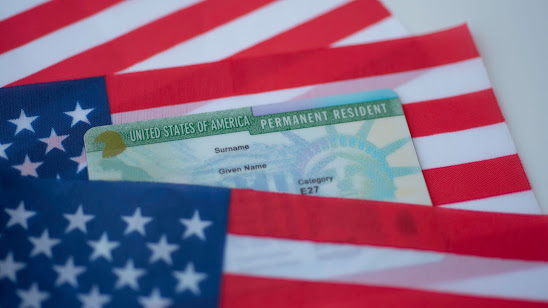
On Saturday, the participants selected for the second stage of the 2023 visa lottery were announced. This lottery awards 55,000 green cards to immigrants who want to reside legally in the United States.
The selection of lottery winners is carried out “by a random system based on the visa allocations available in each region and country, from all registered applications,” the State Department (DOS) said.
To check the status of your application, you must do so through the Diversity Visa (DV) lottery website, which will be updated to inform all participants whether their online registration was selected or not. To check the status, you need to enter the confirmation number you received when you completed your registration form; without it, you will not be able to check.
Furthermore, the DOS states that it “will not send notification letters or notify those selected via email.” And that U.S. embassies and consulates “will not provide a list of those selected.”.
Following this initial screening, participants who remain in the competition for the visa will be asked to provide additional information beyond what was submitted in their application, such as documents to verify their identity and resume. They will also be required to attend an appointment at a U.S. consulate.
The State Department distributes visas among six geographic regions, and no country can receive more than 71 TP3T visas of the available DV visas in any given year. This year, eligible countries include: Antigua and Barbuda, Argentina, Barbados, Bolivia, Chile, Costa Rica, Dominica, Ecuador, Panama, Paraguay, Peru, Saint Vincent and the Grenadines, Suriname, Trinidad and Tobago, and Uruguay. Other countries that had the opportunity to participate included: Egypt, Algeria, Uzbekistan, Iran, Ukraine, Nepal, Afghanistan, Congo, and others.
On the other hand, there are the countries with more than 50,000 citizens who emigrated to the U.S. in the last five years and cannot apply; some of them are: Bangladesh, Brazil, China, Hong Kong, Colombia, El Salvador, Haiti, Honduras, Mexico, Pakistan, South Korea, Venezuela, and Vietnam.
Finally, the State Department announced the randomly selected individuals, who will have until September 30th of this year to find out if they were selected or not.
News report based on information from: Univision and Telemundo.
The public will have access to immediate and clear answers regarding case processing times.
U.S. Citizenship and Immigration Services (USCIS) announced changes Thursday to simplify and improve how the agency communicates case processing time data to the public. As part of an agency-wide commitment to improve transparency, efficiency, and customer service, these changes will also make it easier for people to get an immediate answer about when they can inquire about their case.
USCIS Director Ur M. Jaddou announced that "USCIS is committed to listening to our applicants and stakeholders, and to continually improving our services," adding, "This is an important step, and certainly not the last, in the pursuit of improving the clarity and transparency of the data that USCIS provides to the public.".
The processing times that the agency makes publicly available provide the information needed to understand how long it may take USCIS to process a particular form. These estimated times are based on statistics from the previous six months showing how long it took USCIS to approve or deny a specific percentage of cases for a given form.
As a result of the COVID-19 pandemic and due to resource limitations inherited from the previous administration, USCIS accumulated a significant backlog of cases and experienced increased processing times. In February, there were reports of 9.5 million pending applications.
With the additional changes, users can now immediately find processing time information for their specific case type, instead of seeing an aggregate of all cases. These changes include:
- Drop-down menu for form categories. For example, if you want to check the current wait time for Form N-400 Application for Citizenship at the New York Service Center, you can limit the results by specifying the form category.
-The waiting time is now specified as a single number (e.g., 7.5 months) instead of a range (7.5 to 11 months).
-Review, simplify and add additional content to the processing times web pages to increase transparency, including a new FAQ page and an improved Additional Information page.
Finally, this initiative by the agency aims to improve how processing times are displayed, managing them in a meaningful, concrete, and useful way for both parties. However, it's important to emphasize that each case is unique, and some cases take longer to process than others, depending on their specific circumstances.
This news report was compiled using information from: USCIS and Telemundo 47
Most immigrants whose employment authorization has expired or will expire in the coming months will be able to continue working while the government processes their renewals.
The new policy from U.S. Citizenship and Immigration Services (USCIS) was adopted in response to the massive backlog the agency is facing, which in April exceeded 9 million benefit applications. Some of the beneficiaries would be Temporary Protected Status (TPS) holders and asylum seekers, among others.
«The Temporary Final Rule (TFR) increases the automatic extension period for Employment Authorization Documents (EADs), available to certain EAD renewal applicants, to up to 540 days,» the agency said in a statement. The TFR, which applies only to EAD categories currently eligible for an automatic extension of up to 180 days, will temporarily provide up to an additional 360 days of automatic extension (for a total of up to 540 days) to eligible applicants with a pending Form I-765 renewal application filed on time during the 18-month period following the publication of the TFR while USCIS works with backlogs that increased during the COVID-19 pandemic.
The increase will take effect immediately on May 4, 2022, and will help prevent employment gaps for non-citizens with pending EAD renewal applications. This will stabilize business continuity for U.S. employers, according to USCIS.
It is estimated that up to 420,000 immigrants who renew their work permits will be protected against losing their ability to work for the duration of the policy.
The government said the policy change allows eligible immigrants to work with expired documents for up to 540 days, instead of 180. That means even the tens of thousands of people who have passed their 180-day window have up to another year of work authorization.
However, it makes clear that some immigrants eligible for work permits, including DACA recipients and some spouses of H-1B visa holders, will not benefit from the new policy because they were never eligible for the 180-day extension of their expired authorizations.
Finally, it provides temporary reassurance for workers and employers, as they can continue their work while renewing and awaiting a response to their application.
This news report was compiled using information from USCIS and Univision.
California, the first state in the nation to expand MediCal to low-income adults over 50, regardless of immigration status.
Undocumented immigrants over the age of 50 who fall below certain income thresholds will be eligible for full Medi-Cal coverage, California's version of Medicaid, the federal-state partnership that provides health insurance to low-income individuals, according to California Health Line.
This population, regardless of age, represents the 401(t)(s) of the approximately 3.2 million uninsured residents of the state. Official estimates place the number of newly eligible individuals at 235,000. Those who register will join the more than 220,000 undocumented immigrants aged 25 and younger already enrolled in Medi-Cal.
If Governor Gavin Newsom achieves his goal, which seems entirely possible given the state's optimistic financial outlook, California could allow all remaining low-income undocumented immigrants—approximately 700,000 people—to join Medi-Cal by 2024 or earlier.
Currently, according to the law, all undocumented immigrants who meet the financial criteria can obtain limited Medi-Cal coverage, which includes emergency and pregnancy services, and in some cases, long-term care.
But when they enroll in full Medi-Cal, they get comprehensive coverage that includes primary care, prescription drugs, mental health care, dental and vision care, eyeglasses, and more.
Those wishing to register for the program should take into account the following documentation:
– Social Security number, if you have one
-A California state ID
-Federal tax information. If you don't file taxes, you may still qualify for free or low-cost insurance through Medical.
-One or two pay stubs or proof of unemployment service
-Immigration documents for non-citizens, such as an A-number, USCIS number, or arrival/departure document number. Undocumented family members are not eligible for Covered California coverage, but may qualify for other programs.
-Information about the employer and income of all members of your family.
“This is a crucial moment to integrate all these elderly undocumented immigrants into the healthcare system,” says Arturo Vargas Bustamante, a professor of health policy and management at UCLA’s Fielding School of Public Health. If their chronic conditions are left unattended, he says, they will simply end up in the emergency room, making their treatment more expensive. Professor Vargas has described this measure as “a responsible way to invest.”.
Undocumented immigrants play a significant role in the workforce, paying approximately $3.2 billion in state and local taxes annually in California and $11.7 billion nationally. The meaning of immigration has changed; it's no longer just about temporary jobs followed by a return to their country of origin. This population is settling down and building families in the United States.
The program aims to reach all potential beneficiaries; therefore, it is preparing to address and manage the various requirements that may arise.
The Department of Health Care Services, which administers Medi-Cal, is working with county officials, consumer advocates, and the state health insurance marketplace, Covered California, to reach eligible immigrants. It has published frequently asked questions in several languages. And the agency has a “senior citizen expansion” page on its website, available in English and Spanish. All of this is to ensure that people feel confident enrolling and can access the benefit without any lack of understanding.
However, even as advocates and health officials spread the word about the new eligibility rules, they remain vigilant for potential distrust from immigrants who remember the Trump administration's public charge rule, which reignited fears that applying for public benefits could jeopardize their immigration status or even lead to deportation. With the election just around the corner, many fear those days are not over.
However, the National Immigration Law Center points out that a public charge is defined by U.S. Citizenship and Immigration Services (USCIS) as an individual who is likely to become dependent on the government for their subsistence, receiving public cash assistance, and is unable to support themselves. Nevertheless, immigrant advocates have reiterated that Medi-Cal does not qualify as a public charge.
Finally, the Department of Health Care Services and several organizations are handling the issue and are available to explain the new Medi-Cal benefits for older immigrants, including how to complete the immigration process, which will be available year-round, and how to choose a health plan and provider.
News report based on information from: EFE, Conexión Migrante and La Opinión.
A federal judge in Louisiana temporarily blocked the Joe Biden administration's decision to end Title 42, a public health policy that restricts immigrants' access to the country due to the coronavirus pandemic.
The measure was scheduled to end on May 23, but with the injunction issued by the Eastern District Court of Louisiana, Lafayette Division, it will remain in effect, which is why migrants arriving at the southern border will continue to be turned back.
The information was released by Judge Robert Summerhays as follows: «The Court discussed the Application for a Temporary Restraining Order [ECF No. 24] filed by the plaintiff (the Arizona Attorney General’s Office). For the reasons stated in the record, the Court announced its intention to grant the application. The parties will consult on the specific terms to be included in the Temporary Restraining Order and attempt to reach an agreement,» is part of the 25-page document.
The response has been celebrated and applauded by the various states that filed lawsuits and oppose the policies Joe Biden wants to implement. Arizona Attorney General Mark Brnovich applauded the court for granting a Temporary Restraining Order (TRO) against the Biden administration to keep Title 42 in effect, even though the administration had already tried to reverse it before the May 23 deadline.
The announcement was also celebrated by Missouri Attorney General Eric Schmitt, who stated, "This is a great victory for border security, but the fight continues," he posted on his social media.
The lawsuit was led by Arizona and supported by the states of Alabama, Alaska, Arkansas, South Carolina, Florida, Georgia, Idaho, Kansas, Kentucky, Louisiana, Missouri, Montana, Mississippi, Nebraska, Ohio, Oklahoma, Tennessee, Utah, West Virginia and Wyoming, which had asked the court to prevent the government from ending Title 42.
This request also comes during what has been described as the worst border crisis in U.S. history. In addition to this lawsuit filed by the coalition of more than 20 states, the Texas government filed its own appeal, which will now have to be decided by a judge in that state.
Under Title 42, the expedited removal of almost two million immigrants has been permitted in fiscal years 2021 and so far in 2022.
The Biden Administration made the decision to end Title 42, under the recommendation of the Centers for Disease Control and Prevention (CDC), also after pressure from dozens of organizations and several Democratic congressmen, as well as members of the Congressional Hispanic Caucus (CHC).
Representative Raúl Ruiz, president of the CHC, said that:
“The Congressional Hispanic Caucus made it very clear that the Title 42 policy is a public health emergency policy that was instituted under the Trump Administration during its agenda of hatred and fear against immigrants,” he added, noting that the pandemic situation has changed, as there are now enough COVID-19 tests and vaccines to prevent infections.
Dozens of civil organizations had pressured the Democratic president to end the policy, which prevents immigrants from applying for asylum and sends them back to Mexico or their countries of origin.
Finally, while a final decision is being made on this issue, some of Biden's plans to counteract what would be an increase in migrants at the border if the title were to be terminated continue to emerge, including the processing of between 6,000 and 18,000 asylum cases daily once the health policy is eliminated.
It was warned that deportations under Title 8 of the Immigration and Nationality Act (INA) would continue to be expedited for immigrants who do not qualify for asylum, and that new immigrant detention centers would be expanded and constructed. The government was also preparing to implement new programs at the border, including granting extraordinary discretionary powers to asylum officers from the Immigration and Customs Enforcement (ICE) and prosecutors from the Immigration and Customs Enforcement (ICE) Office, to expedite processes and alleviate the backlog in Immigration Court, which currently has more than 1.7 million pending cases.
News report based on information from: Univision and El Diario.
The United States announced the Union for Ukraine program in April, a key step in fulfilling President Biden's commitment to welcome Ukrainians fleeing the Russian invasion.
The program provides a pathway for displaced Ukrainian citizens and their immediate family members outside the United States to come to the country and remain for a two-year period of temporary parole. Ukrainians participating in Union for Ukraine must have a sponsor in the United States who agrees to provide them with financial support during their stay. They will also be eligible to apply for discretionary employment authorization from U.S. Citizenship and Immigration Services (USCIS).
Some eligibility requirements for program sponsors and beneficiaries include:
The first step in the process is for the sponsor, who resides in the United States, to file Form I-134, Affidavit of Support, with USCIS. The sponsor will be vetted by the U.S. government to ensure they can financially support the person they hope to sponsor.
Among the list of people who can be sponsors are the
U.S. citizens and nationals, lawful permanent residents (including legal temporary residents and conditional permanent residents), and nonimmigrants in legal status, among others. Additionally, these individuals must be willing and able to receive, support, and provide for the beneficiary listed on Form I-134 for the duration of their stay.
Furthermore, beneficiaries include immediate family members, the spouse or civil partner of a Ukrainian citizen, and their unmarried children under 21 years of age. Important: If a child is under 18, they must travel with a parent or legal guardian to use this process.
Similarly, Ukrainians can access this benefit if they meet certain conditions of the process, among which the following stand out:
-They resided in Ukraine immediately before the Russian invasion (until February 11, 2022) and were displaced as a result of it.
-They are Ukrainian citizens and hold a valid Ukrainian passport (or are a child included in a passport of one of their parents).
-He has a sponsor who filed a Form I-134 on his behalf that USCIS has investigated and confirmed as appropriate.
-Passes biographical and biometric security checks.
All these filters are in place to ensure that the sponsor can financially support Ukrainians and protect this population from exploitation and abuse.
However, not all Ukrainians can access this program. For example, Ukrainian citizens who were already present in the United States will not be considered for temporary stay (“parole”) under Union for Ukraine and must go through the Temporary Protected Status process. Also, minors traveling without a parent or legal guardian are not eligible for temporary stay.
Following this, and after processing all the documentation requested by USCIS, which can be found on their website, the application and supporting evidence will be reviewed to ensure that the sponsor has sufficient financial resources to sponsor the Ukrainian beneficiary. In addition, background checks on the sponsor will be conducted.
Finally, it will be determined whether Form I-134 is appropriate, and additional evidence may be requested to make that determination. Approval or denial of the application, as well as any additional information that may be requested, will be communicated via email by USCIS.
News report based on information from: US Citizenship and Immigration Services (USCIS)
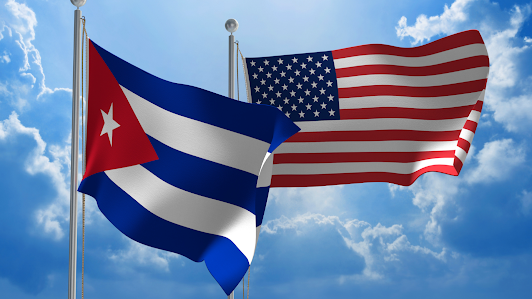
US and Cuban representatives met Thursday in Washington to discuss migration.
This event has been considered the first high-level bilateral meeting since Joe Biden arrived at the White House and since negotiations on this issue were interrupted in 2018. The US delegation was headed by Emily Mendrala, Deputy Assistant Secretary of State for Western Hemisphere Affairs, and the Cuban delegation was led by Deputy Foreign Minister Carlos Fernández de Cossio.
Although discussions were expected to cover various issues straining relations between the two countries, the talks focused on ways to address illegal immigration, changing migration trends, deportations, and the roles of embassies, State Department spokesman Ned Price added.
In reference to this, according to the United States Customs office, from October 2021 to March 2022, more than 78,000 Cubans entered the country through the border with Mexico, that is, double the number who left the island during the so-called "rafter crisis" in 1994.
Tensions between Washington and Havana over the Cuban government's repression of protests in July 2021 resulted in one death, dozens of injuries, and 1,395 arrests. US sanctions against the island and other issues have hampered cooperation between the two countries on challenges such as immigration. Despite this, the delegations emphasized their willingness to engage in direct and comprehensive dialogue.
«Discussions about safe, orderly, and legal migration remain of paramount importance to the United States,» Price told reporters. He added that the desire to «encourage family reunification and promote greater respect for human rights and fundamental freedoms in Cuba» is equally important.
However, the Cuban delegation "reiterated its concern about the measures taken by the U.S. government that encourage migration, impede legal and orderly migration, and create socioeconomic conditions that incite emigration. It stressed that these measures, including those associated with the extreme strengthening of the economic blockade, cause loss of life and the commission of crimes such as migrant smuggling, immigration fraud, and human trafficking, a situation that affects both countries and the region," according to a statement released by the Ministry of Foreign Affairs.
He also insisted that Washington has "the obligation" to issue 20,000 annual visas to Cubans to emigrate to the United States under an agreement "that has been violated since 2017.".
Regarding the visa issue, the first announcements about the resumption of visa issuance in Cuba were made in March, but no specific date was set. However, at Thursday's meeting, the discussion focused on "consular services at the U.S. Embassy in Havana, including the limited resumption of immigrant visa services beginning in May and the ongoing issuance of emergency nonimmigrant visas," the U.S. State Department detailed in a statement released after the meeting.
As can be seen, after the meeting, both countries issued their respective statements outlining some of the agreements reached and proposals made. Additionally, the same document issued by the U.S. State Department stated that the migration talks "provide an opportunity to discuss the mutual implementation of the Migration Agreements (comprised of a series of bilateral agreements between the United States and Cuba made in 1984, 1994, 1995, and 2017)."«
For its part, Cuba reiterated that "the United States must stop obstructing and violating the rights of Cubans to travel to third countries in the area" and demanded "compliance with bilateral migration agreements in their entirety and not selectively.".
Finally, although the meeting represents progress after nearly four years without dialogue between these countries, it also served as an opportunity to criticize the agreements that have been broken. Cuba reproaches the United States for not fulfilling its commitments regarding visas, and Washington denounces that Havana has not accepted any deportations of Cubans since last October via commercial or charter flights from U.S. territory. It is hoped that the talks will foster collaboration and achieve objectives that benefit both migrants and the countries involved.
News report based on information from: El Economista, France 24 and On Cuba news.
The United States is seeking to reach a "firm" agreement on migration with Latin American countries ahead of the upcoming Summit of the Americas in Los Angeles in June, U.S. Secretary of State Antony Blinken said Wednesday.
«The work will continue at the Summit of the Americas, where we hope that leaders from across the region will establish shared principles for a joint response to the issue of regional migration and displacement,» Blinken said at a press conference before leaving Panama City. The summit, convened by U.S. President Joe Biden, is scheduled to take place in Los Angeles from June 6 to 10 and will focus on the idea of “building a sustainable, resilient, and equitable future” for the Americas.
The meeting of foreign ministers from the region, held in Panama, focused on the theme of "shared responsibility" in addressing the thousands of migrants who irregularly attempt to reach the United States each year.
The number of people displaced around the world is increasing, some of the reasons being: armed conflicts, economic crises, climate change and poverty, thus causing humanitarian crises.
During the meeting in Panama, a call was made to combat the root causes of irregular migration and to support countries such as Colombia, Mexico, Panama, and Costa Rica, which are assisting migrants.
The United States and Latin American governments are also seeking to create legal routes for migrants and offer economic opportunities, with the help of international organizations, that generate employment and reduce migration.
Speaking about the U.S. strategy, Blinken said that part of the plan is to address the root causes of irregular immigration: “What drives people to make the decision to leave their homes, their families, their country, everything they know, to undertake an extremely dangerous journey?” However, he insisted that this problem must be addressed in a “sustainable” way.
For her part, Panamanian Foreign Minister Erika Mouynes believes that the migratory phenomenon will increase, driven by the effects of climate change and the invasion of Ukraine.
«"We cannot falter because reality prevails. Strategies must be permanent, and we must continue the work we have begun," he said.
In this regard, US authorities detained more than 221,000 people at the border with Mexico in March, the highest number in a single month since February 2000. These detainees are citizens of El Salvador, Guatemala, Haiti, and Honduras, who are fleeing extreme poverty, violence, and natural disasters exacerbated by climate change.
In his remarks, U.S. Secretary of Homeland Security Alejandro Mayorkas said, «We need to think regionally about how to stem the flow of migrants,» and emphasized that the U.S. has several programs for immigrants who arrive legally. “Those who do not meet the requirements will continue to be repatriated,” he stated. Mayorkas described the U.S. strategy as a multi-component plan, creating “orderly and safe routes so that people don’t have to risk their lives.”.
Although the main theme of the meeting, which was attended by ministries from 22 countries across the continent, was the search for mechanisms to reduce irregular migration, issues such as the fight against corruption and the rule of law in the region were also addressed.
News report based on information from France 24 and Voice of America.