Once again, Texas authorities are cracking down on migrants.

On Thursday, Texas Governor Greg Abbott, a Republican, signed an executive order authorizing the Texas National Guard and the Department of Public Safety (DPS) to "detain immigrants who illegally cross ports of entry and return them to the border with Mexico" in order, according to him, "to protect Americans and secure the southern border.".

This is not the first time that Abbott has been involved in a migration-related conflict:

*In April, the governor decided to increase truck inspections at the border with Mexico, which affected the flow of trade.       

*Also, that same month, he fulfilled his threat to Joe Biden to send undocumented migrants from Texas to Washington by bus. 

Regarding this new measure, the White House stated the following: the enforcement of immigration law is the responsibility "of federal authorities and states should not (...) interfere in it," said spokeswoman Karine Jean-Pierre at a press conference.

Several associations, migrant advocacy groups, and others have expressed their disagreement with Abbot's order. Among them is the Mexican government, which attributes the initiative "to an election campaign context in the state of Texas" in view of the legislative elections in November.

In announcing the measure this Thursday, Greg Abbott argued that it aims to "stop the criminal enterprise that endangers" those who live in border towns. However, his measures should be more closely monitored, since the United States Constitution clearly states that immigration enforcement is a federal authority and that state governors cannot establish their own policies.

Finally, tomorrow (July 12) Mexican President Andrés Manuel López Obrador will visit the White House to discuss one of the main issues with Joe Biden: the migration crisis. 

News report based on information from: CNN and BBC News Mundo. 

We know this news isn't what you'd most like to read, however, it's necessary to be informed. Also, not everything is bad; some states have different policies, and most importantly, you still have time to migrate and obtain immigration status in the United States.

Want to get started? Schedule a consultation at the following link. https://www.asisvisa.com/consulta-legal 
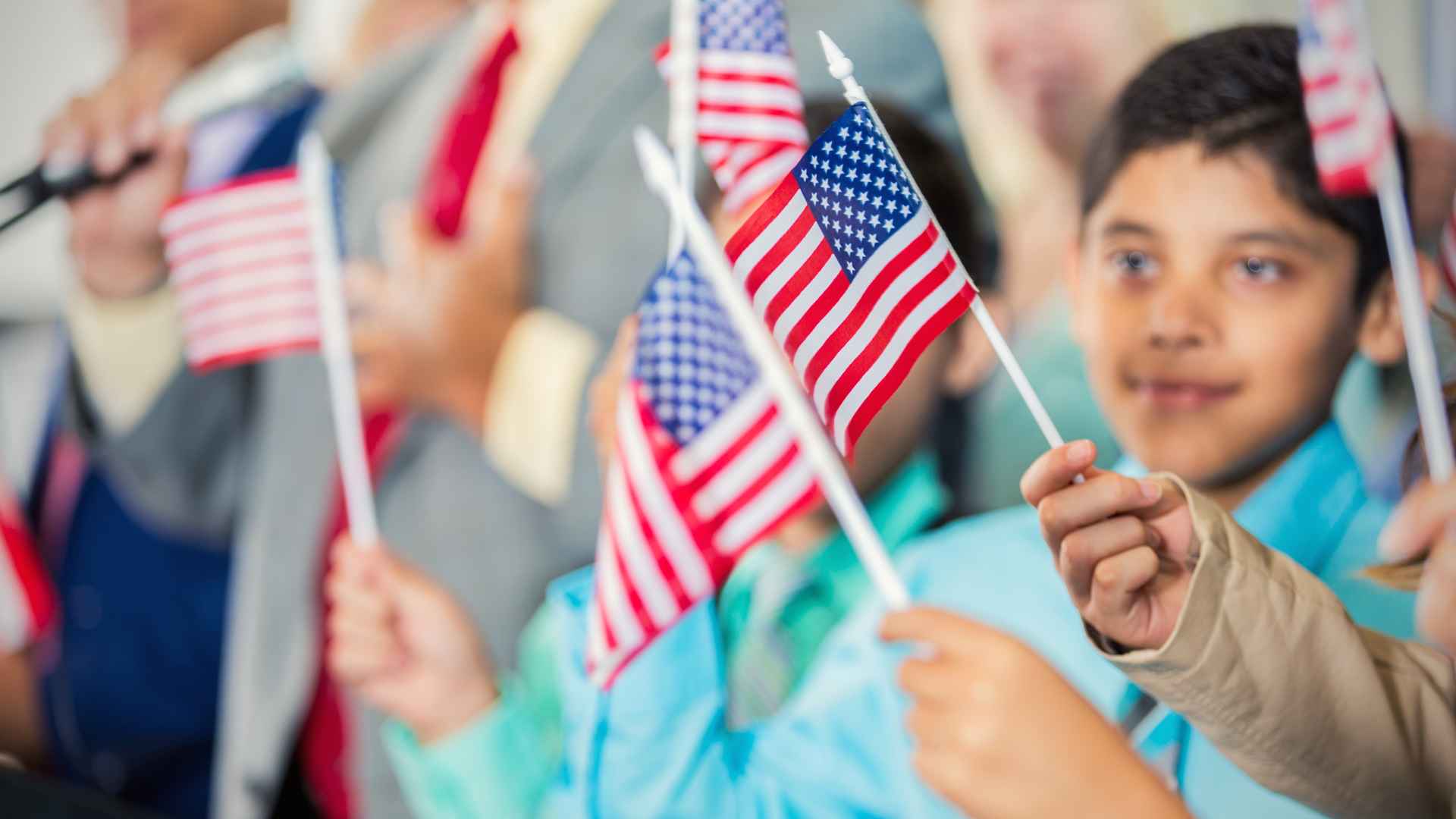
The United States welcomes 6,600 new citizens

The United States Citizenship and Immigration Services (USCIS) will celebrate Independence Day this year by welcoming more than 6,600 new citizens in over 140 naturalization ceremonies between July 1 and 8.

“Throughout our nation’s history, the promise of life and liberty, and the freedom to pursue happiness, has drawn millions of people from around the world to call America home. At USCIS, we believe in the promise of America, which is renewed daily as we work to welcome immigrants as our fellow citizens,” said USCIS Director Ur M. Jaddou. 

The ceremonies demonstrate the commitment to welcoming immigrants and promoting the benefits of citizenship for all who are eligible. In fiscal year 2021, USCIS welcomed 855,000 new U.S. citizens, and so far in 2022, it has welcomed 661,500 new U.S. citizens and made significant progress in reducing the backlog of naturalization applications caused by the pandemic.

USCIS reaffirms its commitment to making the naturalization process accessible to all eligible individuals. Since the beginning of the Biden-Harris administration, this organization has taken a series of steps to support the implementation of Executive Order 14012: Restoring faith in our legal immigration system and strengthening integration and inclusion efforts for new Americans. Likewise, efforts to improve access to the naturalization process continue to be promoted by these entities in accordance with established regulations. 

Finally, these special naturalization ceremonies will be held across the country, including a naturalization ceremony for military service members on July 1st in San Diego at the USS Midway Museum. The USS Midway was a U.S. Navy aircraft carrier, the lead ship of its class, and is named in honor of the Battle of Midway. It was also the largest ship in the world until 1955 and participated in several wars. 

Other sites where ceremonies will be held include Vienna Town Green, Mount Vernon (the birthplace of George Washington), the New York Public Library, the Betsy Ross House in Philadelphia's Historic District, Monticello (the birthplace of Thomas Jefferson) in Virginia, and national parks such as Saguaro National Park in Arizona and Valley Forge in Pennsylvania. Additionally, Director of National Intelligence Avril Haines and Treasury Secretary Janet Yellen are among those participating in these events. 

News report based on information from: USCIS 

Would you like to obtain American citizenship? Schedule a consultation at the following link and begin your process today: https://www.asisvisa.com/consulta-legal 

Shootings continue in the United States

In recent weeks, the United States Supreme Court has ruled on issues of vital importance to Americans: gun ownership, abortion, and climate change. 

Regarding gun ownership, the debate is open again due to the latest attack that occurred on Monday of this week at a parade for the United States Independence Day in Highland Park, Illinois, which has left 7 people dead and another 25 wounded by firearms, with average ages between 8 and 85 years.

The suspect, identified as Robert Crimo, was arrested after a chase outside Chicago. The man, armed with a powerful rifle, fired from a rooftop into the crowd gathered for the traditional Fourth of July parade in Highland Park, a town of 30,000.

This latest shooting occurred amid a wave of gun violence plaguing the United States, where approximately 40,000 people die from firearms annually. The incident cast a pall over the nation's most patriotic holiday, a time of parades commemorating independence, family gatherings, sporting events, and fireworks displays. Many of those waiting for the parade initially mistook the gunshot for fireworks until they saw people running in terror, screaming, and seeking refuge.

President Joe Biden said that both he and his wife were “shocked by the senseless gun violence that once again brought pain to an American community on this Independence Day. I will not stop fighting the epidemic of gun violence,” the president said. Last week, Biden signed the first major gun safety and control legislation in decades, just days after the Supreme Court recognized Americans’ fundamental right to bear arms in public.

This is a divisive issue in the United States, but one that must be addressed promptly to prevent further incidents. According to the Gun Violence Archive website, 309 shootings have been recorded in the United States so far in 2022.

The rapid bursts of a high-powered rifle brought the chilling reality that no one can be completely sure of being safe. Highland Park now joins Uvalde, Columbine, Newtown, and Parkland, among other cities and towns that have experienced shootings so far this year. 

News report based on information from: El Espectador and CNN. 

We know this news is unfortunate, however, it's not all bad news. You still have time to migrate and obtain legal immigration status in the United States. Want to get started? Schedule a consultation at the following link. https://www.asisvisa.com/consulta-legal 

The Citizenship and Integration Scholarship Program now has more funding

The Department of Homeland Security (DHS) increased funding for organizations that help immigrants obtain citizenship.

These grant opportunities are open to organizations that prepare immigrants for naturalization and promote civic integration through increased English proficiency, U.S. history, and civic education. In addition to traditional programs that fund citizenship and English language classes, the 2022 grant opportunities have been expanded to include creative and innovative approaches.

This represents an increase of $10 million dollars; with this increase, $20 million dollars will be allocated this year to the Citizenship and Integration Scholarship Program.

Secretary Alejandro N. Mayorkas stated that: “Through our Citizenship and Integration Scholarship Program, we are helping to provide integration services to non-citizens on their path to becoming U.S. citizens.”.

The program supports various organizations with projects that help immigrants, and the resources are divided into four opportunities:
*Citizenship instruction and naturalization application services: This opportunity will fund public or non-profit organizations that provide citizenship instruction and naturalization application services to immigrants.

*Community and Regional Integration Network Scholarship: will provide extended integration services with a focus on individualized programming for certain immigrants who have entered the United States under different programs.

*Regional Center Program: is designed to fund regional or state citizen support networks that develop capacity among their affiliates or members to provide direct preparedness services.

*Citizenship Education Innovations Program: USCIS will award this type of grant to organizations that promote creative approaches to preparing immigrants for naturalization and encourage the civic, linguistic, and cultural integration of immigrants into their communities.

Please note that all applications must be submitted by August 5. Finally, the USCIS Citizenship and Integration Grant Program, in operation since 2009, has awarded 1,412 million pesos through 513 grants to organizations serving immigrants, providing citizenship preparation services to more than 300,000 immigrants in 39 states and the District of Columbia.

News report based on information from: USCIS

Do you want to migrate or legalize your status in the United States? Schedule a consultation at the following link. https://www.asisvisa.com/consulta-legal

Shortage of baby formula in the United States

The United States government is seeking to counter an unexpected crisis caused by a shortage of infant formula, which has worsened in recent weeks.

Uncertainty surrounding the shortage of infant formula is affecting millions of American families. The shortage had been ongoing for months in the United States, but it worsened after Abbott Laboratories, the country's largest supplier of powdered milk, temporarily suspended production due to possible bacterial contamination following the deaths of two infants.

Meanwhile, as photos of empty supermarket shelves circulate on social media and frightened parents grapple with the ongoing shortage of baby formula in the country, some politicians are criticizing the Biden Administration, claiming it is prioritizing immigrant children detained at the border, where formula is readily available, over American families.

However, what critics fail to recognize is that the 1997 Flores Agreement requires border agents to provide food and water, among other things, to detained children, which may include infant formula. Failure to do so would constitute a violation of the law by the Biden administration.

Also, House Speaker Nancy Pelosi said on May 18 that Abbott Nutrition, the company at the center of the current infant formula shortage, could face criminal charges. 

Aside from the measures being considered in the legislature, President Joe Biden has also sought to reach agreements that would allow more foreign imports of infant formula.

In addition, the Food and Drug Administration (FDA) and Abbott reached an agreement that would allow the Sturgis plant to reopen. However, the company has said that even when the plant reopens, it could take eight to ten weeks for infant formula to be restocked in supermarkets.

All solutions have surfaced, President Biden invokes the Defense Production Act to address the shortage of baby formula. The president resorted to a wartime law to ensure that powdered milk manufacturers have sufficient inputs to produce the product.

The announcement means the federal government will prioritize key ingredients for infant formula production and require suppliers to provide manufacturers with the necessary resources. Biden has also ordered the Department of Defense to use military aircraft to assist in importing formula from abroad.

This news report was compiled using information from Telemundo and The Epoch Times. 

“Say no to the coyote” CBP advertising campaign that seeks to warn migrants of the dangers

U.S. Customs and Border Protection (CBP) launched a digital advertising campaign Wednesday to discourage migrants from the Northern Triangle (Guatemala, Honduras, and El Salvador) from undertaking the dangerous journey to the U.S. border.

The ads aim to convey a clear message: smugglers are lying; illegally entering the United States is a crime. They also emphasize that smugglers, known as "coyotes," exploit and profit from vulnerable migrants.

“Smugglers use lies to lure vulnerable people into embarking on a dangerous journey that often ends with their deportation or death,” said CBP Commissioner Chris Magnus. “This public awareness campaign is an important component of the U.S. government’s efforts to prevent tragedies and reduce irregular migration.”.

The message warns that those who attempt to cross the U.S. border without authorization will be immediately expelled from the country or subjected to immigration deportation proceedings. Furthermore, they will receive information about the thousands of migrants who end up imprisoned, kidnapped, extorted, or even left to die by unscrupulous transnational criminal organizations. 

In fiscal year 2021, the northern Central American countries accounted for 44% of migrant encounters along the southwest border.

Finally, this campaign has emerged from the joint work of the Department of Homeland Security (DHS) working closely with the State Department to track trends, share research, and coordinate messaging to counter the tactics used by smugglers to victimize vulnerable migrants.

These messages are an effort to counter the many lies spread by human traffickers and warn migrants about the dangers of being scammed and dying at the hands of these criminal organizations.

News report based on information from: U.S. Customs and Border Protection (CBP)

Immigrants in the USA will be key to addressing the labor shortage in 2030

It is estimated that there are two million fewer immigrants in the United States than there would have been if the rate of arrival had remained the same as in previous years; a situation that affects the scarcity of certain products and impacts certain sectors. 

The labor shortage in the United States reached a record 11.5 million job openings in March and is projected to reach 80 million by 2030, according to a report released by the American Immigration Council. The study also estimates that these job openings will be due to retirements, career changes, and people leaving the workforce.

Currently, the sectors most affected by the labor shortage are agriculture, construction, restaurants, and healthcare, among others. This has led them to take measures such as changes in food production and harvesting, increased restaurant prices, higher housing prices, and delays in delivery.

Additionally, the country is grappling with its highest inflation levels since the 1980s, and last year saw the highest job vacancy rate in the country in the past three years. The labor market is one of the factors contributing to the United States' highest inflation; other contributing factors include supply chain disruptions caused by the coronavirus pandemic and rising fuel and commodity prices since Russia's invasion of Ukraine.

Finally, the occupations with the greatest growth between 2019 and 2021 were those with the highest proportions of immigrant personnel.

It is important to highlight the significance of immigrants in the many sectors of a country where they make their professional contributions, such as healthcare, technology, mathematics, cleaning and building maintenance, and so on. Immigrants are part of the driving force that moves and transforms a country. 

This news report was compiled using information from: Telemundo, El Periódico USA, and Nuevo Herald.

United States reveals the results of the 2023 Visa Lottery

On Saturday, the participants selected for the second stage of the 2023 visa lottery were announced. This lottery awards 55,000 green cards to immigrants who want to reside legally in the United States. 

The selection of lottery winners is carried out “by a random system based on the visa allocations available in each region and country, from all registered applications,” the State Department (DOS) said.

To check the status of your application, you must do so through the Diversity Visa (DV) lottery website, which will be updated to inform all participants whether their online registration was selected or not. To check the status, you need to enter the confirmation number you received when you completed your registration form; without it, you will not be able to check. 

Furthermore, the DOS states that it “will not send notification letters or notify those selected via email.” And that U.S. embassies and consulates “will not provide a list of those selected.”. 

Following this initial screening, participants who remain in the competition for the visa will be asked to provide additional information beyond what was submitted in their application, such as documents to verify their identity and resume. They will also be required to attend an appointment at a U.S. consulate.        

The State Department distributes visas among six geographic regions, and no country can receive more than 71 TP3T visas of the available DV visas in any given year. This year, eligible countries include: Antigua and Barbuda, Argentina, Barbados, Bolivia, Chile, Costa Rica, Dominica, Ecuador, Panama, Paraguay, Peru, Saint Vincent and the Grenadines, Suriname, Trinidad and Tobago, and Uruguay. Other countries that had the opportunity to participate included: Egypt, Algeria, Uzbekistan, Iran, Ukraine, Nepal, Afghanistan, Congo, and others. 

On the other hand, there are the countries with more than 50,000 citizens who emigrated to the U.S. in the last five years and cannot apply; some of them are: Bangladesh, Brazil, China, Hong Kong, Colombia, El Salvador, Haiti, Honduras, Mexico, Pakistan, South Korea, Venezuela, and Vietnam.

Finally, the State Department announced the randomly selected individuals, who will have until September 30th of this year to find out if they were selected or not.

News report based on information from: Univision and Telemundo.

USCIS provides access to case processing times

The public will have access to immediate and clear answers regarding case processing times.

U.S. Citizenship and Immigration Services (USCIS) announced changes Thursday to simplify and improve how the agency communicates case processing time data to the public. As part of an agency-wide commitment to improve transparency, efficiency, and customer service, these changes will also make it easier for people to get an immediate answer about when they can inquire about their case.

USCIS Director Ur M. Jaddou announced that "USCIS is committed to listening to our applicants and stakeholders, and to continually improving our services," adding, "This is an important step, and certainly not the last, in the pursuit of improving the clarity and transparency of the data that USCIS provides to the public.".

The processing times that the agency makes publicly available provide the information needed to understand how long it may take USCIS to process a particular form. These estimated times are based on statistics from the previous six months showing how long it took USCIS to approve or deny a specific percentage of cases for a given form.

As a result of the COVID-19 pandemic and due to resource limitations inherited from the previous administration, USCIS accumulated a significant backlog of cases and experienced increased processing times. In February, there were reports of 9.5 million pending applications. 

With the additional changes, users can now immediately find processing time information for their specific case type, instead of seeing an aggregate of all cases. These changes include:

- Drop-down menu for form categories. For example, if you want to check the current wait time for Form N-400 Application for Citizenship at the New York Service Center, you can limit the results by specifying the form category.

-The waiting time is now specified as a single number (e.g., 7.5 months) instead of a range (7.5 to 11 months).

-Review, simplify and add additional content to the processing times web pages to increase transparency, including a new FAQ page and an improved Additional Information page.

Finally, this initiative by the agency aims to improve how processing times are displayed, managing them in a meaningful, concrete, and useful way for both parties. However, it's important to emphasize that each case is unique, and some cases take longer to process than others, depending on their specific circumstances. 

This news report was compiled using information from: USCIS and Telemundo 47

Immigrants with expired permits will be able to continue working

Most immigrants whose employment authorization has expired or will expire in the coming months will be able to continue working while the government processes their renewals. 

The new policy from U.S. Citizenship and Immigration Services (USCIS) was adopted in response to the massive backlog the agency is facing, which in April exceeded 9 million benefit applications. Some of the beneficiaries would be Temporary Protected Status (TPS) holders and asylum seekers, among others. 

«The Temporary Final Rule (TFR) increases the automatic extension period for Employment Authorization Documents (EADs), available to certain EAD renewal applicants, to up to 540 days,» the agency said in a statement. The TFR, which applies only to EAD categories currently eligible for an automatic extension of up to 180 days, will temporarily provide up to an additional 360 days of automatic extension (for a total of up to 540 days) to eligible applicants with a pending Form I-765 renewal application filed on time during the 18-month period following the publication of the TFR while USCIS works with backlogs that increased during the COVID-19 pandemic.

The increase will take effect immediately on May 4, 2022, and will help prevent employment gaps for non-citizens with pending EAD renewal applications. This will stabilize business continuity for U.S. employers, according to USCIS. 

It is estimated that up to 420,000 immigrants who renew their work permits will be protected against losing their ability to work for the duration of the policy.

The government said the policy change allows eligible immigrants to work with expired documents for up to 540 days, instead of 180. That means even the tens of thousands of people who have passed their 180-day window have up to another year of work authorization.

However, it makes clear that some immigrants eligible for work permits, including DACA recipients and some spouses of H-1B visa holders, will not benefit from the new policy because they were never eligible for the 180-day extension of their expired authorizations.

Finally, it provides temporary reassurance for workers and employers, as they can continue their work while renewing and awaiting a response to their application. 

This news report was compiled using information from USCIS and Univision.