Get a Green Card without leaving the United States

If you dream of living and working in the United States, Adjustment of Status may be your path to achieving it. In this guide, we'll tell you the details and requirements to fulfill your American dreams.

What is Status Adjustment?
Adjustment of Status is a process that allows certain individuals already in the USA to apply for lawful permanent resident status without leaving the country. It is also known as applying for a Green Card. Below are the steps you must follow:

Who is eligible?
Not everyone is eligible to apply for Adjustment of Status. The main eligible groups are:

  • Holders of work visas.
  • Student visa holders.
  • People with Temporary Protected Status (TPS).
  • Asylum seekers and refugees.
  • Certain family members of U.S. citizens or permanent residents.

Here's what I'll tell you.

  • Verify that you are eligible for an Adjustment of Status process.
  • Submit an application.
  • Check visa availability.
  • Gather and present the necessary evidence.
  • Please attend your appointment at the Application Support Center.
  • Track your progress.
  • Wait for the response regarding your case.

Basic requirements
To be successful in your Adjustment of Status application, make sure you meet these requirements:

  • Maintain a valid and current immigration status in the United States.
  • Do not be in an illegal situation.
  • You have not committed serious crimes or serious immigration violations.
  • Have a sponsor (in certain cases) or an approved petition.

Process and Times
Patience is key in Adjusting Status. The process can take months or even years. But don't worry, during the process, you can work and live legally in the United States! 🕰️

Benefits of Status Adjustment

  • Living and working in the United States legally.
  • Access to social services and education.
  • Possibility of applying for citizenship after meeting the requirements.
  • Travel outside the United States without losing status (with travel authorization).

Final Recommendations
Before embarking on the process, consult with an immigration attorney to ensure you meet all the requirements and submit a strong application. Don't let obstacles stop you—pursue your American dreams!

We hope this guide has provided you with helpful information about Adjustment of Status in the United States. If you know someone who might benefit from this content, please share it!

Family Reunification, the reality to be able to apply

Family reunification is only for citizens of Colombia, El Salvador, Guatemala, or Honduras who have approved family petitions. A family petition refers to when a parent petitions for their children, a married couple petitions for their spouse, or a child petitions for their parents.

It is important to note that you cannot apply for this program as you would normally apply for any type of immigration application; instead, the Federal Government will select the families that have approved family petitions and are on the National Visa Center's waiting list.

Citizens applying to the program must also be outside the United States, meet medical and screening requirements, and not have received an immigrant visa. What if I'm eligible?

If they are deemed eligible, they will be considered for parole to remain in the United States for up to three years while their process to become legal permanent residents continues.

Did this help clarify your doubts about family reunification? Let us know in the comments!

How to extend your stay in the United States if you entered as a tourist

If you're in the United States on a B1/B2 nonimmigrant visa (you came as a tourist or for business) and want to stay longer, you can extend your visa. Here's how the process works; this information can also be helpful if you're planning a future visit to the USA.

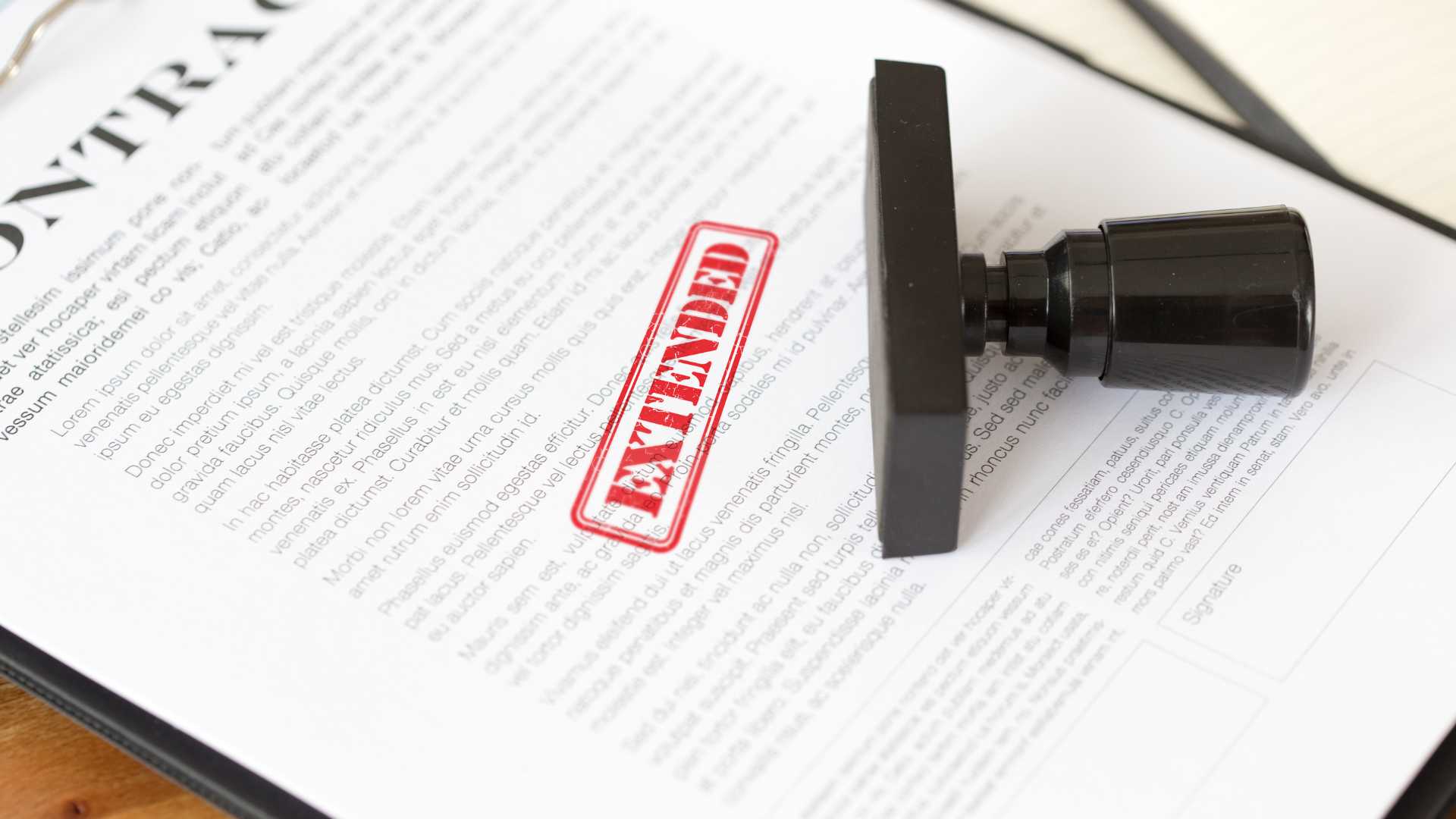
If you entered the USA legally, you did so with a B1 (business) or B2 (tourist) visa. Both can be extended. To do so, you must complete Form I-539, but first you must meet the following requirements: requirements:

  1. You entered the U.S. on a nonimmigrant visa.
  2. You have no criminal record and have not committed a crime that violates your non-migrant status.
  3. Your stay has not expired. (This point is crucial)*
    To know that your stay has not expired, do not look at the visa stamp: the date that matters is the one indicated on your I-94 Card.

I-94 What is it?
This is what the immigration officer gives you at the port of entry (the airport, for example). This document indicates the date you arrived and also the date you must leave the USA.

And when do I request my extension?
You must request an extension before the date indicated on your I-94 for leaving the USA; otherwise, your legal stay will have expired. It is best to do so 45 days in advance. If you do not, you will have to prove that:

Don't let it happen to you
If you allow your permitted stay in the USA to expire, you must prove that:

  1. The delay in submitting the request is reasonable and was due to unavoidable circumstances.
  2. You never violated the conditions of your visa (for example, if you are a tourist, you did not work).
  3. You remain a bona fide non-immigrant.
  4. You are not in deportation proceedings.

If you require guidance for your visa extension process, contact us via WhatsApp. +1 (786) 619 5937

New US visa fees 

President Joe Biden's administration proposed a series of fee increases for some visas and immigration procedures in order to fully recover its operating costs and return to full operation. 

The reality behind the increased visa fees is that no increases had been implemented since 2016, and furthermore, there was a drastic reduction in 2020 due to Covid-19. Even with these reasons for the fee increase, many people fear it could affect their access to visas.

However, the proposal seeks to increase, among other things, the prices of employment visas, but will maintain the prices of humanitarian visas and non-immigrant visas. 

«"The new fees would allow USCIS to more fully recover its operating costs, restore and maintain timely case processing, and prevent future backlogs," the agency said in a statement Tuesday.

Another major reason is that since 2020, due to closures caused by the COVID-19 pandemic, there has been "a drastic reduction in new applications, resulting in a temporary drop in revenue," which is why the agency has reduced its ability to adjudicate cases on time, according to USCIS.

The agency did not establish changes to non-immigrant visas, such as B1-B2 tourist visas.

Some visas and procedures that would increase in price: 

Some of the most notable changes in the increase in visa and immigration processing prices are those related to skilled workers with H-2A, L or O visas.

H-1B visas, for highly skilled workers, would increase from US$ 460 to US$ 780 once the proposal takes effect.

The H-2A visa, for foreign workers who come to do agricultural work, would increase from US$1,460 to US$1,090, a 1,371% increase.

L-type visas, for workers with specialized knowledge, would increase from US$$ 460 to US$$ 1,385, an increase from 201%

H-3, E (investor), O (persons with extraordinary achievement or ability), P (for renowned individuals, whether athletes or artists), Q (cultural exchange), R (religious workers), or TN (NAFTA Temporary Professionals) visas would increase from US$$ 460 to US$$ 1,015, an increase in the fee of US$1,21%

Investor visa applications could increase from US$ 3,675 to US$ 11,160

The electronic registration fee for the H-1B visa would increase from US$ 10 to 215, a rise from 2050%.

The naturalization process, through form N-400, would go from US$ 640 to US$ 760, an increase of 19%.

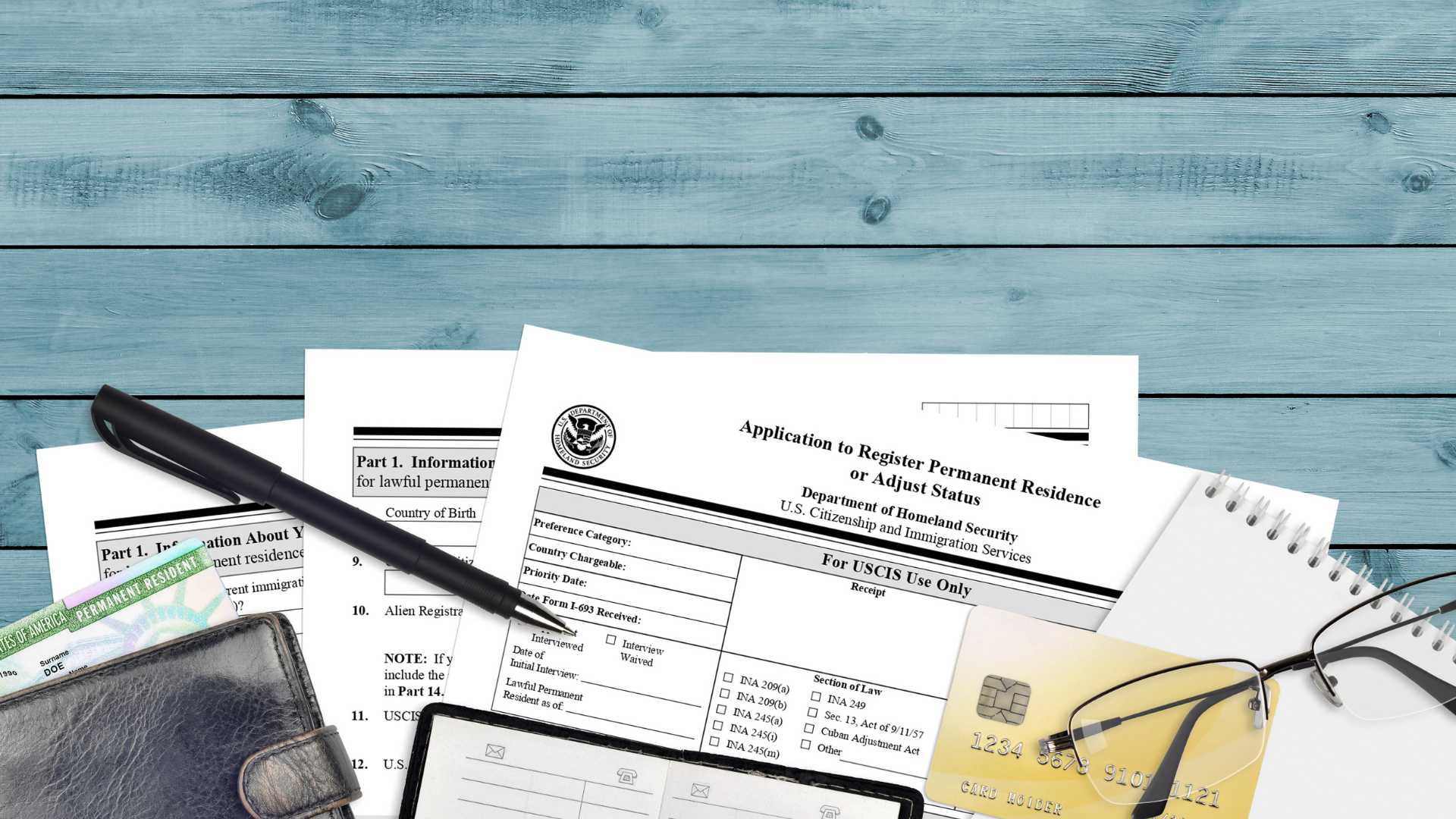
The application for permanent residence registration, made using form I-485, would change from US$ 1.140 to US$ 1.540. This form allows verification of whether the person requesting the service is eligible to obtain legal residency or a green card.

USCIS said it would preserve the fee waiver for vulnerable and low-income populations, as is currently the case, in addition to adding new waivers for some humanitarian programs.

USCIS expects that with this proposal it can collect an average of US$5.2 billion per year in fiscal years 2022 and 2023. With the addition of premium processing for some visas, total revenue is projected at US$6.4 billion per year. 

The rates will not change immediately, but in about 60 days, until the final rule comes into effect once public comments have been made, which began on January 4 of this year and end on March 6, 2023. 

News report compiled using information from: BBC News, USCIS News, Federal Register

Appointments at the Embassy, don't let them pull this stunt on you

During the last few months, news has been circulating regarding the advancement of appointments at the American embassy in Colombia, stating that scheduling times have been reduced from 2 years to 2 months.

How true is this?

The U.S. government constantly updates average wait times for scheduling appointments. Furthermore, the U.S. Embassy in Colombia is working tirelessly to reduce wait times for tourist visa interviews; in fact, they have even deployed an additional team to support them.

This mission has already begun to yield results. Currently, applications from people who do not require a consular interview for the granting of their tourist visa have an estimated wait time of 23 calendar days.

Who does NOT require a consular interview?
Visa renewals that have expired in the previous 48 months, children under 13 years old and adults over 80 years old. However, not everyone in this group qualifies; the appointment scheduling system decides whether or not you should proceed with the process, just like most people in the 2-year-old group.

Why some yes and others no?

Many people have already been able to reschedule their appointment, however, others have not. This may be because, despite being on the correct team, you have obtained a new passport, your fingerprints have not been taken in the past, or you have been denied another visa recently.

Waiting times according to visa type

In the case of the most common visas, which are the B1 (for visitors arriving in the United States for business) and the B2 (for tourists), the waiting time for an interview appointment at the embassy of that country in Colombia is currently 799 days.

However, if the applicant is requesting a different type of visa, the processing times are much shorter. For students or visitors participating in an exchange program (F, M, and J visas) and for petition-based temporary workers (H, L, O, P, and Q visas), the waiting time for an appointment is only 13 calendar days.

If you are eligible to be exempt from an interview (check the website of the United States embassy), the waiting time for any type of visa is on average 23 calendar days.

It is important to remember that the estimated wait time to receive an interview appointment at a U.S. embassy or consulate can change weekly and is based on the actual incoming workload and staffing levels.

The U.S. government clarifies that the above are only estimates and do not guarantee appointment availability. Interview waiver application wait times refer to the average number of days between acceptance of an interview waiver application and its adjudication by a consular officer; they do not include the time required for passport or other document processing.

Consular sections abroad can expedite your interview date if there is an urgent and unforeseen situation, such as a funeral, a medical emergency, or the start date of classes.

News written from: Portfolio, USCIS

Status Change for Dummies

When you enter the United States and your original reason for coming changes, in those cases you can request to change your nonimmigrant status to a different status before your authorized stay in the United States expires.

A common example of Change of Status cases is when a person enters as a tourist and wishes to stay to study in the United States.

What requirements do you need to know to apply for the Change of Status process?

  • Having entered the USA legally.
  • Have a valid stay throughout the entire process.
  • Financial capacity to cover housing and study costs.
  • Demonstrate a strong connection to your country of origin.

How long can a Change of Status process take?

The average processing time is 8 to 14 months. During which you can remain in American territory.

When can you request to change your status?

Employment-based categories:
If you want to change your status to one of the following employment-based nonimmigrant categories, your prospective employer must submit the corresponding form, Nonimmigrant Worker Application, before your Form I-94 expires.

  • E-1 and E-2 (Traders and investors and employees of traders and investors) E-3 (Skilled professionals from Australia)
  • H-1B, H-2A, H-2B, or H-3 (Skilled or unskilled apprentices and temporary workers)
  • L-1A or L-1B (Intracompany Transferees)
  • O-1 or O-2 (Foreigners with extraordinary abilities)
  • P-1, P-2, or P-3 (Athletes and artists)
  • Q-1 (International visitors for cultural exchanges)
  • R-1 (Religious representatives)
  • TN-1 or TN-2 (Canadians and Mexicans under the North American Free Trade Agreement)
    Each of the categories mentioned above has its own specific limitations and requirements, and even limitations on the length of your stay in this country.

Other categories:
If you wish to change your status to one of the following nonimmigrant categories, you must submit Form I-539:

  • A (Diplomats and other government officials, immediate family members, and employees)
  • B-1 and B-2 (Visitors on business or leisure trips)
  • E-1 and E-2 (Dependents of traders and investors who have made treaties and
    your employees)
  • E-3 (Dependents of trained professionals from Australia)
  • F (Academic students and their dependents)
  • G (Foreign government officials, certain immediate family members and their employees)
  • H-4 (Dependents of skilled or unskilled temporary workers and apprentices)
  • L-2 (Intracompany transferees dependents)
  • M (Vocational students and their dependents)
  • N (Parents and children of certain persons who have been granted a special status of
    immigrant)
  • NATO (NATO representatives, officials, employees and immediate family members)
  • O-3 (Dependents of foreigners with extraordinary abilities and their assistants)
  • P-4 (Dependents of athletes and artists)
  • R-2 (Dependents of religious representatives)

Tips you should know

  • Even if it seems simple, it's best to get advice.
  • If you switch to F1, make sure you always use the same SEVIS number on your I-20 form.
  • If your application is denied, you will accumulate irregular presence from the expiration of your
  • I-94, I-20 or DS-2019 as applicable.

How can you do it?

News written from: USCIS

Permanent Residence for Low-Income Migrants

In the year 2021 United States Citizenship and Immigration Services (USCIS) received an estimated 648,000 green card applications, and during the first half of 2022 the agency registered 280,000 new applications, a figure that is expected to improve with this new regulation that will make it easier for low-income immigrants to become permanent residents of the United States. 

The vast majority of immigrants who come to the USA are in search of a better life and aim to eventually achieve permanent residency, with the purpose of securing their legal future in the United States. 

However, The policies established in the Trump administration would have made the procedures and requirements for obtaining a 'green card' more difficult.’', expanding the number and types of government benefits used by some immigrants, which could make them ineligible for residency. Such as: food stamps, housing subsidies, or Medicaid health insurance.

What will the new measure be like?

Through this new regulation that will come into effect on December 23, 2022 The aim is to examine the situation of each particular case, analyzing the standards that establish when an immigrant is considered an economic burden on the country or a public charge.

An immigrant who falls into the “public charge” category will not be eligible for a Green Card or permanent residency. However, according to new regulations from U.S. Citizenship and Immigration Services (USCIS), The category is restricted to cases where it is “likely” that the migrant “will at some point depend primarily on the Government for their subsistence”.

Points to consider 

This measure Joe Biden's administration It seeks to control and curb the adverse effect that previous regulations had on immigrants. Many of them refused to accept benefits such as food stamps, housing subsidies, and Medicaid health insurance, for which they might have qualified, for fear of not having access to a Green Card that would secure their future in the country.

News written from: Telemundo, Infobae and Semana.

Free Webinar | How to Build a Winning Profile to Immigrate to the United States with a Job

🔴 Only for people who want to migrate to the USA with a job.

Free Webinar

How to build a winning profile to migrate to the United States with a job?

Discover the key steps you need to take to apply for a job, the requirements you should know, and where you can start.

When?

Tuesday, October 4

6:00 PM Texas Time

3 Things You Will Learn in This Webinar

Learning 1

How to build your American profile

Learning 2

Requirements to apply for a work permit in the USA

Learning 3

How can you start your process?

Besides!,


🔴 Live Q&A Session

What do people who have participated in our webinars and consultations say?

Rated 5 out of 5

AsisVisa is not a law firm and does not substitute the legal advice of an attorney. We are not affiliated with or endorsed by the United States Citizenship and Immigration Services (USCIS) or any other government agency. The use of our website and its services is subject to our Privacy Policy and Terms of Use. Attorney services are provided by independent attorneys and are subject to a separate Legal Representation Agreement.

US Visa: What You Need to Know

Delays in US visa applications, a phenomenon that occurs worldwide.

Waiting times for visa applicants are increasing, whether they are applying for the first time or renewing their visas. According to research conducted by the British media outlet Bloomberg, the five consulates that take the longest to issue visas are:

*Georgetown, capital of Guyana, with an average of 900 days
*Bogotá, the capital of Colombia, has an average waiting time of 874 days.
*Abuja, capital of Nigeria, with an 850-day wait.
*Kingston, capital of Jamaica, with 813 days.
*Kinshasa, capital of the Democratic Republic of Congo, with a 796-day wait.

The overall average wait times for citizens of these countries are over two years. According to the same research, these delays are primarily due to the coronavirus pandemic, which led to staff shortages and a reduction in consular services, resulting in long wait times.

On the other hand, in the specific case of Colombia, those who wish to travel to the United States for the first time for tourism or business trips will have to be patient, since the waiting days to obtain the American visa have increased to such an extent that there are already cases whose appointment has been scheduled for January 2025.

However, there are exceptions for visa cases in priority situations such as the death of a family member or urgent medical services. Furthermore, visas are also being prioritized for exchange students and workers.
The embassy also reported that there are visa cases that are exempt from interviews, some of which are:
-“Applicants under 14 years of age and over 79 years of age can apply for a tourist visa without an interview, provided they have not had a previous rejection of the visa application they are submitting (for those under 14 years of age, at least one of their parents must have a valid visa)”
-If it's a renewal, some visas that don't require an interview are: B1/B2 (tourism); F1 and M1 (student); J1 (exchange programs). For both of these, the first requirement is to be a Colombian resident.

Finally, it is important to highlight that if you want to reschedule your appointment, the only way is through the embassy's website; you should check it constantly, and this is free of charge.

Information taken from: Channel 1.

There may be delays in the process, but having a US visa can open many doors. Don't despair and don't be fooled by unscrupulous people; we are a secure company with several important certifications that prove it. If you have any questions

Schedule your initial consultation https://www.asisvisa.com/consulta-legal

New guide to prevent separations of migrant families

Immigration and Customs Enforcement (ICE) announced that as of Thursday (July 14), it updated its policy of procedures and requirements to avoid the separation of families, especially minors and disabled adults, in immigration processes carried out at the borders. 

The new guidelines for ICE agents aim to prevent the widely criticized family separations that separated at least 5,000 migrant children from their parents following a policy established by the previous administration of former President Donald Trump in 2017. The new measure seeks to have officers investigate and trace the relationship between migrants and the minors they bring across the border.

ICE said the review of protocols is part of the government's immigration policy that seeks to establish a system it calls "fairer, more orderly and humane".

ICE Acting Director Tae D. Johnson said in a statement that in the performance of their duties, officers and agents “will preserve to the greatest extent possible the family unity and parental rights of non-citizen parents and legal guardians.”. 

In this regard, through a directive published by the agency, some of the instructions were made known, including: 

*Allows previously deported parents or guardians to return to the United States temporarily for child custody hearings.

*Requires that procedures be in place to identify individuals who are parents or legal guardians of minor or incapacitated children, including asking affirmatively about such status when a non-citizen is encountered.

To accomplish this, ICE will also develop training programs to ensure its staff are informed about protecting the parental or guardianship rights of undocumented parents. 

Finally, Immigration and Customs Enforcement announced that the policy will take effect immediately and that full implementation will be rolled out over the coming months. 

The agency added that, while the old policy “applied to parents and legal guardians of minor children, the new rule also applies to parents and legal guardians of incapacitated adults regardless of the dependent’s citizenship or immigration status.”.

News report based on information from: EFE and Univision. 

Do you want to migrate or legalize your status in the United States?

With AsisVisa you can do it, schedule a consultation at the following link https://www.asisvisa.com/consulta-legal 

Hosted by WordPress Clusters