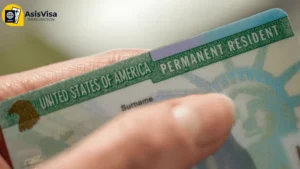
The EB-3 program allows skilled workers, professionals, and unskilled workers (occupations that require less than two years of training or experience) to obtain permanent residency in the U.S. through full-time employment.
The applicant must have valid legal status in the United States.
Have a permanent, full-time job offer from a U.S. employer.
Have an approved Labor Certification (PERM)
Have a current priority date to file the Adjustment of Status.
Benefits of our Service
Designed to increase the chances of success, reduce errors, and accelerate the processing of your immigration application
Increase Your Chances of Success
Our proven process strengthens every detail of your application, giving you the best opportunity for approval.
Error-Free Confidence
Using our intelligent platform, we carefully prepare and review each step to minimize mistakes that can cause costly delays or denials.
Faster Results
We streamline every step—so your petition moves forward quickly, saving you valuable time and avoiding unnecessary delays.
Our Process
Expert guidance with the intelligent use of our platform to simplify every step of your immigration application
Step 1
Eligibility
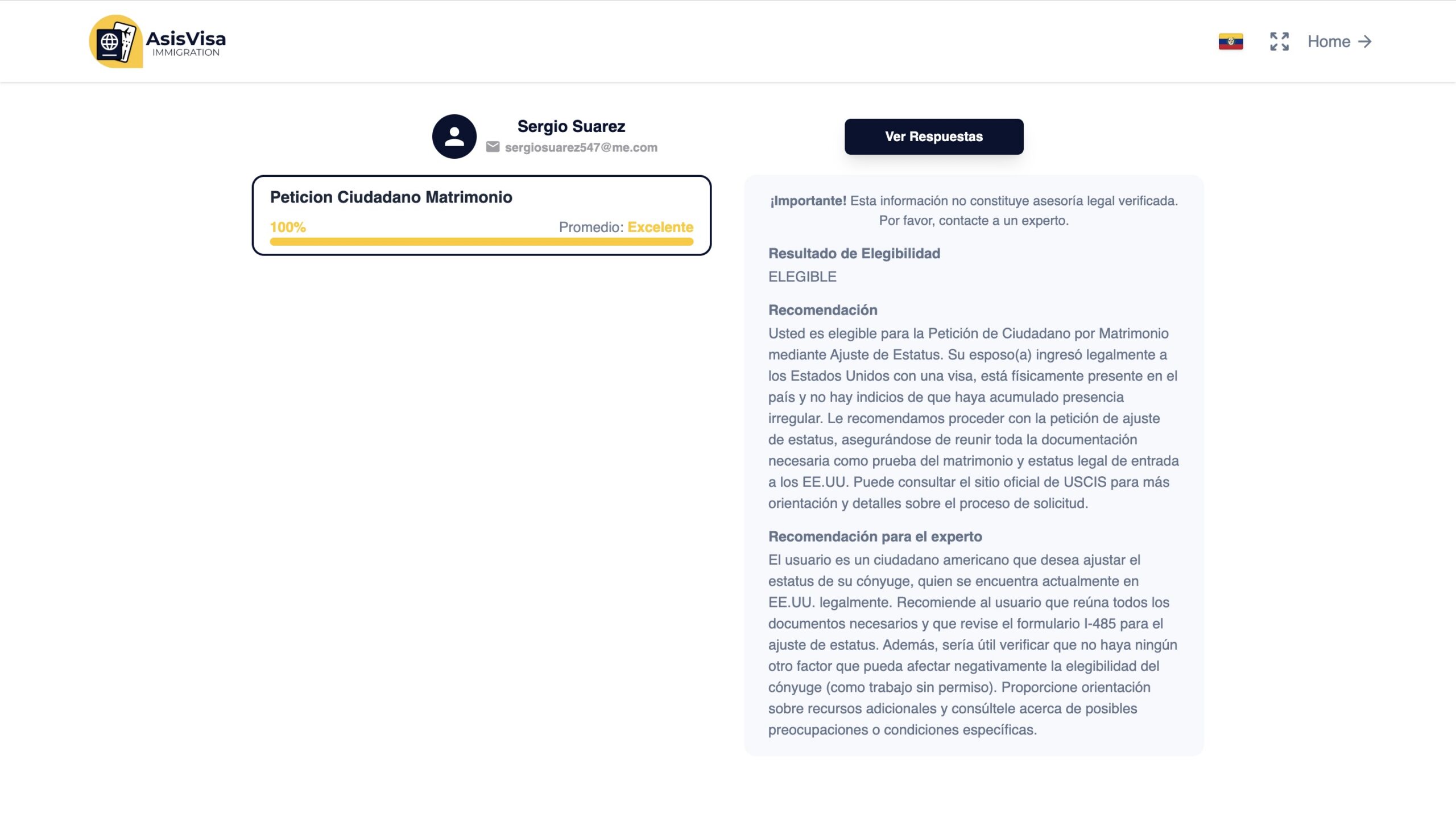
Eligibility: Check if you qualify for the visa you want to apply for with the help of artificial intelligence, quickly, securely, and without intermediaries.
Step 2
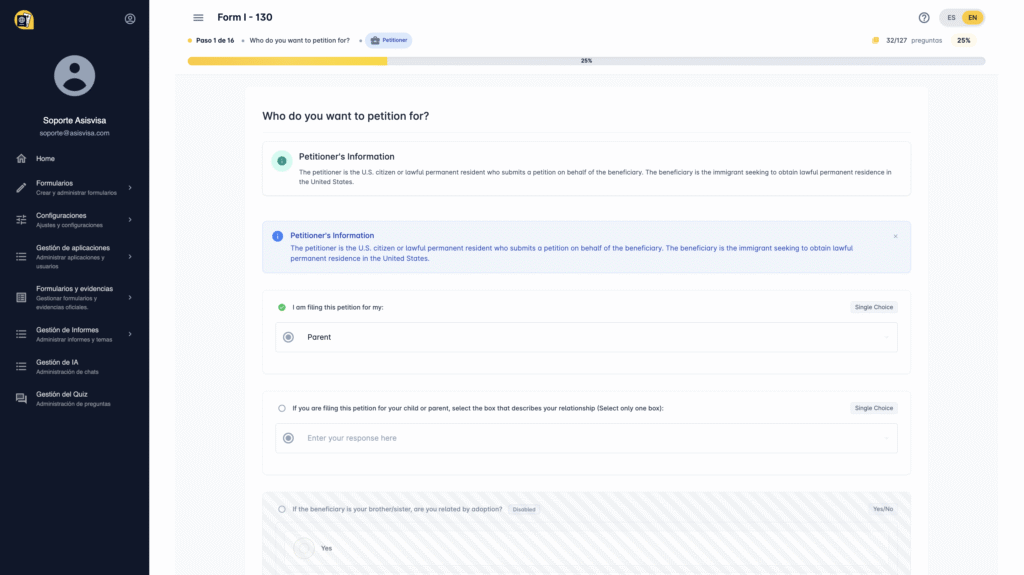
Fill Out Immigration Forms
Fill Out Immigration Forms: We make filling out immigration forms simple, guiding you step by step so you can feel confident every detail is right.
Step 3
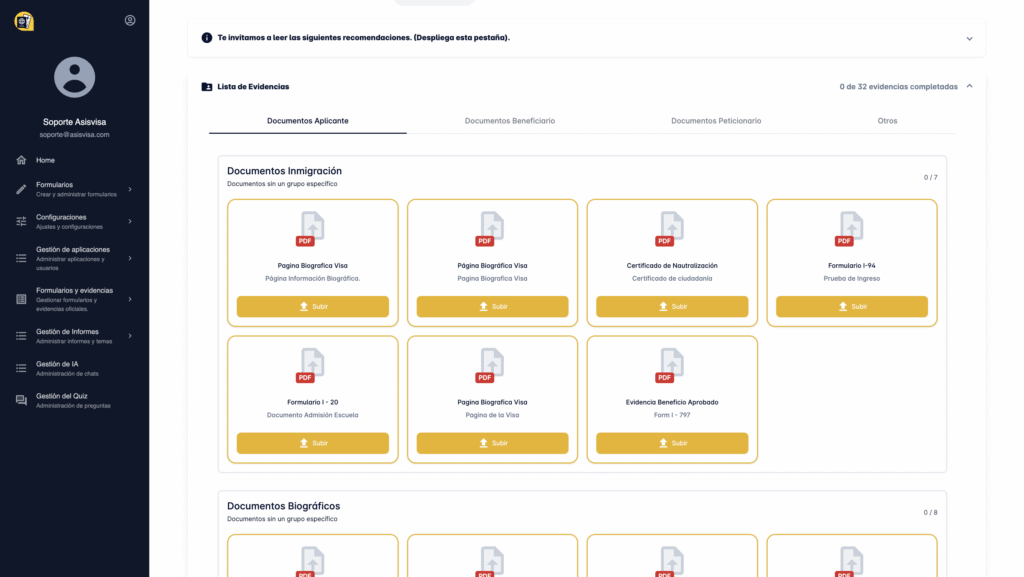
Upload Evidence
Upload Evidence: Easily upload the supporting evidence tailored to your situation directly into our secure platform.
Step 4
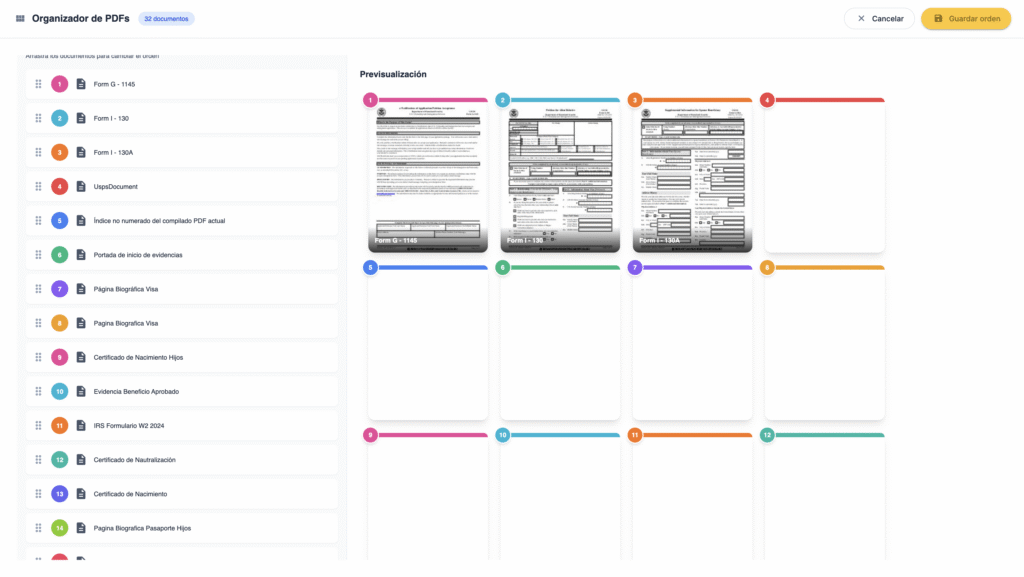
File Compilation
File Compilation: Our platform automatically compiles all the required forms, evidence, and supporting materials into a complete immigration file tailored to your case.
Step 5
Submission
Submission: Once reviewed and finalized, your application is prepared for submission to USCIS, ensuring everything is properly organized, consistent, and ready for review by the officer.
Key requirements for applying for a visa
Discover the main criteria that embassies evaluate before approving your application.
Purpose of the trip
The main reason for the trip is evaluated: tourism, studies, work, residence or asylum.
Financial solvency
The applicant must demonstrate that they have sufficient financial resources to cover their expenses during their stay.
Letter of invitation or sponsorship
In some cases, an invitation letter from a family member, company, or educational institution is required.
Immigration history
Previous travel records and compliance with immigration laws are reviewed.
International health insurance
It is mandatory to have insurance that covers medical emergencies during your stay.
Criminal record
The applicant must present a certificate proving the absence of a criminal record.
Service Breakdown
Clarity at Every Step: What’s Included and What’s Not
What’s Included
Personalized Case Review.
Smart Platform Access.
Document Preparation & Organization.
Translations (Spanish to English Only)
Tailored Evidence Checklists.
File Compilation & Submission.
Ongoing Support.
What’s Not Included
USCIS Filing Fees.
Attorney Representation in Court.
Travel, Medical, or Third-Party Costs.
Expedited or Premium Processing Fees.
Non-Immigration Legal Services.
Fabrication of Case or Evidence.
Guaranteed Approval
USCIS Approval Rates
History of cases processed according to USCIS
No Data
Approved:
0
Denied:
0
0%
No Data
Approved:
0
Denied:
0
0%
No Data
Approved:
0
Denied:
0
0%
No Data
Approved:
0
Denied:
0
0%
USCIS Processing Times
Data based on 80% of cases processed within the same category. The remaining 20% may vary.
Clear answers to our customers' most frequently asked questions
What is the difference between the EB-3 visa and the EB-2 visa?
The main difference lies in the level of education and experience required. The EB-2 visa is for professionals with advanced degrees (master's or doctoral) or exceptional abilities, while the EB-3 visa is for professionals with a bachelor's degree, skilled workers with at least two years of experience, or other workers in non-skilled positions.
Do I have to be a professional to apply for this visa?
Not necessarily. The EB-3 category includes professionals, skilled workers, and other workers. While some positions require a degree, others accept applicants with technical training or verifiable work experience in their trade.
Can I get a work permit while I wait for my visa? How does it work?
Yes. If your case is being filed within the U.S. through adjustment of status, you can apply for employment authorization (Form I-765) after filing Form I-485. This allows you to work legally while your case is pending. If you are processing through a consulate, you will receive employment authorization after entering the U.S. as a permanent resident.
How does the Visa Bulletin work?
The U.S. Department of State's Visa Bulletin shows the availability of immigrant visa numbers by category and country of origin. It is updated monthly to indicate which priority dates are being processed. When your priority date (the filing date of your PERM or I-140) is updated, you can proceed to the next step in your case.
Resources Of Interest
Explore our blog and discover articles on immigration news, practical guides, and exclusive tips to increase your chances of success in your immigration applications.