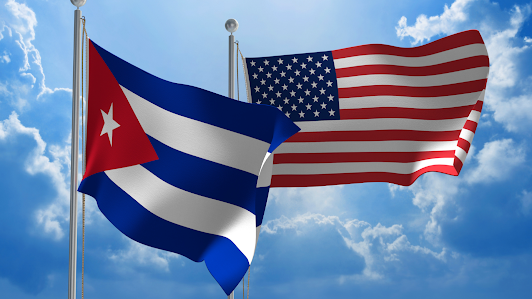
The United States Embassy in Cuba announced that it will begin processing all categories of immigrant visas for immediate family members.
Through its social media channels, it announced that it expects to resume processing visas for the Cuban Family Reunification Program (CFRP) soon.
In a tweet posted on Sunday, the embassy announced a change in visa policy to expedite processes that were negatively impacted during the COVID-19 pandemic. The embassy also noted that the Department of Homeland Security will resume processing cases this summer and will work with the State Department to begin interviews in Cuba in early fall.
“We chose the immediate family categories recognizing the importance of family reunification for U.S. citizens and their immediate family members,” it explained.
“The U.S. is expanding pathways for legal migration. The Cuban Family Reunification Program provides a safe and orderly route to the United States for certain Cuban beneficiaries of approved family-based immigration petitions,” the diplomatic mission stated.
Dozens of Cubans joyfully received the announcement of the reactivation of the CFRP, understanding that it is a program that was halted under the administration of President Donald Trump, during which an average of 200 sanctions were applied in the territory.
During the first stage, US diplomats will process pending cases from the last five years, which could exceed 22,000 files, including interviews and final visa processing.
Finally, it is a new opportunity for relations between Cuba and the United States, which were strained during the Trump administration.
News report compiled using information from: Tampa Hoy, Univision and Periodico Cubano
Discover all the services offered by AsisVisa. With us, you can find out that emigrating is faster, easier, and more convenient than you thought.
The U.S. Supreme Court on Thursday rejected the Biden administration's request to immediately impose a different policy on immigrant deportation criteria than that dictated by his predecessor, Donald Trump.
The ruling (5-4) was the first time Justice Ketanji Brown Jackson participated, who along with Justices Sonia Sotomayor, Elena Kagan, and Amy Coney Barrett reportedly agreed to the Biden Administration's request to suspend a ruling issued by a federal district court in Texas that nullified the president's immigration policy regarding deportation priorities.
Last week, the Biden administration filed an emergency appeal with the Supreme Court to overturn a ruling by a federal court in the District of Texas that, in June, halted the deportation priorities of Immigration and Customs Enforcement (ICE).
The new priorities, presented by the Government, focus on those undocumented immigrants with deportation orders and criminal records who constitute a threat to the public, national and border security of the United States, contrary to that of Donald Trump, who targeted all undocumented immigrants for deportation.
The plaintiffs, the states of Texas and Louisiana, both governed by Republicans, allege that the Department of Homeland Security's (DHS) deportation policy announced in late September 2021 violated the Administrative Procedure Act (APA) by not taking into account the states' opinions.
They also state that the government cannot change the Immigration Law, and that it is obligated to detain and expel foreigners with deportation orders and criminal records.
States that halted the deportation priorities of Joe Biden's administration celebrated the Supreme Court's decision issued on Thursday. Other states also argued that implementing the priorities would lead to an increase in crime and place a burden on law enforcement resources.
Meanwhile, immigrant rights organizations have spoken out, stating: “This is an absolutely absurd ruling. Every presidential administration in history has had immigration enforcement priorities,” said Aaron Reichlin-Melnick of the American Immigration Council (AIC). “When Congress created the DHS, it legally mandated that the Secretary of Homeland Security set those priorities. Now, a 5-4 divided court has allowed a single judge in Texas to overrule Mayorkas.”
The existence of two different rulings issued by the 5th and 6th Circuit Courts of Appeals, decisions that generated a contradiction on the issue, opened the door for the government to go to the Supreme Court to resolve the legal conflict.
Now, everyone is waiting to see what actions the Government will take through the relevant departments and the oral hearing that will be held in December on this issue.
This news report was compiled using information from: Univision, El Nuevo Herald, and Telemundo.
Finally, people with a deportation order or without a defined legal status should, before taking any action, first seek legal advice and see what resources are available for their case.
U.S. Customs and Border Protection (CBP) launched a digital advertising campaign Wednesday to discourage migrants from the Northern Triangle (Guatemala, Honduras, and El Salvador) from undertaking the dangerous journey to the U.S. border.
The ads aim to convey a clear message: smugglers are lying; illegally entering the United States is a crime. They also emphasize that smugglers, known as "coyotes," exploit and profit from vulnerable migrants.
“Smugglers use lies to lure vulnerable people into embarking on a dangerous journey that often ends with their deportation or death,” said CBP Commissioner Chris Magnus. “This public awareness campaign is an important component of the U.S. government’s efforts to prevent tragedies and reduce irregular migration.”.
The message warns that those who attempt to cross the U.S. border without authorization will be immediately expelled from the country or subjected to immigration deportation proceedings. Furthermore, they will receive information about the thousands of migrants who end up imprisoned, kidnapped, extorted, or even left to die by unscrupulous transnational criminal organizations.
In fiscal year 2021, the northern Central American countries accounted for 44% of migrant encounters along the southwest border.
Finally, this campaign has emerged from the joint work of the Department of Homeland Security (DHS) working closely with the State Department to track trends, share research, and coordinate messaging to counter the tactics used by smugglers to victimize vulnerable migrants.
These messages are an effort to counter the many lies spread by human traffickers and warn migrants about the dangers of being scammed and dying at the hands of these criminal organizations.
News report based on information from: U.S. Customs and Border Protection (CBP)
On Saturday, the participants selected for the second stage of the 2023 visa lottery were announced. This lottery awards 55,000 green cards to immigrants who want to reside legally in the United States.
The selection of lottery winners is carried out “by a random system based on the visa allocations available in each region and country, from all registered applications,” the State Department (DOS) said.
To check the status of your application, you must do so through the Diversity Visa (DV) lottery website, which will be updated to inform all participants whether their online registration was selected or not. To check the status, you need to enter the confirmation number you received when you completed your registration form; without it, you will not be able to check.
Furthermore, the DOS states that it “will not send notification letters or notify those selected via email.” And that U.S. embassies and consulates “will not provide a list of those selected.”.
Following this initial screening, participants who remain in the competition for the visa will be asked to provide additional information beyond what was submitted in their application, such as documents to verify their identity and resume. They will also be required to attend an appointment at a U.S. consulate.
The State Department distributes visas among six geographic regions, and no country can receive more than 71 TP3T visas of the available DV visas in any given year. This year, eligible countries include: Antigua and Barbuda, Argentina, Barbados, Bolivia, Chile, Costa Rica, Dominica, Ecuador, Panama, Paraguay, Peru, Saint Vincent and the Grenadines, Suriname, Trinidad and Tobago, and Uruguay. Other countries that had the opportunity to participate included: Egypt, Algeria, Uzbekistan, Iran, Ukraine, Nepal, Afghanistan, Congo, and others.
On the other hand, there are the countries with more than 50,000 citizens who emigrated to the U.S. in the last five years and cannot apply; some of them are: Bangladesh, Brazil, China, Hong Kong, Colombia, El Salvador, Haiti, Honduras, Mexico, Pakistan, South Korea, Venezuela, and Vietnam.
Finally, the State Department announced the randomly selected individuals, who will have until September 30th of this year to find out if they were selected or not.
News report based on information from: Univision and Telemundo.
The United States announced the Union for Ukraine program in April, a key step in fulfilling President Biden's commitment to welcome Ukrainians fleeing the Russian invasion.
The program provides a pathway for displaced Ukrainian citizens and their immediate family members outside the United States to come to the country and remain for a two-year period of temporary parole. Ukrainians participating in Union for Ukraine must have a sponsor in the United States who agrees to provide them with financial support during their stay. They will also be eligible to apply for discretionary employment authorization from U.S. Citizenship and Immigration Services (USCIS).
Some eligibility requirements for program sponsors and beneficiaries include:
The first step in the process is for the sponsor, who resides in the United States, to file Form I-134, Affidavit of Support, with USCIS. The sponsor will be vetted by the U.S. government to ensure they can financially support the person they hope to sponsor.
Among the list of people who can be sponsors are the
U.S. citizens and nationals, lawful permanent residents (including legal temporary residents and conditional permanent residents), and nonimmigrants in legal status, among others. Additionally, these individuals must be willing and able to receive, support, and provide for the beneficiary listed on Form I-134 for the duration of their stay.
Furthermore, beneficiaries include immediate family members, the spouse or civil partner of a Ukrainian citizen, and their unmarried children under 21 years of age. Important: If a child is under 18, they must travel with a parent or legal guardian to use this process.
Similarly, Ukrainians can access this benefit if they meet certain conditions of the process, among which the following stand out:
-They resided in Ukraine immediately before the Russian invasion (until February 11, 2022) and were displaced as a result of it.
-They are Ukrainian citizens and hold a valid Ukrainian passport (or are a child included in a passport of one of their parents).
-He has a sponsor who filed a Form I-134 on his behalf that USCIS has investigated and confirmed as appropriate.
-Passes biographical and biometric security checks.
All these filters are in place to ensure that the sponsor can financially support Ukrainians and protect this population from exploitation and abuse.
However, not all Ukrainians can access this program. For example, Ukrainian citizens who were already present in the United States will not be considered for temporary stay (“parole”) under Union for Ukraine and must go through the Temporary Protected Status process. Also, minors traveling without a parent or legal guardian are not eligible for temporary stay.
Following this, and after processing all the documentation requested by USCIS, which can be found on their website, the application and supporting evidence will be reviewed to ensure that the sponsor has sufficient financial resources to sponsor the Ukrainian beneficiary. In addition, background checks on the sponsor will be conducted.
Finally, it will be determined whether Form I-134 is appropriate, and additional evidence may be requested to make that determination. Approval or denial of the application, as well as any additional information that may be requested, will be communicated via email by USCIS.
News report based on information from: US Citizenship and Immigration Services (USCIS)
US and Cuban representatives met Thursday in Washington to discuss migration.
This event has been considered the first high-level bilateral meeting since Joe Biden arrived at the White House and since negotiations on this issue were interrupted in 2018. The US delegation was headed by Emily Mendrala, Deputy Assistant Secretary of State for Western Hemisphere Affairs, and the Cuban delegation was led by Deputy Foreign Minister Carlos Fernández de Cossio.
Although discussions were expected to cover various issues straining relations between the two countries, the talks focused on ways to address illegal immigration, changing migration trends, deportations, and the roles of embassies, State Department spokesman Ned Price added.
In reference to this, according to the United States Customs office, from October 2021 to March 2022, more than 78,000 Cubans entered the country through the border with Mexico, that is, double the number who left the island during the so-called "rafter crisis" in 1994.
Tensions between Washington and Havana over the Cuban government's repression of protests in July 2021 resulted in one death, dozens of injuries, and 1,395 arrests. US sanctions against the island and other issues have hampered cooperation between the two countries on challenges such as immigration. Despite this, the delegations emphasized their willingness to engage in direct and comprehensive dialogue.
«Discussions about safe, orderly, and legal migration remain of paramount importance to the United States,» Price told reporters. He added that the desire to «encourage family reunification and promote greater respect for human rights and fundamental freedoms in Cuba» is equally important.
However, the Cuban delegation "reiterated its concern about the measures taken by the U.S. government that encourage migration, impede legal and orderly migration, and create socioeconomic conditions that incite emigration. It stressed that these measures, including those associated with the extreme strengthening of the economic blockade, cause loss of life and the commission of crimes such as migrant smuggling, immigration fraud, and human trafficking, a situation that affects both countries and the region," according to a statement released by the Ministry of Foreign Affairs.
He also insisted that Washington has "the obligation" to issue 20,000 annual visas to Cubans to emigrate to the United States under an agreement "that has been violated since 2017.".
Regarding the visa issue, the first announcements about the resumption of visa issuance in Cuba were made in March, but no specific date was set. However, at Thursday's meeting, the discussion focused on "consular services at the U.S. Embassy in Havana, including the limited resumption of immigrant visa services beginning in May and the ongoing issuance of emergency nonimmigrant visas," the U.S. State Department detailed in a statement released after the meeting.
As can be seen, after the meeting, both countries issued their respective statements outlining some of the agreements reached and proposals made. Additionally, the same document issued by the U.S. State Department stated that the migration talks "provide an opportunity to discuss the mutual implementation of the Migration Agreements (comprised of a series of bilateral agreements between the United States and Cuba made in 1984, 1994, 1995, and 2017)."«
For its part, Cuba reiterated that "the United States must stop obstructing and violating the rights of Cubans to travel to third countries in the area" and demanded "compliance with bilateral migration agreements in their entirety and not selectively.".
Finally, although the meeting represents progress after nearly four years without dialogue between these countries, it also served as an opportunity to criticize the agreements that have been broken. Cuba reproaches the United States for not fulfilling its commitments regarding visas, and Washington denounces that Havana has not accepted any deportations of Cubans since last October via commercial or charter flights from U.S. territory. It is hoped that the talks will foster collaboration and achieve objectives that benefit both migrants and the countries involved.
News report based on information from: El Economista, France 24 and On Cuba news.
The United States is seeking to reach a "firm" agreement on migration with Latin American countries ahead of the upcoming Summit of the Americas in Los Angeles in June, U.S. Secretary of State Antony Blinken said Wednesday.
«The work will continue at the Summit of the Americas, where we hope that leaders from across the region will establish shared principles for a joint response to the issue of regional migration and displacement,» Blinken said at a press conference before leaving Panama City. The summit, convened by U.S. President Joe Biden, is scheduled to take place in Los Angeles from June 6 to 10 and will focus on the idea of “building a sustainable, resilient, and equitable future” for the Americas.
The meeting of foreign ministers from the region, held in Panama, focused on the theme of "shared responsibility" in addressing the thousands of migrants who irregularly attempt to reach the United States each year.
The number of people displaced around the world is increasing, some of the reasons being: armed conflicts, economic crises, climate change and poverty, thus causing humanitarian crises.
During the meeting in Panama, a call was made to combat the root causes of irregular migration and to support countries such as Colombia, Mexico, Panama, and Costa Rica, which are assisting migrants.
The United States and Latin American governments are also seeking to create legal routes for migrants and offer economic opportunities, with the help of international organizations, that generate employment and reduce migration.
Speaking about the U.S. strategy, Blinken said that part of the plan is to address the root causes of irregular immigration: “What drives people to make the decision to leave their homes, their families, their country, everything they know, to undertake an extremely dangerous journey?” However, he insisted that this problem must be addressed in a “sustainable” way.
For her part, Panamanian Foreign Minister Erika Mouynes believes that the migratory phenomenon will increase, driven by the effects of climate change and the invasion of Ukraine.
«"We cannot falter because reality prevails. Strategies must be permanent, and we must continue the work we have begun," he said.
In this regard, US authorities detained more than 221,000 people at the border with Mexico in March, the highest number in a single month since February 2000. These detainees are citizens of El Salvador, Guatemala, Haiti, and Honduras, who are fleeing extreme poverty, violence, and natural disasters exacerbated by climate change.
In his remarks, U.S. Secretary of Homeland Security Alejandro Mayorkas said, «We need to think regionally about how to stem the flow of migrants,» and emphasized that the U.S. has several programs for immigrants who arrive legally. “Those who do not meet the requirements will continue to be repatriated,” he stated. Mayorkas described the U.S. strategy as a multi-component plan, creating “orderly and safe routes so that people don’t have to risk their lives.”.
Although the main theme of the meeting, which was attended by ministries from 22 countries across the continent, was the search for mechanisms to reduce irregular migration, issues such as the fight against corruption and the rule of law in the region were also addressed.
News report based on information from France 24 and Voice of America.
A bus carrying a dozen undocumented asylum seekers arrived in Washington on Wednesday, sent by Texas Governor Greg Abbott, a Republican.
Abbott announced last week that he would send undocumented immigrants to Washington, D.C., in anticipation of the Biden administration's imminent repeal of Title 42. This title had prevented most immigrants from entering the United States to seek asylum for more than two years due to the pandemic. Its official end is scheduled for May 23.
So far, there are records of two buses coming from Texas, which transported a dozen migrants from Venezuela, Nicaragua, Cuba and Colombia, who arrived again at Union Station, just as the first group did on Wednesday morning.
Catholic Charities DC had people at Union Station Wednesday morning when migrants were dropped off to receive assistance, according to Kate Kennedy, the organization's communications director. The organization provides a range of services, including food assistance and medical care, among other social services in the Washington, D.C., metropolitan area.
On the other hand, although Abbott called these people "illegal migrants," the White House reported that they are people who are processing their asylum application in the United States and are therefore "free" to move around the country.
It is important to note that once an immigrant is processed by federal authorities and released from custody, they are allowed to move freely throughout the country while awaiting immigration court proceedings. An immigration judge will ultimately decide whether they are allowed to remain in the United States or be deported.
Eleven people who resided in California were charged for their connection to the management of a large-scale marriage fraud "agency" that allegedly arranged hundreds of sham marriages to adjust immigration status, the Justice Department reported.
The indictment states that these individuals operated an “agency” that arranged hundreds of sham marriages between foreign “clients” and U.S. citizens. As part of the scheme, U.S. citizens were recruited to marry the agency’s clients in exchange for an upfront fee and monthly payments until after the marriage, to keep the U.S. citizens receptive and cooperative until the agency’s client obtained legal status.
The agency allegedly prepared and submitted false petitions, applications, and other documents to corroborate fraudulent marriages and secure adjustment of clients' immigration statuses for a fee of between $20,000 and $30,000 in cash.
One of those captured was Marcialito Biol Benítez, alias “Mars”, who along with his accomplices helped some clients, generally those whose spouses did not respond or cooperate, to obtain residency cards under the Violence Against Women Act (VAWA) by claiming that the undocumented clients had been abused by alleged American spouses.
“Marriage fraud is a serious crime that threatens the integrity of our nation’s legal immigration system,” said U.S. Attorney Rachael S. Rollins. “These defendants” alleged exploitation of this system for profit is an affront to our nation’s tradition of welcoming immigrants and prospective citizens. Their alleged fraudulent behavior makes things difficult for the vast majority of immigrants who follow the law and respect our immigration system. Beyond that, by allegedly filing false applications claiming domestic abuse, these defendants caused further harm, this time to real victims and survivors of domestic violence.”.
The charges allege that the defendants arranged fraudulent marriages and submitted false immigration documents for at least 400 clients between October 2016 and March 2022. The charge of conspiracy to commit marriage fraud carries a sentence of up to five years in prison, three years of supervised release, and a fine of $250,000.
Joseph R. Bonavolonta, special agent in charge of the Federal Bureau of Investigation (FBI) in Boston, said: “We believe that their alleged scheme violated current immigration laws that serve to protect public safety and created a disadvantage for those seeking to obtain their citizenship legally.”.
Among the eleven defendants, six were of Filipino nationality, resided in the state of California, and one was Brazilian.
Information taken from: El Tiempo Latino, Department of Justice and United States Attorney's Office.
The United States Citizenship and Immigration Services (USCIS) announced yesterday, April 7, that it will waive mandatory interviews for some conditional permanent residents who have filed a petition to remove their conditional status.
In the interview, these types of residents who are married to US citizens must prove to the USCIS officer that their marriage is real and not for obtaining an immigration benefit.
According to the updated policy, USCIS may waive the interview requirement if an agency officer determines that there is sufficient evidence of the good faith of the marriage, no indication of fraud, misrepresentation in supporting documents, and no criminal record, among other considerations.
The new criteria will guide officials in determining when to exempt permanent residents who filed an I-751 petition to have conditions on their residency removed from interviews.
Meanwhile, USCIS Director Ur M. Jaddou, the first woman to hold the position, said in a statement that this update "is consistent with the agency's priorities to break down barriers in the immigration system and eliminate undue burdens for those seeking benefits.".
Currently, the wait time for I-751 applications is 22 to 36 months, and according to agency data, more than 166,000 applications were filed in 2017.
Several changes are taking place in Joe Biden's government, thereby relaxing the rule imposed by the government of then-President Donald Trump in 2018, which proclaimed that all those who obtained conditional permanent residence for being spouses of US citizens and who have filed an application to have their conditional status withdrawn must attend a personal interview with USCIS.
Information taken from: EFE News
Stay up-to-date on immigration with our YouTube channel: