The Biden Administration powerless before the Supreme Court

The U.S. Supreme Court on Thursday rejected the Biden administration's request to immediately impose a different policy on immigrant deportation criteria than that dictated by his predecessor, Donald Trump.

The ruling (5-4) was the first time Justice Ketanji Brown Jackson participated, who along with Justices Sonia Sotomayor, Elena Kagan, and Amy Coney Barrett reportedly agreed to the Biden Administration's request to suspend a ruling issued by a federal district court in Texas that nullified the president's immigration policy regarding deportation priorities.

Last week, the Biden administration filed an emergency appeal with the Supreme Court to overturn a ruling by a federal court in the District of Texas that, in June, halted the deportation priorities of Immigration and Customs Enforcement (ICE).

The new priorities, presented by the Government, focus on those undocumented immigrants with deportation orders and criminal records who constitute a threat to the public, national and border security of the United States, contrary to that of Donald Trump, who targeted all undocumented immigrants for deportation.

The plaintiffs, the states of Texas and Louisiana, both governed by Republicans, allege that the Department of Homeland Security's (DHS) deportation policy announced in late September 2021 violated the Administrative Procedure Act (APA) by not taking into account the states' opinions.

They also state that the government cannot change the Immigration Law, and that it is obligated to detain and expel foreigners with deportation orders and criminal records.

States that halted the deportation priorities of Joe Biden's administration celebrated the Supreme Court's decision issued on Thursday.
Other states also argued that implementing the priorities would lead to an increase in crime and place a burden on law enforcement resources.

Meanwhile, immigrant rights organizations have spoken out, stating: “This is an absolutely absurd ruling. Every presidential administration in history has had immigration enforcement priorities,” said Aaron Reichlin-Melnick of the American Immigration Council (AIC). “When Congress created the DHS, it legally mandated that the Secretary of Homeland Security set those priorities. Now, a 5-4 divided court has allowed a single judge in Texas to overrule Mayorkas.”

The existence of two different rulings issued by the 5th and 6th Circuit Courts of Appeals, decisions that generated a contradiction on the issue, opened the door for the government to go to the Supreme Court to resolve the legal conflict.

Now, everyone is waiting to see what actions the Government will take through the relevant departments and the oral hearing that will be held in December on this issue.

This news report was compiled using information from: Univision, El Nuevo Herald, and Telemundo.

Finally, people with a deportation order or without a defined legal status should, before taking any action, first seek legal advice and see what resources are available for their case.

Schedule your initial consultation https://www.asisvisa.com/consulta-legal
United States reveals the results of the 2023 Visa Lottery

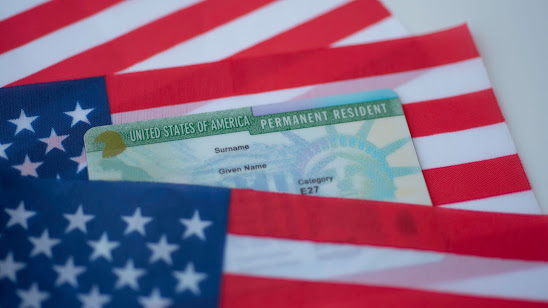
On Saturday, the participants selected for the second stage of the 2023 visa lottery were announced. This lottery awards 55,000 green cards to immigrants who want to reside legally in the United States. 

The selection of lottery winners is carried out “by a random system based on the visa allocations available in each region and country, from all registered applications,” the State Department (DOS) said.

To check the status of your application, you must do so through the Diversity Visa (DV) lottery website, which will be updated to inform all participants whether their online registration was selected or not. To check the status, you need to enter the confirmation number you received when you completed your registration form; without it, you will not be able to check. 

Furthermore, the DOS states that it “will not send notification letters or notify those selected via email.” And that U.S. embassies and consulates “will not provide a list of those selected.”. 

Following this initial screening, participants who remain in the competition for the visa will be asked to provide additional information beyond what was submitted in their application, such as documents to verify their identity and resume. They will also be required to attend an appointment at a U.S. consulate.        

The State Department distributes visas among six geographic regions, and no country can receive more than 71 TP3T visas of the available DV visas in any given year. This year, eligible countries include: Antigua and Barbuda, Argentina, Barbados, Bolivia, Chile, Costa Rica, Dominica, Ecuador, Panama, Paraguay, Peru, Saint Vincent and the Grenadines, Suriname, Trinidad and Tobago, and Uruguay. Other countries that had the opportunity to participate included: Egypt, Algeria, Uzbekistan, Iran, Ukraine, Nepal, Afghanistan, Congo, and others. 

On the other hand, there are the countries with more than 50,000 citizens who emigrated to the U.S. in the last five years and cannot apply; some of them are: Bangladesh, Brazil, China, Hong Kong, Colombia, El Salvador, Haiti, Honduras, Mexico, Pakistan, South Korea, Venezuela, and Vietnam.

Finally, the State Department announced the randomly selected individuals, who will have until September 30th of this year to find out if they were selected or not.

News report based on information from: Univision and Telemundo.

USCIS provides access to case processing times

The public will have access to immediate and clear answers regarding case processing times.

U.S. Citizenship and Immigration Services (USCIS) announced changes Thursday to simplify and improve how the agency communicates case processing time data to the public. As part of an agency-wide commitment to improve transparency, efficiency, and customer service, these changes will also make it easier for people to get an immediate answer about when they can inquire about their case.

USCIS Director Ur M. Jaddou announced that "USCIS is committed to listening to our applicants and stakeholders, and to continually improving our services," adding, "This is an important step, and certainly not the last, in the pursuit of improving the clarity and transparency of the data that USCIS provides to the public.".

The processing times that the agency makes publicly available provide the information needed to understand how long it may take USCIS to process a particular form. These estimated times are based on statistics from the previous six months showing how long it took USCIS to approve or deny a specific percentage of cases for a given form.

As a result of the COVID-19 pandemic and due to resource limitations inherited from the previous administration, USCIS accumulated a significant backlog of cases and experienced increased processing times. In February, there were reports of 9.5 million pending applications. 

With the additional changes, users can now immediately find processing time information for their specific case type, instead of seeing an aggregate of all cases. These changes include:

- Drop-down menu for form categories. For example, if you want to check the current wait time for Form N-400 Application for Citizenship at the New York Service Center, you can limit the results by specifying the form category.

-The waiting time is now specified as a single number (e.g., 7.5 months) instead of a range (7.5 to 11 months).

-Review, simplify and add additional content to the processing times web pages to increase transparency, including a new FAQ page and an improved Additional Information page.

Finally, this initiative by the agency aims to improve how processing times are displayed, managing them in a meaningful, concrete, and useful way for both parties. However, it's important to emphasize that each case is unique, and some cases take longer to process than others, depending on their specific circumstances. 

This news report was compiled using information from: USCIS and Telemundo 47

DACA Renewal Forms can now be submitted online

The United States Citizenship and Immigration Services (USCIS) announced that people who previously received DACA can now file Form I-821D, Consideration of Deferred Action for Childhood Arrivals, online.

“Expanding online filing is a priority for USCIS as we make our operations more efficient and effective for the agency and our applicants,” said USCIS Director Ur M. Jaddou.

Currently, the online filing option is only available to individuals who have previously been granted DACA. These individuals must also file Form I-765, Application for Employment Authorization, which is available online, and upload Form I-765WS, which is evidence of their DACA application. 

However, people applying for DACA for the first time cannot access this benefit; they must submit Form I-821D in paper format.

With the addition of Form I-821D, people can now file 13 USCIS forms online, which can be found on the Forms Available for Online Filing page. 

It is important to note that, in order to submit these forms online, applicants must first create a USCIS online account, which provides a convenient and secure method for submitting forms, paying fees, and tracking the status of any pending immigration application with USCIS throughout the adjudication process.

Creating this account is free of charge; on the contrary, the benefits outweigh the costs, as it provides the ability to communicate with the agency through a secure inbox and respond online to requests for evidence.

According to the immigration agency, since the launch of online filing in 2017, the total number of forms submitted online has increased significantly. In fiscal year 2021, approximately 1,210,700 petitions and applications were filed online, a 2.3% increase over the 1,184,000 filed in fiscal year 2020.

Information taken from: USCIS 

Conditional permanent residents will be exempt from the interview

The United States Citizenship and Immigration Services (USCIS) announced yesterday, April 7, that it will waive mandatory interviews for some conditional permanent residents who have filed a petition to remove their conditional status.


In the interview, these types of residents who are married to US citizens must prove to the USCIS officer that their marriage is real and not for obtaining an immigration benefit.


According to the updated policy, USCIS may waive the interview requirement if an agency officer determines that there is sufficient evidence of the good faith of the marriage, no indication of fraud, misrepresentation in supporting documents, and no criminal record, among other considerations.


The new criteria will guide officials in determining when to exempt permanent residents who filed an I-751 petition to have conditions on their residency removed from interviews.


Meanwhile, USCIS Director Ur M. Jaddou, the first woman to hold the position, said in a statement that this update "is consistent with the agency's priorities to break down barriers in the immigration system and eliminate undue burdens for those seeking benefits.".


Currently, the wait time for I-751 applications is 22 to 36 months, and according to agency data, more than 166,000 applications were filed in 2017.


Several changes are taking place in Joe Biden's government, thereby relaxing the rule imposed by the government of then-President Donald Trump in 2018, which proclaimed that all those who obtained conditional permanent residence for being spouses of US citizens and who have filed an application to have their conditional status withdrawn must attend a personal interview with USCIS.


Information taken from: EFE News 

Stay up-to-date on immigration with our YouTube channel: 

The DHS will implement immigration law enforcement priorities

The Department of Homeland Security announced that the implementation of the guidelines for compliance with the Civil Immigration Act, signed by Secretary of Homeland Security Alejandro Mayorkas on September 30, would begin on November 29 of this year.

The memorandum dated September 30, 2021, announces that under the new guidelines, Immigration and Customs Enforcement (ICE) will ensure a fair and equitable case review process that provides non-citizens and their representatives with the opportunity to obtain a prompt review of any enforcement action taken.

Secretary Alejandro Mayorkas stated, “DHS will carry out our mission to safeguard our country in a fair and humane manner. In making our enforcement decisions, we will focus our efforts on the greatest threats while recognizing that the majority of undocumented non-citizens, who have been here for many years and have contributed positively to the well-being of our country, are not priorities for removal.»