The Biden administration unveiled a new program called “Welcome Corps” that will allow groups of permanent residents and citizens to sponsor refugees from around the world to live in the United States.
Many define this program as a measure to fulfill at all costs the commitment to implement a private sponsorship program to resettle refugees in the United States, as instructed in Biden's executive order since February 2021.
This program will be implemented in 2 stages:
Participating private sponsors will be connected with refugees whose cases have already been approved for resettlement. The State Department will begin coordinating sponsors with refugees arriving during the first six months of 2023.
It will be launched in mid-2023, and private sponsors will be able to identify refugees to send to the US Refugee Admissions Program (USRAP) for resettlement purposes.
During the first year of the program, the State Department will seek to motivate 10,000 Americans to apply as sponsors to host at least 5,000 refugees.
According to the program, groups of at least 5 people can apply to sponsor refugees and help them adjust to life in the USA, with the support of a consortium of non-profit resettlement organizations.
Sponsor groups must raise a minimum of US$1,275 per refugee, but they are not obligated to provide ongoing financial support to the refugees they sponsor. The support they provide will be fixed for the first three months, and they must ensure continued financial support for the refugees as needed for two years.
The migration process for a refugee is not an easy task; finding a school, a job, learning how to get around, having financial support, and other everyday things takes time. All of these tasks would have to be taken on by a group of 5 or more Americans. Now, the main concern that remains is whether sponsors will actually come forward for this arduous task.
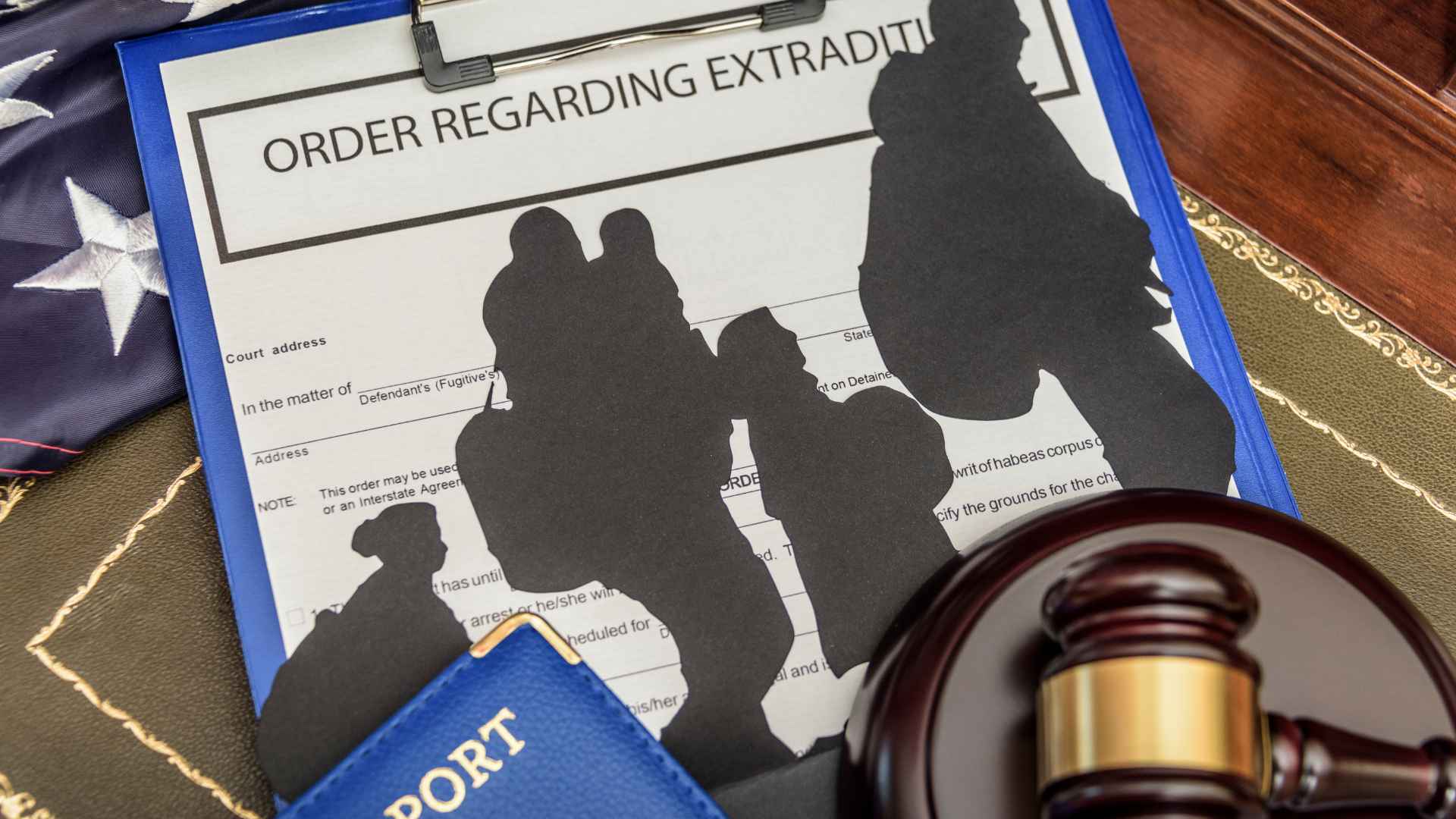
Title 42 is a 1944 law that Trump recently used to expel immigrants from the US. This law empowers the federal government to take extraordinary measures to prevent the introduction of easily transmissible diseases into the country. Trump used this legislation to expel thousands of immigrants under the pretext of COVID-19.
After a long legal battle between Democrats and Republicans over the legality of this policy, Title 42 will expire this Wednesday, December 21. This represents a victory for the Democrats, but leaves a bitter taste for the immigration system.
With the end of Title 42, we return to Title 8, regulations that are more rigid and strict than 42. Under these regulations, people who enter irregularly must be interviewed by a border agent and demonstrate a "credible fear" of returning to their country of origin.
The penalties for those who have entered the country illegally on repeated occasions are more severe. Furthermore, the situation is unclear for individuals who were removed under Title 42 and are now attempting to enter under Title 8, since removal under Title 42 is based on public health concerns, while removal under Title 8 is based on admissibility or inadmissibility under immigration law.
In other words, this means that deportations under Title 42 did not take into account a person's merits for remaining in the U.S. Therefore, the government could deport people to Mexico and make them wait there for their hearing, regardless of whether or not they had a strong asylum case. This discouraged many people from crossing irregularly.
With the end of this policy, the door is opened for thousands of immigrants to attempt to enter irregularly starting Wednesday. This is for two reasons: first, there is no mechanism to deport anyone who fails the credible fear interview; and second, those who were deported under Title 42 have not been deported under Title 8, which has a different standard.
Faced with the surge of migrants waiting to cross the border, the Biden team claimed to have increased resources for the area, improved application processing, imposed penalties for illegal entry, and targeted smugglers. Even so, the issue of immigration is a ticking time bomb that could explode at any moment.
News report compiled from: CNN and San Diego Union Tribune
Monumental Migration, that's how many border patrol agents classify the event that is expected as soon as the Title 42 pandemic policy ends, just a few days before Christmas.
In other words, there will be no one to stop the more than 1 million migrants who were expelled and crossed the border between the United States and Mexico.
Under Title 42, Customs and Border Protection (CBP) prohibits the entry of certain individuals who "potentially pose a risk to public health (COVID-19).".
After the Biden administration announced it would withdraw the Title 42 policy, a debate erupted over whether ending its enforcement is justified and whether officials are prepared to handle the influx of people who will enter the already dysfunctional immigration system.
The Border Patrol could face investigating nearly 18,000 arrests per day after this policy is withdrawn, while currently handling approximately 6,000 detainees daily amid this crisis. For context, a DHS secretary during the Obama administration stated that 1,000 arrests per day constituted a "crisis.".
The 6,000 daily arrests since President Biden took office have already put agents in a bind, especially since the Biden administration decided not to detain immigrants in federal facilities until they appear in court, resulting in more than 1.5 million people being released in the U.S. instead of being detained.
Backlogged immigration courts mean that someone released today may not be in court until 2028, while living in the U.S. on "parole," a new legal status created by the Biden administration.
The entry of migrants can be classified as free entry starting December 21, since there will not be enough agents to control the entry of illegal immigrants across the border, which will lead the Customs and Border Protection Office to release virtually all of them.
It will be the perfect opportunity for smugglers, who earn between $5,000 and $50,000 per person, to move people with criminal records and drugs across the border in an unguarded area, since approximately half of all agents have been withdrawn from the field to transport, process, and care for detainees.
What some migrants are hoping for is to maintain a glimmer of hope of entering the United States after months or even years of waiting in camps and makeshift shelters in Mexico. Meanwhile, Border Patrol agents are concerned about the unprecedented surge of migrants expected at the border after December 21st.
U.S. Customs and Border Protection (CBP) launched a digital advertising campaign Wednesday to discourage migrants from the Northern Triangle (Guatemala, Honduras, and El Salvador) from undertaking the dangerous journey to the U.S. border.
The ads aim to convey a clear message: smugglers are lying; illegally entering the United States is a crime. They also emphasize that smugglers, known as "coyotes," exploit and profit from vulnerable migrants.
“Smugglers use lies to lure vulnerable people into embarking on a dangerous journey that often ends with their deportation or death,” said CBP Commissioner Chris Magnus. “This public awareness campaign is an important component of the U.S. government’s efforts to prevent tragedies and reduce irregular migration.”.
The message warns that those who attempt to cross the U.S. border without authorization will be immediately expelled from the country or subjected to immigration deportation proceedings. Furthermore, they will receive information about the thousands of migrants who end up imprisoned, kidnapped, extorted, or even left to die by unscrupulous transnational criminal organizations.
In fiscal year 2021, the northern Central American countries accounted for 44% of migrant encounters along the southwest border.
Finally, this campaign has emerged from the joint work of the Department of Homeland Security (DHS) working closely with the State Department to track trends, share research, and coordinate messaging to counter the tactics used by smugglers to victimize vulnerable migrants.
These messages are an effort to counter the many lies spread by human traffickers and warn migrants about the dangers of being scammed and dying at the hands of these criminal organizations.
News report based on information from: U.S. Customs and Border Protection (CBP)
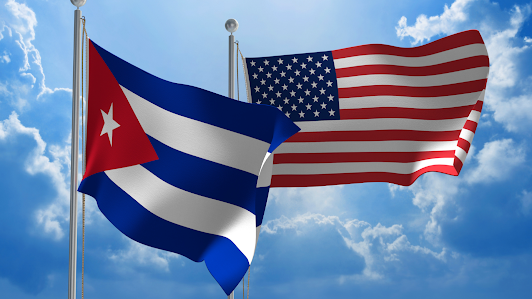
US and Cuban representatives met Thursday in Washington to discuss migration.
This event has been considered the first high-level bilateral meeting since Joe Biden arrived at the White House and since negotiations on this issue were interrupted in 2018. The US delegation was headed by Emily Mendrala, Deputy Assistant Secretary of State for Western Hemisphere Affairs, and the Cuban delegation was led by Deputy Foreign Minister Carlos Fernández de Cossio.
Although discussions were expected to cover various issues straining relations between the two countries, the talks focused on ways to address illegal immigration, changing migration trends, deportations, and the roles of embassies, State Department spokesman Ned Price added.
In reference to this, according to the United States Customs office, from October 2021 to March 2022, more than 78,000 Cubans entered the country through the border with Mexico, that is, double the number who left the island during the so-called "rafter crisis" in 1994.
Tensions between Washington and Havana over the Cuban government's repression of protests in July 2021 resulted in one death, dozens of injuries, and 1,395 arrests. US sanctions against the island and other issues have hampered cooperation between the two countries on challenges such as immigration. Despite this, the delegations emphasized their willingness to engage in direct and comprehensive dialogue.
«Discussions about safe, orderly, and legal migration remain of paramount importance to the United States,» Price told reporters. He added that the desire to «encourage family reunification and promote greater respect for human rights and fundamental freedoms in Cuba» is equally important.
However, the Cuban delegation "reiterated its concern about the measures taken by the U.S. government that encourage migration, impede legal and orderly migration, and create socioeconomic conditions that incite emigration. It stressed that these measures, including those associated with the extreme strengthening of the economic blockade, cause loss of life and the commission of crimes such as migrant smuggling, immigration fraud, and human trafficking, a situation that affects both countries and the region," according to a statement released by the Ministry of Foreign Affairs.
He also insisted that Washington has "the obligation" to issue 20,000 annual visas to Cubans to emigrate to the United States under an agreement "that has been violated since 2017.".
Regarding the visa issue, the first announcements about the resumption of visa issuance in Cuba were made in March, but no specific date was set. However, at Thursday's meeting, the discussion focused on "consular services at the U.S. Embassy in Havana, including the limited resumption of immigrant visa services beginning in May and the ongoing issuance of emergency nonimmigrant visas," the U.S. State Department detailed in a statement released after the meeting.
As can be seen, after the meeting, both countries issued their respective statements outlining some of the agreements reached and proposals made. Additionally, the same document issued by the U.S. State Department stated that the migration talks "provide an opportunity to discuss the mutual implementation of the Migration Agreements (comprised of a series of bilateral agreements between the United States and Cuba made in 1984, 1994, 1995, and 2017)."«
For its part, Cuba reiterated that "the United States must stop obstructing and violating the rights of Cubans to travel to third countries in the area" and demanded "compliance with bilateral migration agreements in their entirety and not selectively.".
Finally, although the meeting represents progress after nearly four years without dialogue between these countries, it also served as an opportunity to criticize the agreements that have been broken. Cuba reproaches the United States for not fulfilling its commitments regarding visas, and Washington denounces that Havana has not accepted any deportations of Cubans since last October via commercial or charter flights from U.S. territory. It is hoped that the talks will foster collaboration and achieve objectives that benefit both migrants and the countries involved.
News report based on information from: El Economista, France 24 and On Cuba news.
During the last few weeks, the United States has quietly transferred Venezuelan migrants to Colombia.
According to two national security officials, President Joe Biden's administration has expelled Venezuelans from the U.S. who were detained at the border with Mexico and is sending them to Colombia, as part of an administration strategy to try to stem the flow of migrants.
It should be noted that the flights on which they were transported were not previously reported, and in December the United States Customs and Border Protection office registered more than 13,000 single adults from Venezuela at the southern border of North America.
Did you find this information helpful? Stay connected with us through our YouTube channel.
US border authorities detained more than 210,000 migrants attempting to cross the border with Mexico in March, the highest monthly total in two decades and underscoring the challenges ahead for US President Joe Biden. Biden, a Democrat who took office in January 2021, pledged to reverse many of the immigration policies of his Republican predecessor, former President Donald Trump, but has struggled both operationally and politically with the high number of crossing attempts. The total for March represents a 241,000 increase compared to the same month last year, when 169,000 migrants were apprehended at the border. This also marks the third time the number of migrants apprehended has exceeded 200,000 during his administration. These figures could be a prelude to what lies ahead with the expiration of Title 42 on May 23. It's important to remember that the termination of this Title, which allows for the mass expulsion of hundreds of migrants to prevent the spread of COVID-19, is based on the recommendation of health officials. Similarly, according to the data presented, 221,303 immigrants were processed last month, surpassing the previous peak under the Biden administration in July 2021, when US officials recorded 213,593 encounters with migrants. On the other hand, although more than half of the migrants encountered at the U.S.-Mexico border in recent months come from traditional countries of origin—Mexico, Guatemala, Honduras, and El Salvador—increasing numbers of migrants are arriving from distant places like Ukraine and Russia. U.S. authorities are preparing for up to 18,000 encounters with migrants per day in the coming weeks. Finally, the more than 210,000 migrants detained in March, a figure made public in a court filing Friday night, is the highest monthly total recorded since February 2000, according to statistics from U.S. Customs and Border Protection (CBP). Note compiled with information from: LaRazon.es and UNIVISION
A bus carrying a dozen undocumented asylum seekers arrived in Washington on Wednesday, sent by Texas Governor Greg Abbott, a Republican.
Abbott announced last week that he would send undocumented immigrants to Washington, D.C., in anticipation of the Biden administration's imminent repeal of Title 42. This title had prevented most immigrants from entering the United States to seek asylum for more than two years due to the pandemic. Its official end is scheduled for May 23.
So far, there are records of two buses coming from Texas, which transported a dozen migrants from Venezuela, Nicaragua, Cuba and Colombia, who arrived again at Union Station, just as the first group did on Wednesday morning.
Catholic Charities DC had people at Union Station Wednesday morning when migrants were dropped off to receive assistance, according to Kate Kennedy, the organization's communications director. The organization provides a range of services, including food assistance and medical care, among other social services in the Washington, D.C., metropolitan area.
On the other hand, although Abbott called these people "illegal migrants," the White House reported that they are people who are processing their asylum application in the United States and are therefore "free" to move around the country.
It is important to note that once an immigrant is processed by federal authorities and released from custody, they are allowed to move freely throughout the country while awaiting immigration court proceedings. An immigration judge will ultimately decide whether they are allowed to remain in the United States or be deported.
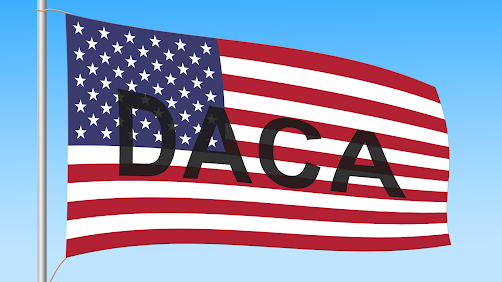
The United States Citizenship and Immigration Services (USCIS) announced that people who previously received DACA can now file Form I-821D, Consideration of Deferred Action for Childhood Arrivals, online.
“Expanding online filing is a priority for USCIS as we make our operations more efficient and effective for the agency and our applicants,” said USCIS Director Ur M. Jaddou.
Currently, the online filing option is only available to individuals who have previously been granted DACA. These individuals must also file Form I-765, Application for Employment Authorization, which is available online, and upload Form I-765WS, which is evidence of their DACA application.
However, people applying for DACA for the first time cannot access this benefit; they must submit Form I-821D in paper format.
With the addition of Form I-821D, people can now file 13 USCIS forms online, which can be found on the Forms Available for Online Filing page.
It is important to note that, in order to submit these forms online, applicants must first create a USCIS online account, which provides a convenient and secure method for submitting forms, paying fees, and tracking the status of any pending immigration application with USCIS throughout the adjudication process.
Creating this account is free of charge; on the contrary, the benefits outweigh the costs, as it provides the ability to communicate with the agency through a secure inbox and respond online to requests for evidence.
According to the immigration agency, since the launch of online filing in 2017, the total number of forms submitted online has increased significantly. In fiscal year 2021, approximately 1,210,700 petitions and applications were filed online, a 2.3% increase over the 1,184,000 filed in fiscal year 2020.
In May, Customs and Border Protection expects an increase in migrants.
The Biden administration is preparing for a new wave of migrants arriving across the United States' land borders, primarily the southern border, after the controversial Title 42 expires in May.
Blas Nuñez-Neto, Deputy Assistant Secretary for Border Policy and Immigration at the U.S. Department of Homeland Security, spoke about the issue on RCN Mundo and explained how the Biden administration is preparing to face the change:
«Our department will send officers, agents, and volunteer personnel to the border in the coming weeks; we have already redeployed more than 600 Border Patrol agents and are prepared to send more if needed,» Nuñez-Neto said. There is also talk of adding technological tools such as drones and building infrastructure to process more people safely and respectfully.
With respect to deportations agreed upon with other governments, the United States' efforts will now focus on investing in the development of migrants' countries of origin to improve their conditions there and, consequently, prevent their attempts to migrate.
In the United States, there is division over the end of Title 42. Weeks ago, the Democratic leader in the Senate, Chuck Schumer, called the application of that regulation "terrible and inhumane" and said he was "deeply disappointed" that Biden continued to use it.
In contrast, the Republican Party considered the lifting of Title 42 to be "a disastrous decision that will open the floodgates" of migration in the United States.
Finally, there are still weeks to go before the completion of Title 42 and the possible changes that may occur in the political and social environment are unknown.
Information taken from: RCN Mundo and Debate.
Stay up-to-date on immigration with our YouTube channel: