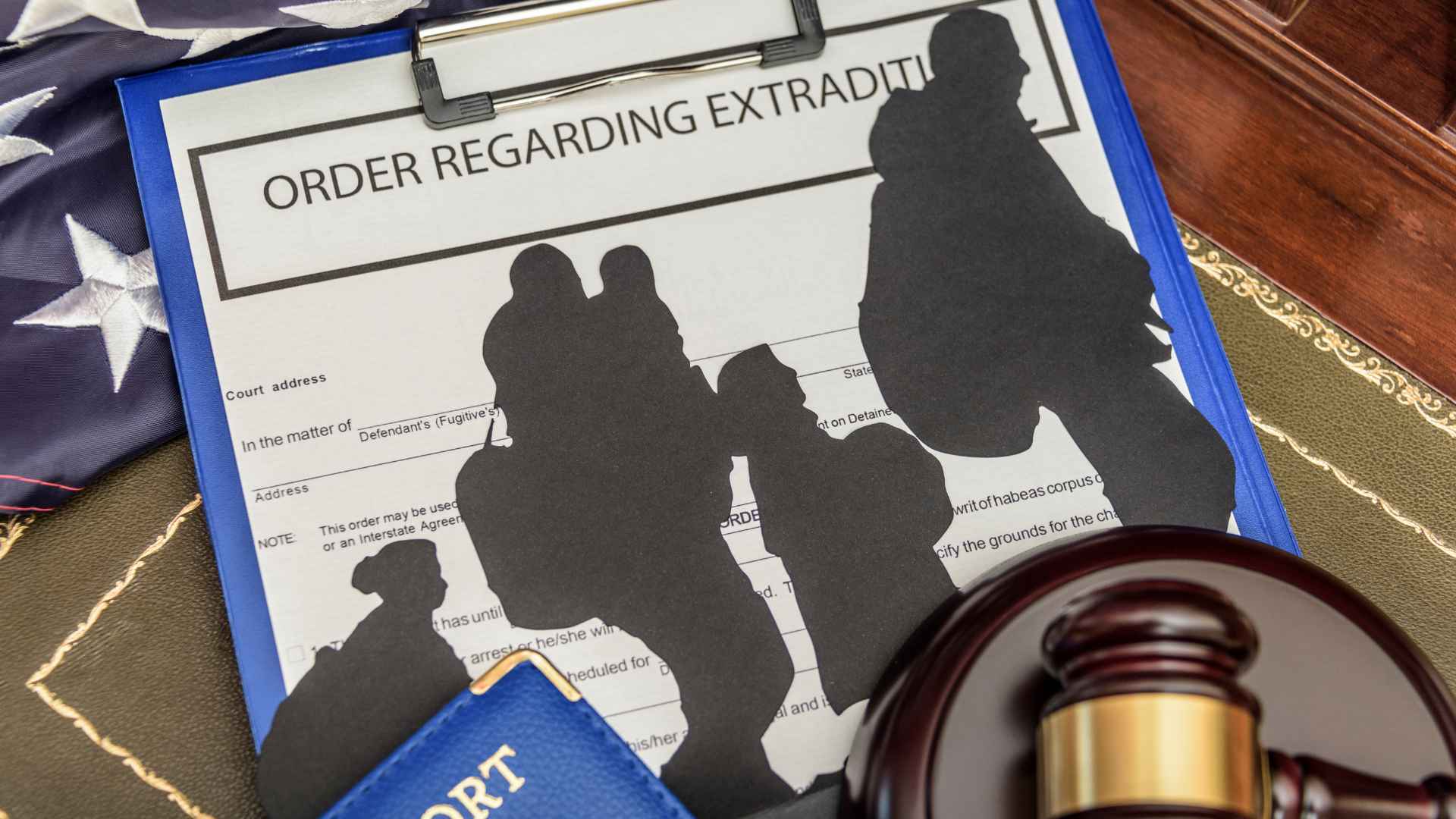
Family Reunification, the reality to be able to apply

Family reunification is only for citizens of Colombia, El Salvador, Guatemala, or Honduras who have approved family petitions. A family petition refers to when a parent petitions for their children, a married couple petitions for their spouse, or a child petitions for their parents.

It is important to note that you cannot apply for this program as you would normally apply for any type of immigration application; instead, the Federal Government will select the families that have approved family petitions and are on the National Visa Center's waiting list.

Citizens applying to the program must also be outside the United States, meet medical and screening requirements, and not have received an immigrant visa. What if I'm eligible?

If they are deemed eligible, they will be considered for parole to remain in the United States for up to three years while their process to become legal permanent residents continues.

Did this help clarify your doubts about family reunification? Let us know in the comments!

Political asylum in the United States = Hope for exile

Many of the questions that migrants have is whether they can apply for political asylum in the United States if they entered illegally.

The answer is YES, it is possible, as long as you meet the following requirements:

  • You cannot be in the process of removal.
  • You must apply for asylum within one year of your last arrival in the USA
  • Or you must demonstrate that you are eligible for an exception to the above requirement.

Countless people come to the United States seeking protection because of past experiences of persecution or the persistent risk of suffering persecution because of: their race, their religion, their nationality, their association with a social group, or their political ideology.

If you wish to apply for political asylum, you should know that there are two ways to obtain political asylum. I will explain what they are and what they mean:

Affirmative Asylum: To obtain affirmative asylum, you must be present in the USA. You must apply for asylum status regardless of how you arrived in the USA or your current immigration status.

Defensive Asylum: An asylum defense request occurs when you request asylum as a defense against your removal from the U.S. For an asylum application to be considered a defense, you must be in removal proceedings in Immigration Court with the Executive Office for Immigration Review (EOIR).

Do you need help with your asylum process? Leave us a comment

How to extend your stay in the United States if you entered as a tourist

If you're in the United States on a B1/B2 nonimmigrant visa (you came as a tourist or for business) and want to stay longer, you can extend your visa. Here's how the process works; this information can also be helpful if you're planning a future visit to the USA.

If you entered the USA legally, you did so with a B1 (business) or B2 (tourist) visa. Both can be extended. To do so, you must complete Form I-539, but first you must meet the following requirements: requirements:

  1. You entered the U.S. on a nonimmigrant visa.
  2. You have no criminal record and have not committed a crime that violates your non-migrant status.
  3. Your stay has not expired. (This point is crucial)*
    To know that your stay has not expired, do not look at the visa stamp: the date that matters is the one indicated on your I-94 Card.

I-94 What is it?
This is what the immigration officer gives you at the port of entry (the airport, for example). This document indicates the date you arrived and also the date you must leave the USA.

And when do I request my extension?
You must request an extension before the date indicated on your I-94 for leaving the USA; otherwise, your legal stay will have expired. It is best to do so 45 days in advance. If you do not, you will have to prove that:

Don't let it happen to you
If you allow your permitted stay in the USA to expire, you must prove that:

  1. The delay in submitting the request is reasonable and was due to unavoidable circumstances.
  2. You never violated the conditions of your visa (for example, if you are a tourist, you did not work).
  3. You remain a bona fide non-immigrant.
  4. You are not in deportation proceedings.

If you require guidance for your visa extension process, contact us via WhatsApp. +1 (786) 619 5937

Request your Change of Status in two (2) weeks

When you enter the United States and your original reason for coming changes, you can request to change your nonimmigrant status to a different status before your authorized stay in the USA expires. For example, you entered as an au pair and want to stay to study.

If you don't know where to start to apply for a Change of Status, or if you're even unsure whether you qualify, the best thing to do is take an eligibility test, which you can do at the following link: https://shorturl.at/aclW6

If you need to complete your process on your own schedule, without complications, in Spanish, and with guidance from a lawyer, you should:

COMPLY WITH THE REQUIREMENTS FOR CHANGE OF STATUS:
– To have entered the USA legally.
– Have a valid stay throughout the entire process.
– Financial capacity to cover housing and study costs.
– Demonstrate ties to your country of origin. There's more!

FOLLOW THESE STEP-BY-STEP INSTRUCTIONS TO CHANGE YOUR STATUS:

  1. Register at: https://app.asisvisa.com/sign-up
  2. Go to: https://asisvisa.com
  3. Click on the "Services" option in the main menu, and then select "Change Status." To begin the process, click the "Get it Now!" button. (located at the bottom of the webpage)
  4. Now you can complete your process independently from our app

HOW LONG DOES THE STATUS CHANGE TAKE?
The average processing time is 8 to 14 months. During this time, you can remain in the USA.

NOTE: Although it seems simple, we recommend seeking professional guidance.

If you switch to F1, make sure you always use the same SEVIS number on your I-20 form.

If your application is denied, you will accumulate irregular presence from the expiration of your I94/I20/DS-2019, as applicable.

Immigration falls into a 70% with the end of Title 42

According to figures from the Department of Homeland Security (DHS), since May 11, with the end of Title 42, more than 38,400 people have been repatriated, including citizens of Cuba, Venezuela, Haiti and Nicaragua who were returned to Mexico under Title 8.

On the other hand, Republicans claim that instead of a "decrease" in the arrival of migrants, what is currently happening is an evasion in the way the figures of migrants crossing the USA irregularly are presented, or at least that is what Clay Higgins, a representative of the House, argues.

According to agents, in the days leading up to the end of Title 42, encounters with migrants attempting to cross reached 10,000 per day, so the Title 8 rule has generated significant relief, in addition to Mexico's help in accepting migrants deported from the USA.

With Title 8, the Biden administration seeks to control irregular immigration for migrants, and open legal possibilities for some, through processes such as: Humanitarian Parole, CBP ONE for Political Asylum and Family Reunification (Not Yet Regulated).

23,000 people have entered the USA since May 12 with Humanitarian Parole, a program that allows Venezuelans, Haitians, Cubans and Nicaraguans to stay in the USA for 2 years.

On the other hand, at the ports of entry, the asylum applications of 1,070 people who scheduled an appointment to present their case through the CBP One application were processed.

Some argue that the current decline is a “fragile balance” that may “be affected in the future” because “the factors in our hemisphere that are driving the historical movement of people still exist, and that traffickers use misinformation to encourage migration.”.

Sources: San Diego Union Tribune and Voice of America

US states with anti-immigrant policies

During the last year, immigration policies have become stricter in order to control irregular migration, a situation that has led Texas, North Carolina and Florida to propose anti-immigrant laws.

Texas: HB20 Law
The new plan hopes to punish each undocumented crossing into Texas with fines of $10,000.
This law seeks to create a controversial border protection unit. It would allow civilians to join a group led by a chief appointed by the governor to "hunt" immigrants for deportation purposes.

North Carolina, HB10
In North Carolina, they are seeking to have agents and officials actively cooperate with Immigration and Customs Enforcement (ICE).
According to Stefania Arteaga, an activist with Carolina Migrant, in counties like Mecklenburg, an initiative similar to HB-10 called 287(g), which operated between 2006 and 2018, resulted in 15,000 people being placed in deportation proceedings. Two out of every three of those people had been arrested for minor offenses, such as traffic violations.

Florida, Law SB1718

Florida Governor Ron DeSantis signed SB1718 on May 10, 2023, the strictest law against illegal immigration, which includes:
Mandatory use of the E-Verify system by employers to verify the work authorization of employees.
Prohibition of the use of driver's licenses from other states by undocumented people.
Severe penalties for transporting undocumented immigrants to Florida.
Requirement for hospitals to collect information on patients' immigration status during registration.

Learn about the organizations that provide resources and support to migrants:
Several national organizations provide valuable resources and support to immigrants in the USA. Here are some examples:

  1. The National Immigration Law Center (NILC) is a leading organization advocating for the rights of low-income immigrants. The NILC website offers a variety of resources, including guides on immigration law, immigrant rights, and access to healthcare and education.
  2. The ACLU's Immigrants' Rights Project protects immigrants' rights, challenges discriminatory policies, and provides legal support.
  3. United We Dream is the largest immigrant youth-led organization in the country. They advocate for the rights and dignity of immigrant communities, with a focus on immigrant youth.
  4. The National Network for Immigrant and Refugee Rights (NNIRR) is a network of organizations and advocates committed to advancing the rights of immigrants and refugees. They work to challenge unjust immigration policies, promote immigrant rights, and support community initiatives.

Sources: Telemundo, Univision, Enlace Latino NC and La Noticia.

New proposal for immigration reform in the United States to allow migrants to obtain citizenship

With an uncontrollable migration situation and thousands of migrants stranded in Mexico, Representative Maria Elvira Salazar will present a bill in Congress this Tuesday that addresses the most complex issues that have kept the two main political parties (Republicans and Democrats) apart on immigration reform.

According to Salazar, this is the first bipartisan immigration bill introduced in Congress in the last 10 years, which contemplates creating a legal path to citizenship for the estimated 12 million undocumented immigrants already in the country, while allocating billions of dollars to increase border security, an effort that would be paid for by the immigrants themselves.

The idea behind this bill is that it would be fully paid for by immigrants already in the U.S., with the exception of those who have committed a crime. The program would grant immigrants authorization to work and live for seven years under a program called "Dignity Status," which would cost $1,400. After those seven years, immigrants would qualify for "Redemption Status," which would lead to citizenship at a cost of another $1,400.

The bill contemplates acquiring state-of-the-art technology to better monitor the border, building an impenetrable border infrastructure system, which would include improved physical barriers, and hiring more border patrol agents.

Furthermore, this project would also modify current asylum regulations by creating five “humanitarian campuses” for those awaiting immigration status. The construction of these centers would end the catch-and-release practice, in which undocumented immigrants are released while their cases are being processed.

It should be clarified that the facilities would prevent the separation of family members and immigrants would have a resolution of their cases within 60 days, after which applicants would know if asylum has been approved, denied or is pending, in which case they would be allowed to be free while wearing an ankle monitor.

With this new immigration reform proposal, it is hoped that a bipartisan agreement can be reached that will contribute to offering real and dignified solutions to the immigration situation in the United States.

Source: The New Herald and Dallas News.

Florida's toughest law against undocumented immigrants is enacted

Governor Ron DeSantis, of the Republican party, declares a new law against illegal immigration in Florida, which states that:

  • It requires companies with at least 25 employees to verify the immigration status of the workers in a federal database called E-Verify, and creates penalties for employers who knowingly employ "unauthorized aliens".
  • It requires some hospitals to request information about immigration status of patients in admission records.
  • It will not be possible transporting people without status. It will be a crime that can result in up to 5 years in prison or a fine of $5,000 per person.
  • Some driver's licenses and identifications issued by other states to undocumented immigrants They will not be valid in Florida

When does it come into effect?
This new regulation, which will take effect in July, will serve to address the growing threat of irregular migration, a result, according to the governor, of the Biden administration's failure to secure the borders.

Sources: CNN, NBC News

Even without Title 42, the United States will continue deporting under Title 8

This May 11th, Title 42 will be repealed in the United States, a public health policy that allowed for the expedited expulsion of undocumented immigrants due to Covid-19.

Despite the end of Title 42, immigrants will continue to be deported under Title 8. According to this law, migrants will face more severe consequences for crossing the border illegally. People who cross the border without first requesting asylum will be expelled from the U.S.

Among the measures taken by the US is the installation of barbed wire fences in various parts of the border before Title 42 expires. In addition, Greg Abbott, Governor of Texas, ordered the deployment of more than 500 National Guard troops along the southern border of the state. He called the operation a "border tactical force" and intends to use it to curb illegal immigration.

According to the Department of Homeland Security, the number of deportees during the first half of fiscal year 2023 returned “225,480 people, up from 170,896 during the same period of the previous year,” and expelled “more than 440,000 people under Title 42 during the same period.”.

In the need to control a mass exodus, the USA stated that it will create special centers and offices in countries like Colombia and Guatemala, in order to contribute to the processes of family reunification and migration to the North American country in an orderly and legal manner.

The tension surrounding the new implementation of Title 8 has both the United States and Mexico in a state of uncertainty that can only be resolved on May 11 when Title 42 expires.

New Family Reunification Parole for Colombians, Guatemalans, Hondurans, and Salvadorans in the United States

The State Department (DOS) and the Department of Homeland Security (DHS) announced on Thursday a new regional immigration strategy from the Biden administration, a plan that aims to promote legal immigration to the United States, reduce pressure on the southern border with Mexico, and increase penalties for undocumented immigration.

This new policy seeks to control a massive exodus of migrants that could trigger the lifting of Title 42 on May 11, a policy that was implemented to stop the spread of COVID-19, but which has been used by the Trump and Biden administration to expedite the expulsion of immigrants at the border, affecting more than 2.2 million in 3 years.

The goal of this new policy is to reduce the opportunities for undocumented immigrants and create new pathways through Advance Parole* for El Salvador, Guatemala, Honduras, and Colombia. *Advance Parole is a document issued by USCIS (United States Citizenship and Immigration Services) that allows you to legally leave the U.S. This document is for certain immigrants who intend to travel and do not want to jeopardize their immigration status.

Lifting Title 42 will not give free rein to migrants who wish to enter illegally across the border, as they will continue to use Title 8 to expedite the deportation of inadmissible aliens, especially those who enter irregularly across the US border.

Those who do not follow the established rules will face serious consequences, including a re-entry ban of at least 5 years and possible criminal prosecution for repeated attempts to enter the USA illegally.

Those eligible for family reunification will receive parole in the USA, as well as the possibility of applying for a work permit.

At AsisVisa, we can advise you on family reunification processes, as well as on Humanitarian Parole applications. To do so, we need to schedule a consultation with our lawyer to review your case and determine the best course of action.

Source: Univision, Telemundo and Caracol.