Application for American Citizenship Naturalization
Naturalization is the process by which a permanent resident obtains all the rights and benefits of a U.S. citizen, including the right to vote, the ability to petition for family members, and others.
You must have physically lived in the country and not have made prolonged trips without justification.
Not having a serious criminal record, complying with tax obligations, and not having committed immigration violations.
In addition to the total time as a resident, you must have lived at least three months in the state or district where you will file your application.
Pass a basic English exam (reading, writing, and speaking) and a civics test on the government and history of the United States.
Benefits of our Service
Designed to increase the chances of success, reduce errors, and expedite the processing of your immigration application.
Increase Your Chances of Success
Our proven process strengthens every detail of your application, giving you the best opportunity for approval.
Error-Free Confidence
Using our intelligent platform, we carefully prepare and review each step to minimize mistakes that can cause costly delays or denials.
Faster Results
We streamline every step—so your petition moves forward quickly, saving you valuable time and avoiding unnecessary delays.
Our Process
Expert advice with the intelligent use of our platform to simplify every step of your immigration application.
Step 1
Eligibility
Eligibility: Check if you qualify for the visa you want to apply for with the help of artificial intelligence, quickly, securely, and without intermediaries.
Step 2
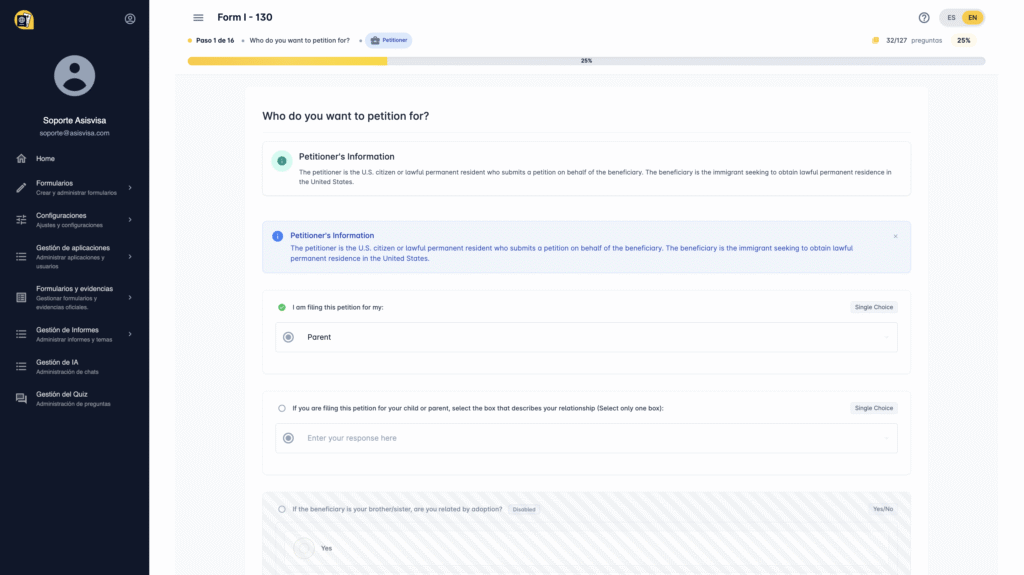
Fill Out Immigration Forms
Fill Out Immigration Forms: We make filling out immigration forms simple, guiding you step by step so you can feel confident every detail is right.
Step 3
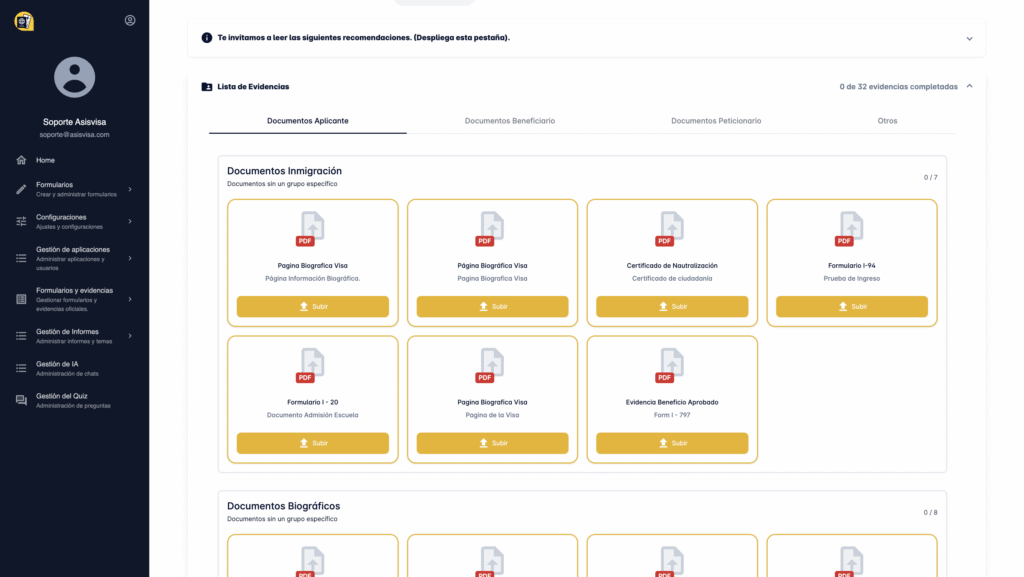
Upload Evidence
Upload Evidence: Easily upload the supporting evidence tailored to your situation directly into our secure platform.
Step 4
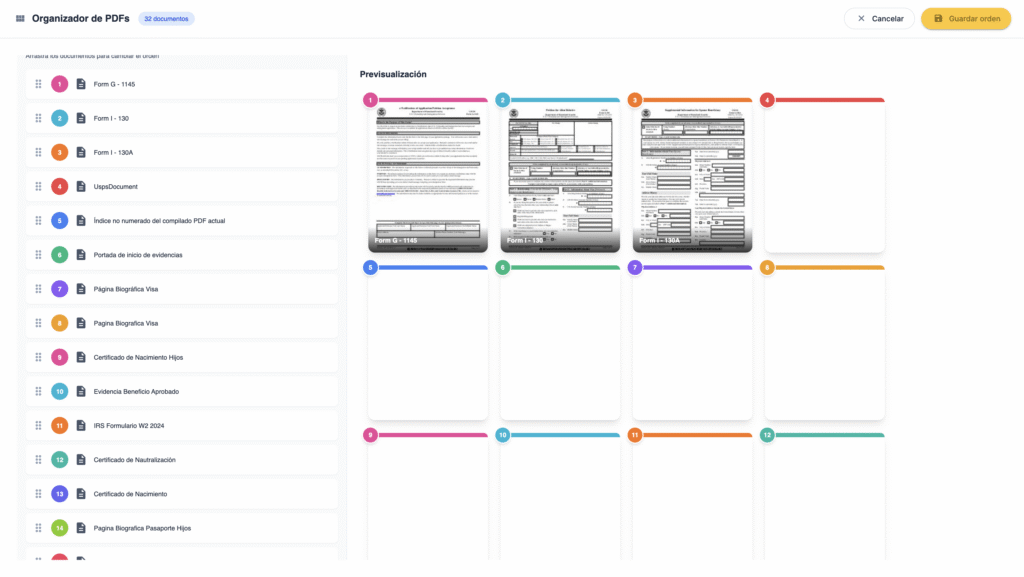
File Compilation
File Compilation: Our platform automatically compiles all the required forms, evidence, and supporting materials into a complete immigration file tailored to your case.
Step 5
Submission
Submission: Once reviewed and finalized, your application is prepared for submission to USCIS, ensuring everything is properly organized, consistent, and ready for review by the officer.
Service Breakdown
Clarity at Every Step: What’s Included and What’s Not
What’s Included
Personalized Case Review.
Smart Platform Access.
Document Preparation & Organization.
Translations (Spanish to English Only)
Tailored Evidence Checklists.
File Compilation & Submission.
Ongoing Support.
What’s Not Included
USCIS Filing Fees.
Attorney Representation in Court.
Travel, Medical, or Third-Party Costs.
Expedited or Premium Processing Fees.
Non-Immigration Legal Services.
Fabrication of Case or Evidence.
Guaranteed Approval
USCIS Approval Rates
History of cases processed according to USCIS
No Data
Approved:
0
Denied:
0
0%
No Data
Approved:
0
Denied:
0
0%
No Data
Approved:
0
Denied:
0
0%
No Data
Approved:
0
Denied:
0
0%
USCIS Processing Times
Data based on 80% of cases processed within the same category. The remaining 20% may vary.
Clear answers to our customers' most frequently asked questions
Can I travel while my citizenship application is being processed?
Yes. You can travel outside the country, as long as you do not interrupt your continuous residence or exceed prolonged trips of more than 6 months without justification.
What happens if I fail the English or civics exam?
USCIS allows you a second attempt. If you fail twice, you will need to resubmit the entire application.
Can I apply for citizenship if I have a criminal record?
It depends. Some faults don't affect the process, while others can delay or prevent naturalization. It's important to consult with your doctor before applying.
Do I need a lawyer to apply for citizenship?
It's not mandatory, but it can help you avoid mistakes, especially if you have extensive travel, a criminal record, tax issues, or doubts about eligibility.
What happens if I haven't filed federal taxes?
It depends on your specific situation. Not filing taxes doesn't always affect your process, but in some cases it can raise questions about your eligibility or tax compliance.
Resources Of Interest
Explore our blog and discover articles on immigration news, practical guides, and exclusive tips to increase your chances of success in your immigration applications.