EB1A Green Card Consular process

Designed for people with extraordinary abilities in the business, scientific, artistic, educational or sports fields who wish to obtain an EB1A visa at the United States embassy in their home country.

What are the main requirements for the EB-1A Green Card for Extraordinary Ability?

Demonstrate that you are among the most outstanding professionals in science, arts, business, education or sports, with sustained recognition.

Flexible self-request option

Apply for the EB-1A visa without needing an employment sponsor and present your achievements independently.

Clear eligibility criteria

To qualify, you must win a major international award or meet at least three of the ten USCIS criteria.

Direct path to a Green Card

Obtain permanent residency in the United States faster and include your spouse and unmarried children under 21.

Benefits of our Service

Designed to increase the chances of success, reduce errors, and accelerate the processing of your immigration application

Increase Your Chances of Success

Our proven process strengthens every detail of your application, giving you the best opportunity for approval.

Error-Free Confidence

Using our intelligent platform, we carefully prepare and review each step to minimize mistakes that can cause costly delays or denials.

Faster Results

We streamline every step—so your petition moves forward quickly, saving you valuable time and avoiding unnecessary delays.

EB-1A Criteria: How to Grade

USCIS requires proof of a major international award (such as a Nobel Prize or Oscar) OR at least three of the following criteria demonstrating extraordinary ability and national recognition

Our Process

Expert guidance with the intelligent use of our platform to simplify every step of your immigration application

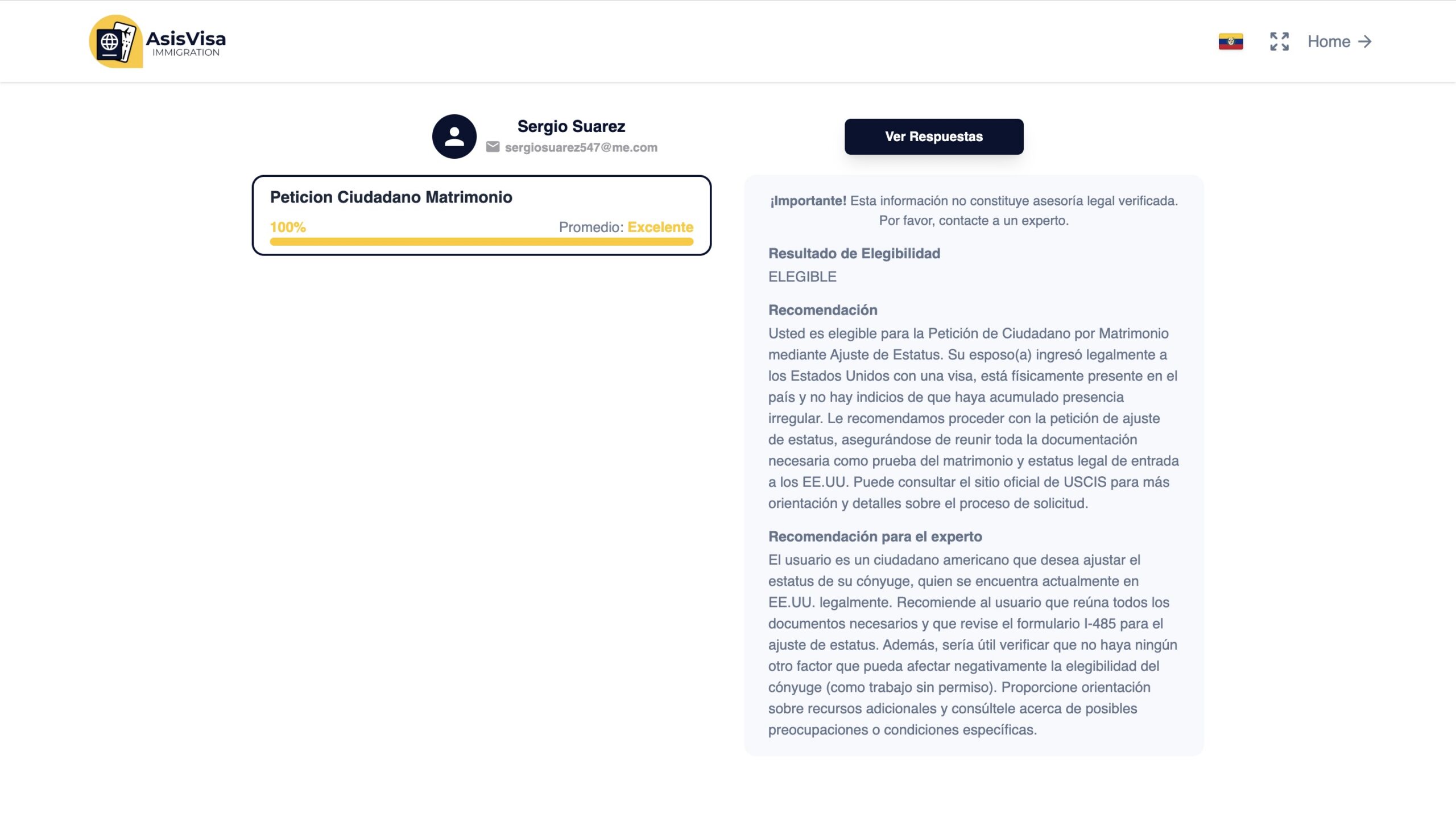
Step 1 Eligibility

Eligibility: Check if you qualify for the visa you want to apply for with the help of artificial intelligence, quickly, securely, and without intermediaries.

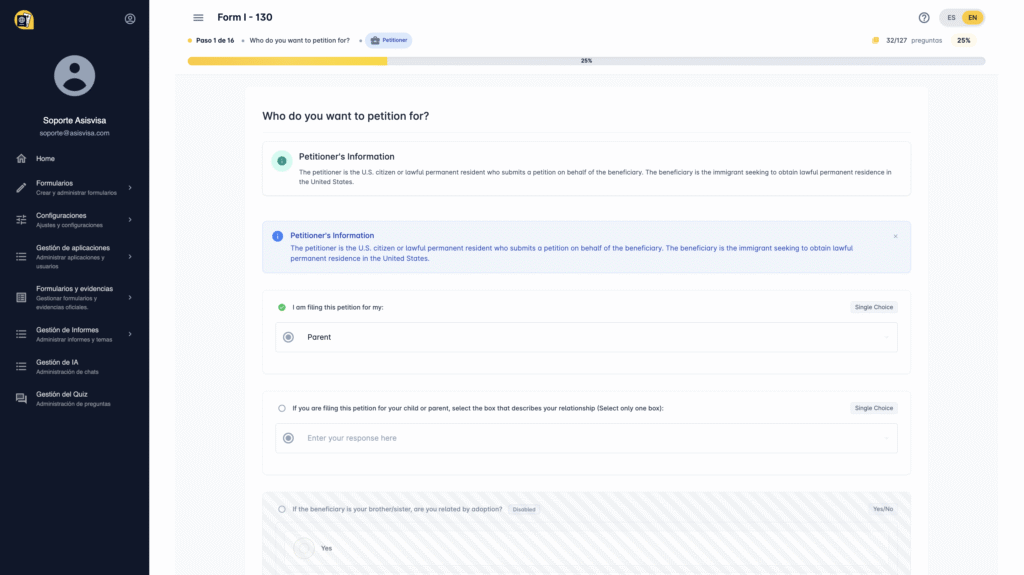
Step 2 Fill Out Immigration Forms

Fill Out Immigration Forms: We make filling out immigration forms simple, guiding you step by step so you can feel confident every detail is right.

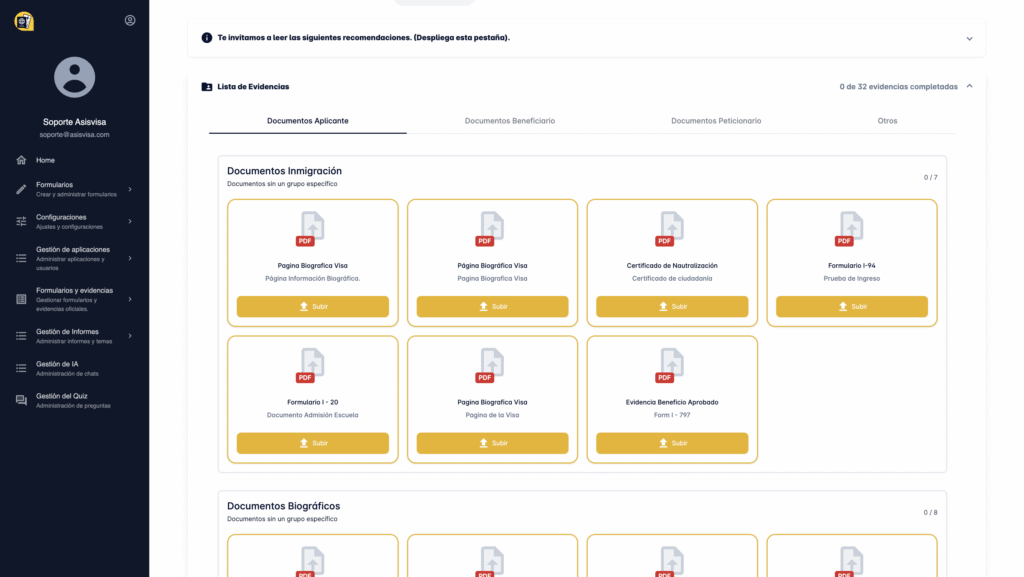
Step 3 Upload Evidence

Upload Evidence: Easily upload the supporting evidence tailored to your situation directly into our secure platform.

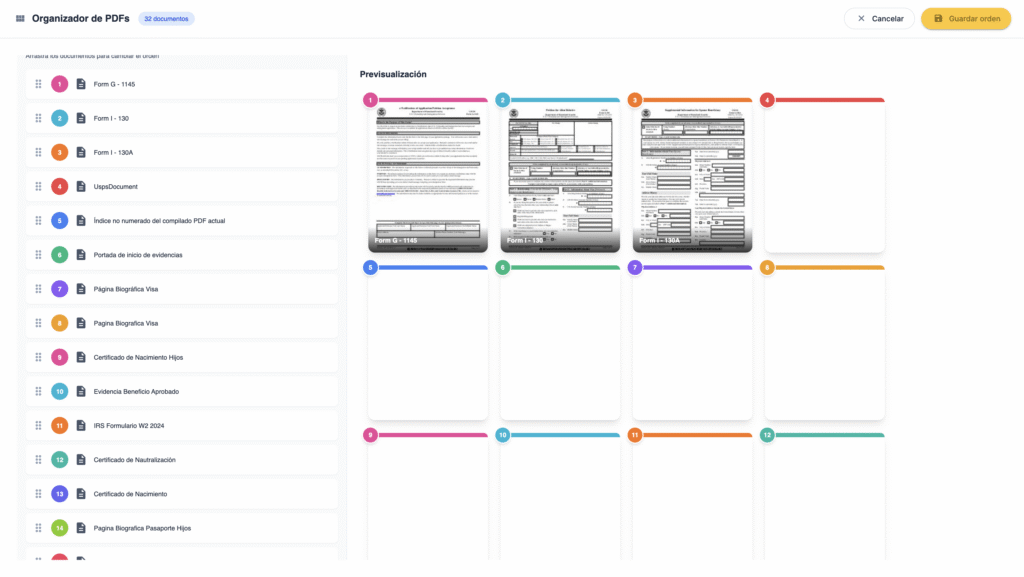
Step 4 File Compilation

File Compilation: Our platform automatically compiles all the required forms, evidence, and supporting materials into a complete immigration file tailored to your case.

Step 5 Submission

Submission: Once reviewed and finalized, your application is prepared for submission to USCIS, ensuring everything is properly organized, consistent, and ready for review by the officer.

Key requirements for applying for a visa

Discover the main criteria that embassies evaluate before approving your application

Service Breakdown

Clarity at Every Step: What’s Included and What’s Not

What’s Included

What’s Not Included

USCIS Approval Rates

History of cases processed according to USCIS

No Data

Approved:

0

Denied:

0

0%

No Data

Approved:

0

Denied:

0

0%

No Data

Approved:

0

Denied:

0

0%

No Data

Approved:

0

Denied:

0

0%

USCIS Processing Times

Data based on 80% of cases processed within the same category. The remaining 20% may vary.

Choose the service that fits you best

Explore our prices

Employment Visas Family Petitions Temporary Visas

Frequent questions

Clear answers to our customers' most frequently asked questions

How long does the consular process take to obtain a Green Card?

The consular process allows you to leave and return to the United States as needed. Once your priority date is set, the scheduling process typically takes three to four months. Upon completion of the process, you will receive an immigrant visa stamped in your passport, which will allow you to enter the United States to obtain your Green Card.

To qualify for an EB-1A Green Card, you must demonstrate (1) extraordinary ability in science, the arts, business, education, or athletics, (2) sustained national or international recognition demonstrated through awards, memberships, publications, or other evidence, and (3) that your work will benefit the United States by contributing to its growth, innovation, or culture.
USCIS requires proof of a major international award (such as a Nobel Prize) or at least three of the ten EB-1A program criteria, which include recognized awards, exclusive memberships, published media coverage, evaluation of others' work, highly relevant original contributions, scholarly articles, exhibitions, leadership roles, high salary, or commercial success. Meeting three criteria is the minimum; USCIS then evaluates whether you are among the top professionals in your field globally.
Sustained recognition means that your achievements are widely acknowledged and maintained over time, not just a one-off success. Examples include repeated awards, media coverage, invitations to serve as a jury member or speaker at conferences, and consistent recognition from experts in your field. USCIS looks for evidence that you are consistently considered a leading authority in your profession.
No. Unlike most employment-based visas, the EB-1A Green Card for Extraordinary Ability allows self-petition. You don't need a U.S. employer to sponsor you. However, you must demonstrate that you will continue working in your field of expertise in the United States and that your work will significantly benefit the country.

Resources Of Interest

Explore our blog and discover articles on immigration news, practical guides, and exclusive tips to increase your chances of success in your immigration applications.