Expulsion of immigrants at the border under Title 42 ruling

Around 2,000 people, including children, women, and men, have been transferred to other immigration stations from a Texas border city that has been overwhelmed by the influx of Haitians, Venezuelans, and Nicaraguans, according to the Department of Homeland Security (DHS). 

These transfers will continue to happen "to ensure that irregular migrants are apprehended, processed, and promptly removed from the United States in accordance with our laws and policies," the DHS said in a statement.

According to the Department of Homeland Security, flights to Haiti and other destinations will be expedited within the next 72 hours to address the needs of migrants seeking refuge and awaiting processing in increasingly precarious conditions under the Rio Grande International Bridge, which connects Texas with Ciudad Acuña, Mexico. 

Michael Vargas, a Venezuelan immigrant, comments on his situation at the border: «There’s urine and feces, and we’re sleeping next to the garbage in the camp. We’ve been here for three days with my wife and two children.” Vargas also states that his ticket number is 16,000, while the authorities are processing number 9,800. 

The order that has allowed most migrants to be quickly expelled without the possibility of seeking asylum is the well-known Title 42, a public health order from the U.S. Centers for Disease Control and Prevention, issued under the Trump administration at the beginning of the coronavirus pandemic. President Joe Biden has kept this rule in effect, although he exempted unaccompanied minors and most families.

A judge ruled on Thursday that the policy could not be applied to families, but the ruling does not take effect for two weeks and the Biden administration is appealing it in court.

This news story was created using information from REUTERS: https://reut.rs/3zz7wqe

Around 10,000 migrants gather under a bridge between the United States and Mexico border

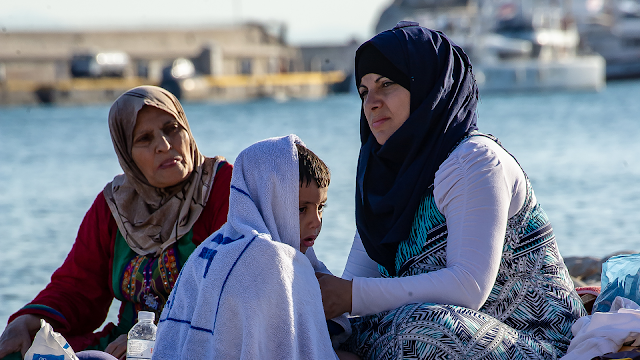
Thousands of people have crossed the border, mostly Haitians; all those who have crossed have been forced to sleep under the bridge in deplorable conditions, thus creating a growing humanitarian crisis. 

The bridge connects with Texas and with the Acuña Metropolis of Mexico, which has a temporary camp that has seen an increase in the flow of people arriving there. 

According to government data, the situation has been such that at the beginning of this year (2021), it was reported that the number of migrants detained at the border in the month of July exceeded 200,000 cases for the first time in 21 years. 

The vast majority of those waiting are Haitian, Cuban, Venezuelan, and Nicaraguan migrants, forced to endure temperatures of 37°C and must return for supplies, even though the makeshift camp has few services to offer them. 

Since the Biden administration took office, there have been major changes in immigration procedures, including the creation of a task force to reunite migrant children with their families, halting the construction of Trump's border wall, and reviewing immigration programs canceled by his predecessor. 

This news story was created from BBC News: https://bbc.in/3zrcG7R 

Biden resumes program that allows Central American children to migrate legally

By decision of the Biden administration, new applications will begin to be accepted for an Obama-era immigration policy, in which parents currently residing in the United States can bring their children from Guatemala, Honduras, and El Salvador to the U.S. 

On Tuesday, September 21 of this year, applications will begin to be accepted again, marking the final phase of the reactivation of this Central American Minors (CAM) initiative by the Biden administration. 

The resumption of the program is hailed as a very positive, safe, and legal step to reduce the often dangerous journeys migrant children undertake to reach the southern border. According to U.S. officials, tens of thousands of parents residing in the United States will be able to benefit from the program. 

During the first phase of reopening, the Trump administration in 2017 closed approximately 3,000 pending cases. During the current reopening, nearly 1,400 cases have been reopened. However, no children have yet been brought to the United States, authorities added. 

In June of this year, the Biden administration expanded eligibility for the CAM program, thus allowing parents petitioning for their children to apply, even if they have pending applications for political asylum, U visas (which are reserved for victims of serious crimes), Temporary Protected Status (TPS) beneficiaries, among other people with temporary legal status in the United States.  

The awarding process for this program should take between 12 and 14 months, administration officials said. The program aims to help children fleeing violence in Central America who have family members in the U.S. 

The Departments of State and Homeland Security stated in a press release: «We are firmly committed to welcoming people to the United States with humanity and respect, and reuniting families… We are fulfilling our promise to promote safe, orderly, and humane migration from Central America through this expansion of legal pathways to seek humanitarian protection in the United States.».

This news story was created from CBS News: https://cbsn.ws/3tSUkvd

New bill makes legal adjustments that give hope to immigrants

«"Chairman Jerrold Nadler (D-NY) announced a committee meeting for Monday, September 13, to discuss legislative proposals under the budget reconciliation guidelines."»

On September 10, 2021, the House Judiciary Committee issued a press release: «Chairman Jerrold Nadler (D-NY) announced a committee meeting for Monday, September 13, on legislative proposals under the budget reconciliation instructions.» Before becoming law, the provisions would have to be approved by the Judiciary Committee, the House of Representatives, the Senate, and signed by the Speaker. (Update: On September 13, 2021, «The House Judiciary Committee voted 25-19 along party lines to advance the legislation,» reported Suzanne Monyak of CQ/Roll Call.) 

This new House bill could provide relief for the millions of immigrants living in the United States who wait years to obtain a Green Card because of delays in granting legal status. 

Although the bill does not contain permanent structural changes to the legal immigration system, it would likely allow more people to obtain permanent residency, which the Immigration Reform and Control Act of 1986 would provide relief to many families, highly skilled immigrants, and employers.

This bill would provide significant benefits and help American employers retain talent, as well as potentially help American universities and improve the lives of many families. 

More than 10 million U.S. citizens live with an undocumented immigrant.

In the United States, there are more than 10 million undocumented immigrants, according to a Census Bureau study conducted by the immigration advocacy group FWD.us. Of these 10 million, 4.9 million are children with at least one undocumented parent. 

Mixed-status households comprise approximately 22 million people who live in and are part of American society despite being undocumented immigrants. These figures include U.S. households that house U.S. citizens, legal permanent residents, or holders of temporary visas, and at least one undocumented individual. 

This study comes as immigrant advocates begin to pressure Democrats in Congress to fight to include immigration provisions in the upcoming $3.5 trillion reconciliation bill. 

Advocates expect up to 8 million people to be covered by the bill, gaining access to permanent legal residency, which could become a path to U.S. citizenship. This is because currently, undocumented immigrants and beneficiaries of the Temporary Protected Status (TPS) program are not allowed to apply for any type of legal status. 

According to a report by FWD.us, of the 2.4 million U.S. citizens living with undocumented immigrants in California, 1.2 million are children, meaning that up to 1.2 million eligible voters live in mixed-status households. In Texas, up to 1.5 million eligible voters live in mixed-status households, as do more than 140,000 in Arizona and 120,000 in Georgia.

«Fixing our broken immigration system is personal for millions of Americans living in mixed-status families. As citizens and voters, they expect Congress to give their families a long-awaited chance at justice, certainty, and a better future in the country they call home,« Connor added.

How immigration policy became "racial criminalization"«

According to César Cuauhtémoc García Hernández, a law professor at Ohio State University, immigration law and criminal law have often merged to the detriment of the rights of those seeking to migrate to the United States. This development has a racial component. 

However, this wasn't always the case. The detention and criminalization of immigrants at the U.S.-Mexico border was the exception, not the rule, until the 1990s. “It's no coincidence that immigration law became more criminalized precisely when the United States closed more legal pathways for Mexicans to immigrate legally. We can look at crime from a racialized perspective in the current context,” said César Cuauhtémoc García.

Similarly, immigration law has increasingly relied on a migrant's criminal record to determine whether an individual is imprisoned or deported. Between 1892 and 1984, approximately 14,000 people were barred from the U.S. due to a criminal conviction or a narcotics offense, while around 56,000 were deported for those reasons between 1908 and 1980. These figures, spanning nearly a century, highlight the stark differences compared to contemporary statistics. In fiscal year 2013 alone, ICE deported more than 216,000 people with criminal records. 

Despite this, García maintains optimism about the possibility of improving the immigration system. “I see my role as being able to participate in making the United States legal system the best version of itself. As a teacher, it is a tremendous privilege to help train the next generation of lawyers and advocates who can work to reform the system that exists today.»

«If you want the sweet thrill of daily victories, immigration law isn’t for you,» added César Cuauhtémoc. “This is a job for people who believe that everyone who goes through the legal system deserves a fair chance. This speaks to the legitimacy of our legal system, and the quality of the process is just as important as the quality of the outcome.»

This news story was created from NBC News https://nbcnews.to/3E4VWXo

Which Afghan refugees are being resettled in the US?

The Biden administration's plan to airlift and relocate wartime allies from Afghanistan faces major logistical and political challenges, so much so that they have ignited a national conversation about U.S. efforts to resettle Afghans who helped U.S. forces during the 20-year conflict. 

Providing refuge to Afghans assisting in the U.S. war effort is an unusual immigration policy that enjoys broad public support, including among Republicans and Democrats. However, it has also raised questions about how many at-risk Afghans will be able to evacuate to the United States, who will qualify for refuge, where those who do will be resettled, how they will be exposed, and what will happen to them once they set foot on American soil.

Special immigrant visas

Under programs established by Congress with broad bipartisan support, designed for certain Afghans who support the U.S. war effort, they may be eligible for a Special Immigrant Visa (SIV), which allows them to move to the U.S. permanently with their spouse and children. 

One program is designed to provide security for Afghans working as translators or interpreters. Another program allows Afghans who have worked for the U.S. government, were contractors, or served with NATO to obtain a special visa if they meet certain requirements. 

While the smaller program for interpreters and translators is permanent, the second classification is temporary and will expire once all targeted visas are issued. In July, Congress added 8,000 more visas to the broader classification, bringing the total to 34,500. 

Another way to qualify for refugee resettlement 

The Biden administration in early summer created a new refugee category for those who worked with U.S.-based media and non-governmental groups.

Afghans evacuated from Kabul who are not eligible for special visas may still qualify for US refugee resettlement if they wait in underdeveloped countries. 

The Biden administration has been asked to use an immigration tool known as "humanitarian parole" to allow vulnerable Afghans, such as female leaders, to enter the United States without a visa. 

It has also been suggested that people on parole who may be potentially eligible for other immigration benefits such as political asylum may be received in the United States. 

Florida Republicans support the resettlement of Afghan refugees and translators

South Florida Republicans favor opening the country's doors to Afghan refugees and visa holders, although there is currently no immediate plan to resettle them in Florida after their arrival in the United States. 

The position of some differs completely from that of former President Donald Trump and some members of the Republican Party who have warned that "terrorists" will be allowed into the United States when President Joe Biden ends the 20-year military occupation of Afghanistan, which triggered a massive, chaotic, and deadly evacuation of American citizens, holders of special Afghan immigration visas, and other refugees who fear retaliation from the Taliban. 

Florida's Republican senators and U.S. representatives are in favor of honoring the commitment made to 22,000 applicants for special immigrant visas and their families, along with refugees referred by the United Nations, the U.S. Embassy, or a designated non-governmental organization. 

Florida Republican Senator Marco Rubio wrote a letter to Joe Biden

“We believe that in addition to evacuation, it should include not only the 22,000 applicants for special immigrant visas in Afghanistan, but also those eligible for Priority 1 and Priority 2 refugee status.”

Trump's sentiments, like those of other Republican members of Congress, candidates for public office, and conservative news pundits, and Georgia Representative Marjorie Taylor Greene tweeted: GA should not welcome Afghan refugees while thousands of Americans are stranded. 

JC Torres, a Tallahassee-based development manager for the International Rescue Committee, an international organization that provides aid to refugees, said the process for settling Afghan refugees in the U.S. includes rigorous vetting before they are settled across the country.

Torres said there are no current plans to send Afghan refugees to Florida. Most of the refugees in the United States are currently at military bases in Texas, Virginia, and Wisconsin until they are cleared to leave.

This news story was created from the Miami Herald: http://hrld.us/3hcqYTE   

Black immigrants have been left out of political decisions for far too long

Shamira Ibrahim has nostalgically recalled being far from home, after a grueling journey across the US-Canada border, struggles to obtain visas, poverty, a battle with the criminal justice system and giant financial obstacles as a result of being an immigrant from East Africa. 

When Ibrahim was just 5 years old, he arrived in the United States with his family. He recalls living briefly in East Africa before moving to Canada. Now 30, he says he spent most of his life in the countryside, experiencing firsthand the fear of being a Black immigrant. 

In a territory like the USA, whose empire is based on the criminalization of foreigners, African American immigrants have an additional stressful element surrounding this, since this society in this nation remains intrinsically criminalized. 

Around 71% of immigrants in the USA are African American, and because of this they are already more likely to be deported than immigrants of other races, according to a report by the Black Alliance for Just Immigration.

Between June 2018 and June 2020, African American immigrants paid higher bail amounts than non-African Americans at detention centers, according to the Refugee and Immigrant Legal Services and Education Center. This has led to the recognition that migrants end up in immigration detention centers for extended periods, sometimes indefinitely, due to their inability to afford the disproportionately high bail amounts. 

African American societies have been and are subject to arrests and prosecutions far more frequently than the general non-African population; 761% of African American immigrants are deported for having had contact or an argument with the police, according to the Black Alliance report. 

Because of all these issues, UndocuBlack, the Black Immigrant Collective, African Communities Together, and other groups fought for years to get Congress to pass the Liberian Refugee Immigration Equality Act, a law that offers Liberians living in the U.S. since 2014 the opportunity to become permanent residents, obtain a green card, and ultimately, citizenship. Congress passed the law in 2019; UndocuBlack officials said it is the first legalization bill to become law in more than a decade.

This news story was created from NBCNEWS: https://nbcnews.to/2WNKqif