Migrant caravan advances towards the United States

As the Summit of the Americas progresses, a caravan of migrants heads towards the United States. 

A group of approximately 14,113 people departed Monday from the city of Tapachula, in southern Mexico, bound for the United States. This number is uncertain and has not been verified by official sources. However, according to Luis Rey García Villagrán, migrant advocate and director of the Center for Human Dignity (CDH), "We have a database with 14,113 registered individuals, including more than 3,000 children, 126 pregnant women, and more than 70 adults with disabilities." It is estimated that most of the people are Venezuelan citizens, but there are also Central Americans, Cubans, Haitians, and others who are joining the group as they travel. 

Unlike other similar caravans that left Tapachula heading to Mexico City to pressure the government of Andrés Manuel López Obrador to grant them humanitarian visas and work permits, this time the migrants have another objective: to reach the southern border of the United States and ask for asylum.

These are people who are fleeing their country of origin due to various factors, including violence, poverty, climate change, government corruption, drug trafficking, and organized crime.

The caravan aims to reach the United States, although in Mexico the agency, which operates under the command of the Ministry of the Interior, asked the migrants to register and request refugee status with the Mexican Commission for Refugee Assistance (COMAR). The response of most migrants was no, since they feel that the system implemented by this country does not work; however, there are migrants who are carrying out the process without having anything clear yet.

“It’s a bottleneck, a human knot. COMAR takes months to grant an appointment, and then the National Institute of Migration takes even more months to issue documents. During all that waiting time, migrants are left behind, often abandoned on the streets and in the poorest cities of Mexico,” García Villagrán added.

A waiting period, during which work is limited or scarce, but expenses for food, housing, and other necessities don't stop. Migrant caravans departed from Tapachula regularly last year, though this week's caravan appears to be one of the largest. This city, located just across the border from Guatemala, is a popular transit point for migrants traveling from Central America.

Furthermore, the activists accompanying the group emphasized that one of their objectives is to draw the attention of America's leaders to the needs of those fleeing their countries. Finally, the caravan continues its journey despite the challenging terrain, the relentless rains, and the heat that hinders progress. 

News report based on information from: Univision and CNN.

Express deportations of Colombian migrants in the United States

Increase in "express" deportations of thousands of Colombians arriving at the southern border of the United States.

According to Tom Cartwright of Witnesses on the Border, between March and May the U.S. sent 48 flights, estimated to have brought back approximately 5,000 people who were denied entry to the country during those three months. To put that number into context, prior to March of this year, the average number of flights per month was one.

The "express expulsion" of Colombians skyrocketed from that month onwards after an agreement was reached in Washington with the national government to accept the return of these people without first subjecting them to the regular processing and deportation process that exists in the North American country.

So far this year, the number of Colombians attempting to enter the country illegally has increased compared to last year. Throughout 2021, approximately 10,000 Colombians were arrested at the border. However, in March of this year alone, arrests reached almost 16,000, and so far this fiscal year, the figures have reached more than 55,000 people.

The United States is using the controversial Title 42 to facilitate the deportation of citizens of many nationalities, conducting such flights to various countries around the world, including Brazil, Ecuador, and Haiti. However, the situation is entirely different for its close neighbors, because, as Adam Isacson, a security expert at the Washington Office on Latin America (WOLA), states, "In the case of the land border, they simply take the arrested person to the border line and leave them there, regardless of whether Mexican authorities are present or not.".

Joe Biden has tried to lift the controversial Title 42, but a Louisiana judge blocked his decision while the case remains in court.

The expedited removal process occurs when a person is detained by U.S. Customs and Border Protection (CBP), and faces two possible paths that are defined by the arresting officer.

The first is expedited removal through Title 42. The second is processing under Title 8. Title 8 is the mechanism normally used to process detainees and typically includes safeguards and guarantees not found under Title 42. According to some experts, the border official chooses the appropriate Title depending on how the encounter occurred. If the person was entering the country illegally and is apprehended, they are generally an immediate candidate for Title 42. The documents the migrant is carrying also influence the decision, as does whether they are part of a family unit or an adult traveling alone.

Finally, removal under Title 42 has no legal consequences in the U.S. because these are removals, not deportations. In contrast, under Title 8, individuals denied entry, whether through summary removal or because their asylum application was denied by an immigration judge, are barred from attempting to enter the country for a period of five years.

News report based on information from: El Tiempo

An alternative summit to the Summit of the Americas will be held in the United States.

Called the People's Summit, it will aim to highlight the issues that were not included in the Summit of the Americas.  

The announcement was made at the Los Angeles Trade Tech College headquarters in downtown Los Angeles, where the meeting will take place from June 8 to 10, just a few blocks from the Los Angeles Convention Center, which will bring together the leaders of the Ninth Summit of the Americas. 

Angelica Salas, director of the Coalition for Humane Immigrant Rights (CHIRLA), told the press that the People's Summit will address "all those important issues that the presidential summit left out," such as the rights of immigrants, women, and workers.

«"Immigration will not be officially discussed at the Summit of the Americas, and that is a big mistake. That is why we are holding this Summit, because we want to ensure that the voices of immigrants are heard," Salas said.

The Summit of the Americas is a meeting held periodically by the political leaders of the countries of North America, South America, Central America and the Caribbean with the aim of discussing and defining actions to address problems and challenges shared by the region and to advance integration.

The U.S. State Department notes that the summit and its forums will be based on a shared respect for democracy, fundamental freedoms, the dignity of labor, and free enterprise. It also explains that each meeting "focuses on a critical area of cooperation of interest to all countries in the Americas.".

This year's theme is "Building a Sustainable, Resilient, and Equitable Future," and according to President Joe Biden's administration, the forums for this ninth edition will foster "greater dialogue among heads of government, people, and businesses of the Americas to address hemispheric challenges and opportunities, such as social inclusion, economic recovery, climate change, democracy, and digital transformation."“

On the other hand, other issues that the alternative summit intends to address include concerns about immigration rules, including the controversial Title 42, which allows for the immediate expulsion of immigrants for health reasons, and the need to pass immigration reform in the United States, among other concerns.

On Tuesday, a senior Biden administration official explained in a call with reporters that they are working on a statement endorsed by summit attendees in which they will share their vision on how to address "the migration challenge together," however, no further information on this topic has been released so far. 

News report based on information from: EFE and CNN 

The United States still has non-immigrant visas for certain countries

The U.S. government announced Tuesday that it continues to accept applications for nonimmigrant worker visas (H-2B), in addition to the 11,500 it has already allocated to citizens of El Salvador, Guatemala, Honduras, and Haiti, regardless of whether they are returning workers. 

The H-2B visa is a temporary visa that allows you to stay in the United States for up to one year. It is specifically designed for temporary foreign workers in the country and is not intended for long-term employment needs.

Under the newly announced temporary final rule on the statutory maximum number of H-2B visas, which increases the maximum number to 35,000 H-2B nonimmigrant visas through the end of fiscal year 2022, U.S. Citizenship and Immigration Services (USCIS) has received enough petitions to reach the limit of 23,500 additional visas that were made available only for returning workers. 

USCIS indicated that citizens of those four countries have until September 15 to file petitions, or until the visa cap is reached (whichever comes first). Likewise, it invited petitioners whose workers were not selected for the allocation of 23,500 returning worker visas to resubmit their petition. 

This new call for applications is due to the fact that no properly submitted requests were received by the publication date of the temporary final rule. 

The beneficiaries include: H-2B workers currently in the United States who wish to extend their stay and, if applicable, change the terms of their employment or change employers. Also included are fish roe processors, fish roe processing technicians, or fish roe processing supervisors; and workers employed or providing services in the Commonwealth of the Northern Mariana Islands and Guam from November 29, 2009, through December 31, 2029.

Finally, these supplemental visas are available only to U.S. companies that suffer or will suffer imminent irreparable harm if they are unable to employ all of the H-2B workers requested in their petition, as stated by the employer in a new certification form.

Before authorizing additional visa amounts, the Secretary of the Department of Homeland Security (DHS), in consultation with the Secretary of Labor, considers the needs of businesses and other factors, including the impact on American workers and the integrity of the H-2B program.

News report based on information from: USCIS and EFE. 

Asylum processes will be expedited in the United States.

This Tuesday marks the start of the first phase of a new protocol that grants temporary discretionary powers to asylum officers at the U.S. Citizenship and Immigration Services (USCIS), who will be able to grant, deny, or refer asylum cases at the border with Mexico, a privilege previously only available to immigration judges.

The Joe Biden Administration announced that migrants who pass the credible fear interview after May 31 may be referred to a court and possibly continue their legal proceedings while free.

The start of this project occurred at the end of March when the Departments of Justice (DOJ) and Homeland Security (DHS) announced an Interim Final Asylum Rule that grants these benefits before cases reach immigration courts.

According to DHS members, this protocol will be activated to “improve and expedite the processing of asylum applications filed by non-citizens subject to expedited removal, ensuring that those who are eligible for asylum receive prompt assistance, and those who are not are placed in expedited removal proceedings.”.

The decision to implement this mechanism was made to alleviate the courts "due to existing judicial delays." By the end of April, the Office of Immigration Case Review (EOIR - Immigration Court -) had accumulated more than 1.7 million cases.

The government explains that the program will be implemented in phases, gradually starting with a small number of people and growing as USCIS develops operational capacity over time.

“Beginning May 31, DHS will seek to refer approximately hundreds of non-citizens each month to USCIS for an Asylum Merit Interview (AMI) following a positive credible fear determination,” the rule explains.

Initially, the regulation states, referrals for an Asylum Merit Interview (AMI) will be limited to those individuals who indicate to USCIS and Immigration and Customs Enforcement (ICE) “their intention to reside in one of the following six cities: Boston, Los Angeles, Miami, New York, Newark or San Francisco.

Finally, the new protocol covers families and clarifies that it “will not apply to unaccompanied minors.” These cases will be handled under existing laws and regulations, including the 1997 Flores Settlement Agreement. The DHS also indicates that the first locations where the new provisional asylum rule will be implemented are two detention centers in the state of Texas.

News report based on information from: Univision

An orientation day for Venezuelan migrants will be held in Miami.

A citizen outreach event to provide guidance to Venezuelan migrants on immigration, education, taxes, and insurance will be held on Wednesday, June 1st in Miami, organized by the Venezuelan embassy in the United States.

Ambassador Carlos Vecchio, along with members of the diplomatic mission, will hold a discussion where Venezuelans can clarify their concerns about issues such as Temporary Protected Status (TPS), to which, as of last month, around 237,500 Venezuelans had applied, and of those applications, 51,295 were approved, others are pending a response, and 90 applications were rejected. 

Remember that the deadline to apply for this immigration relief is September 9, 2022, after the U.S. government granted an extension.

Additionally, “An important point of the day will be how Venezuelans can validate their professional degree so that it is recognized in the United States,” the consular headquarters said this Thursday.

Vecchio will also explain the Labor Connection program, a platform recently launched by the Embassy in conjunction with companies such as Amazon and the Tent Partnership for Refugees Foundation, to provide job opportunities for Venezuelans with work permits.

It is important to emphasize that the immigration or employment status of those who wish to participate does not matter, as the intention is to provide guidance on how people can find a way to legalize their situation in the United States. 

Finally, free assistance will be offered by pro bono immigration attorneys and experts in the other topics to be discussed. The event will take place at URBE University, located at 11430 NW 20th St., Unit 150, Sweetwater, FL 33172, between 4 pm and 9 pm.

If you are interested in attending, you must register at the following link: https://www.eventbrite.com/e/encuentro-del-embajadr-carlos-vecchio-con-la-diaspora-venezolana-tickets-348860951497, as spaces are limited. 

News report based on information from: Embassy of Venezuela and El Nuevo Herald. 

A court order may provide an opportunity for immigrants

The order restores the ability of migrant families to cite fear of persecution and torture as a path to seeking protection in the United States.

A court order recently issued by a federal judge in Washington, DC, grants migrant families a means of entering the United States despite the public health policy measure known as Title 42, which has prevented more than 2 million migrants from entering the country since the start of Covid-19. 

The new guidance issued to Customs and Border Protection (CBP) went into effect at 12:01 a.m. on Monday, according to documents obtained by NBC News. It states that if CBP officers notice that at least one family member displays a verbal or nonverbal «manifestation of fear» of being deported, they must be released into the U.S. with a court date or referred to an asylum officer who can «determine whether the non-citizen is more likely to be persecuted or tortured in the country to which they would be deported.”.

It is unclear whether asylum officers will allow migrant families to apply for asylum, which comes with more protections such as work authorization, or only the protections afforded by the Convention Against Torture, said Lee Gelernt, an attorney with the American Civil Liberties Union (ACLU) representing the migrant families in the D.C. Circuit Court. To qualify for protections under the Convention Against Torture, a migrant must demonstrate that they are likely to be tortured if returned to their country of origin.

A spokesperson for the U.S. Department of Homeland Security said that families who do not qualify for asylum and are not removed under Title 42 will be processed for deportation.

Information taken from: NBC News

The United States has not yet said goodbye to Title 42

Title 42 remains in effect and thousands of immigrants are waiting to see if they will be deported.

The decision by a federal judge in Louisiana to prevent the end of Title 42, a public health rule activated in March 2020 due to the pandemic, represents a major blow to the development of the Joe Biden administration's immigration policy.

On Friday, federal judge Robert Summerhays issued a second temporary injunction blocking the cancellation of Title 42, which in the last 26 months has allowed some 2 million immigrants to be deported, most of whom fled their countries seeking asylum in the United States.

On Friday, 72 hours before the date announced by the Department of Homeland Security (DHS) to begin phasing out the controversial policy, the Louisiana court upheld the ruling. 

It's worth noting that the lawsuit originated from 23 states, led by Arizona, which applauded the ruling and announced they would continue to defend their position to prevent a further migration crisis at the border. The lawsuit arose because the states alleged that the Administration violated the Administrative Procedure Act (APA) by not considering their input on the elimination of Title 42.

On the other hand, the White House Press Office announced that it will respect the decision issued by the Louisiana judge that keeps Title 42 alive, but warned that it will appeal the ruling and continue with preparations to manage the border using legal tools while respecting due process for immigration.

These are other alternatives used by the United States to the health security policy, Title 42, Title 8 of the Immigration Act (INA) and the Remain in Mexico Program (MPP), also known as 'Stay in Mexico', programs that restrict access to asylum in the United States.

Finally, some of those opposing this ruling argue that it causes irreparable harm to migrant families seeking safety. They also state, “Our country can live up to its highest ideals by welcoming women, men, and children in life-threatening circumstances, as we have most recently demonstrated with our support for our Ukrainian brothers and sisters.”. 

"Unfortunately, the judge's decision goes against those ideals," said Mary Kay Henry, president of the Service Workers International Union (SEIU). 

News report based on information from: Univision

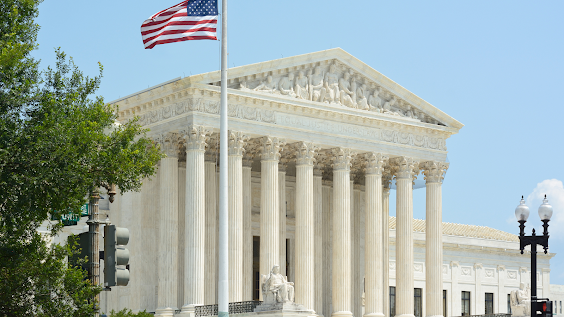
Supreme Court ruling puts some immigrants close to deportation

The ruling issued this Monday, May 16, by the Supreme Court in the Patel case leaves any immigrant who has made a mistake during a procedure that is subsequently rejected by an immigration officer or judge on the verge of deportation.

Until the ruling, there was the option of appeal to the federal courts, including the highest court of justice; however, the judges, in a 5-4 split decision, ruled against the foreigners seeking judicial review.

Justice Amy Coney Barrett wrote in the ruling that federal courts are “categorically prohibited” from considering such immigration matters because they lack jurisdiction in federal courts. Furthermore, the only exceptions, according to the Supreme Court ruling, are constitutional issues or questions of law.

All of this stems from the Supreme Court's review of the case of Pankajkumar Patel, an Indian immigrant, and his wife, who entered the country illegally without being inspected at the border in the 1990s. In 2012, the Department of Homeland Security (DHS) determined that Patel was "deportable" for being present "without inspection" in the country.

Patel sought discretionary relief from deportation, which requires demonstrating, among other things, clearly and beyond a reasonable doubt, that he is not inadmissible to the United States, according to the law. However, his admissibility was called into question because, when he applied for a driver's license in the state of Georgia in 2008, he checked a box indicating that he was a U.S. citizen, which he was not.

Finally, at his deportation hearing, the Indian-born immigrant argued that it was a mistake, but the immigration judge presiding over the trial "rejected" Patel's arguments and denied his request for adjustment.

The Supreme Court decision states that a false declaration that a person is a U.S. citizen when they are not, not only empowers the government to reject an application for a benefit, but also makes the person legally inadmissible for receiving residency because they misrepresented themselves as a citizen.

The ruling represents a severe blow to an undetermined number of immigrants in the process of obtaining a benefit, affected by an adverse decision made at the discretion of an official, or to thousands more who, tomorrow, may apply for an available legal benefit and, during the process, make an unintentional error that becomes an unwanted and unexpected cause of deportation.

Finally, the Supreme Court ruled that foreigners who make false statements during immigration proceedings and claim a legal status they do not possess cannot appeal decisions made by the Department of Justice (DOJ) when they are denied benefits or a deportation order is issued. Likewise, federal law “prohibits judicial review of any ruling related to the granting of relief” under the Immigration Act.

News report based on information from: Univision

A federal judge in Louisiana will decide the future of Title 42

Judge Robert Summerhays is evaluating the arguments for and against Title 42, which allows for the immediate deportation of immigrants seeking asylum in the United States. A final ruling is expected in the coming days.

Summerhays, the Louisiana federal judge in charge of determining the future of that policy, declined to issue a final ruling on the White House's intention to end Title 42. The judge argued that he needs to evaluate the arguments for and against that controversial measure, which was implemented by the Donald Trump administration and which President Joe Biden now wants to end.

Biden had announced that his administration would cancel Title 42 on May 23, because it is a health order, not an immigration order. In addition, the Centers for Disease Control and Prevention (CDC) have given the green light to end immigration restrictions because they consider the pandemic to be under control.

This announcement, however, has sparked strong controversy. Immigrant advocates have applauded it, but Republicans, and even some Democrats, have spoken out against it because they believe that failing to maintain this policy would worsen the migrant humanitarian crisis. The states that support its continuation say the country is not prepared to receive so many migrants.

They also suggest that lifting the Title would put pressure on the health and police systems. Furthermore, advocates argue there is no basis for maintaining the measure, as it is a health policy, not an immigration policy. They also maintain that the CDC has full authority to lift an emergency health restriction that they no longer consider necessary.

While the final ruling is pending, the government reiterates that, for now, it is moving forward with measures to address a possible increase in the arrival of migrants if it can finally end that policy starting on the 23rd of this month.

One of their plans is to "significantly expand" expedited deportations, senior government officials have said, referring to the rigorous enforcement of Title 8 of the Immigration and Nationality Act (INA), a separate procedure, but one guaranteed under the respect for due process of immigration.

Ultimately, what is clear is that both Republicans and Democrats are concerned that the Biden administration is not prepared to receive the enormous influx of immigrants waiting at the Mexican border to enter the United States. 

Now, a new lawsuit has been filed against the Biden administration asking the same judge who has blocked the repeal of Title 42 to halt the implementation of the Interim Final Asylum Rule or to grant a nationwide preliminary injunction. Arizona Attorney General Mark Brnovic argues that the new policy “largely removes federal immigration judges from the asylum review process and instead grants asylum officers within the Department of Homeland Security (DHS) unprecedented authority to grant asylum to immigrants on a peremptory basis.” This lawsuit was filed Friday by the state of Arizona along with 19 other states.

This news report was compiled using information from Univision and Independent en español.