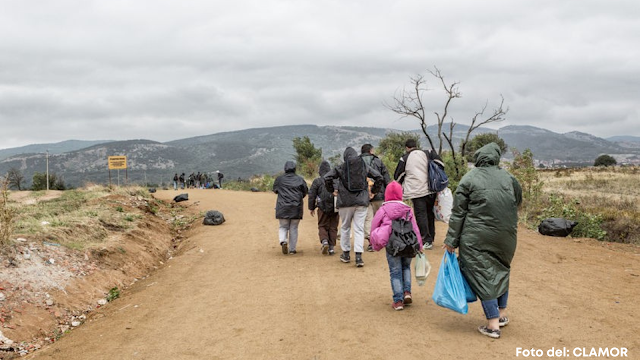
More and more lives are being taken by the illegal trafficking of people into the U.S.

The International Organization for Migration (IOM) and the UN Refugee Agency (UNHCR) called for an investigation into the incident in which dozens of migrants died and for those responsible to be severely punished.

In recent days, it has been impossible not to think about the dangers faced by immigrants on their journey to seek a better life, due to the dramatic discovery inside a truck trailer in Texas of 48 dead people and 16 seriously injured people, including children; this has caused shock around the world. 

This case is, to date, the deadliest related to human trafficking in recent U.S. history, and also affects countries such as Mexico, Honduras, Guatemala, and El Salvador, since several of the fatalities are from these countries.

According to the International Organization for Migration's (IOM) Missing Migrants Project, nearly 3,000 people have been reported missing or killed trying to cross the border from Mexico into the United States since 2014. This latest tragedy brings the total number of deaths in the first six months of the year to 290.

The border between the United States and Mexico presents a great challenge: the region is known for its inhospitable geography, including desert regions and dangerous rivers. 

Among the leading causes of death for migrants on the route to the United States are drowning and accidents. Also included are those who try to avoid natural hazards, hiding in vehicles, and facing other threats, such as the one that caused the deaths in San Antonio, Texas.

The fact that 67 people traveled crammed together, without any control in the vehicle, without ventilation, refrigeration or windows, and also without water and with temperatures almost 40ºC, has caused this tragedy and is proof of the desperation of the migrants.

The survivors of this catastrophe are recovering in the hospital from heatstroke and exhaustion. According to a report in The Texas Tribune, at least five of the 67 passengers were minors, and testimonies gathered by journalists at the scene of the tragedy indicate that most of the passengers were teenagers.

Finally, so far the United States federal authorities have captured 4 people who are already being prosecuted in court for the deaths of the migrants.

News report based on information from: BBC News, IOM and La Opinión. 

Do you want to migrate or legalize your status in the United States? Schedule a consultation at the following link. https://www.asisvisa.com/consulta-legal 

Biden is close to ending the Remain in Mexico program

According to international organizations, asylum seekers on the Mexican border are vulnerable to kidnapping, extortion, and murder.

The U.S. Supreme Court ruled Thursday that President Joe Biden can end the program implemented by his predecessor Donald Trump, which forces asylum seekers to wait in Mexico for their court dates in the United States.

In 2019, Trump launched the program officially known as the Migrant Protection Protocols (MPP), and commonly called "Remain in Mexico," as part of a broader offensive against illegal immigration and asylum seekers.

The initiative forced more than 65,000 asylum seekers to recross the border. Many have remained in Mexico for months or years, waiting to present their cases in U.S. courts near the border.

Biden has criticized the MPP as inhumane and suspended new enrollments in the program on his first day in office in January 2021 as part of his efforts to roll back his predecessor's immigration policies.

There have been several attempts by the Biden administration to end this program, but obstacles have always arisen, forcing them to restart it. 

Since the program was restarted by court order, nearly 4,400 migrants seeking asylum at the U.S.-Mexico border have been returned, according to Department of Homeland Security data through mid-June.

Among the nationalities enrolled in the program are Nicaragua, Cuba, Colombia, and Venezuela.

The aforementioned program has been involved in various problems of human rights violations, overcrowding, among other forms of violence.

In April, in Nuevo Laredo, a Mexican border city near Texas, three asylum seekers were kidnapped while local officials were transferring them to a shelter.

News report based on information from: EFE and Reuters. 

Do you want to migrate or legalize your status in the United States? Schedule a consultation at the following link. https://www.asisvisa.com/consulta-legal 

Supreme Court revokes right to abortion

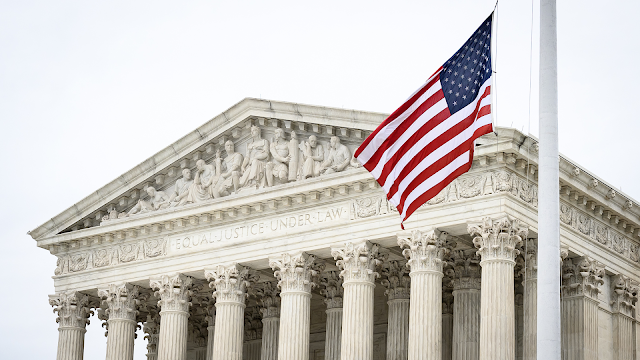
Historic ruling by the United States Supreme Court struck down the constitutional right to abortion.

Merrick Garland, the US Attorney General, lamented that the Supreme Court had overturned a protection that had been in place for almost half a century and had ended the doctrine of "stare decisis" - which means to stand by what has already been decided and not to disturb what has already been established - a "key pillar of the rule of law".

Abortion will not automatically become illegal in the US, but with the Supreme Court ruling, each state will be able to decide autonomously whether to permit abortions and under what conditions. A total of 13 states have already passed "trigger" or "triggering" laws, which take effect following the overturning of Roe v. Wade, the 1973 decision that guaranteed the right to abortion in the US.

More than 20 states are taking steps to restrict access to abortion, according to the Guttmacher Institute, a private, non-profit organization that supports abortion rights.

States can maintain the right to abortion within their territories, and those territories that wish to prohibit it cannot prevent women seeking abortions from traveling to other locations to obtain them. In this regard, major American companies such as Disney, JP Morgan, and Meta have pledged to cover the travel expenses of their employees who choose to have abortions.

Companies that offer to cover the cost of traveling to another state for the procedure are likely to face a strong backlash from anti-abortion Republicans.

Abortion is a highly divisive issue in the United States. According to a recent poll, 61% of American adults believe abortion should be legal in all or most cases, while 37% believe it should be illegal in all or most cases.

Furthermore, the name of this ruling (Roe v. Wade) originated in 1969 when a 25-year-old single woman, Norma McCorvey, using the pseudonym "Jane Roe," challenged Texas's abortion laws. At that time, the state prohibited abortion because it was not addressed in the Constitution, except in cases where the mother's life was in danger. Henry Wade, the Dallas County District Attorney, was a leading advocate for the anti-abortion law. For this reason, this legal battle is known as Roe v. Wade.

McCorvey was pregnant with her third child when she claimed she had been raped and took her case to court. However, her claim was rejected, and she was forced to give birth. In 1973, her appeal reached the Supreme Court, where her case was

She listened along with that of a 20-year-old Georgia woman, Sandra Bensing.

At that time, by a 7-2 vote, the Court justices ruled that governments lacked the power to prohibit abortions. The justices decided that a woman's right to terminate her pregnancy was protected by the Constitution.

Finally, in recent days, both pro- and anti-abortion voices have been heard, including that of President Joe Biden, who stated that it was a “sad day for the court and the country.” He expressed that the U.S. Supreme Court made a “tragic mistake” and that “the health and lives of women across the country are now in danger.” Meanwhile, state laws do not prohibit abortion outright, and most include exceptions, although these are limited to cases where the woman’s health or life is at risk, or to cases of rape or incest.

News report based on information from: EFE and BBC.

Do you want to migrate or legalize your status in the United States? Schedule a consultation at the following link. https://www.asisvisa.com/consulta-legal

What is known about “Operation Sting”?

An operation that had been kept secret, involving some 1,300 federal agents, as well as police and troops from Mexico, Central and South America. So far, more than 2,000 human smugglers have been arrested, and this is just the beginning.

A White House document revealed a multilateral covert operation to disrupt human smuggling networks across the hemisphere. According to the document, this is the first campaign of its kind, “unprecedented in scale, to disrupt and dismantle human smuggling networks in the Americas.”.

The operation, dubbed 'Sting,' is led by the Department of Homeland Security (DHS) and involves 1,300 personnel (including agents, staff, and officers) across the region. To date, ‘more than $14.5 billion has been invested to support these activities,’ the statement reveals.

Also, the first results have already been seen, the government says that the efforts have produced approximately 20,000 total disruption actions that include: arrests and prosecutions, seizures of property such as houses and vehicles used to hide and smuggle people and criminal investigations.

Similarly, according to DHS analysts, these actions have resulted in 900 migrants not reaching the southwest border (United States-Mexico) each day. And according to Luis García Villagrán, director of the Organization for Human Dignity, one of the organizers of the march that departed from Tapachula, Mexico on June 6, caravan participants witnessed covert and secret operations led by U.S. federal agents. He stated that the agents made themselves visible and spoke to people, instilling fear.

Additionally, the operation has been embroiled in various allegations of abuse of authority and other methods used to achieve its objective. The Mexican newspaper La Jornada stated on its website that military personnel are involved in 'Operation Sting' and that one of its main objectives is to stop the caravans.

Finally, this operation is seen as an effort by the American government to target smuggling organizations and is expected to fulfill the commitments made at the Summit of the Americas regarding safe, orderly and regular migration that respects and protects the human rights of immigrants.

News report based on information from: Univision

Do you want to migrate or legalize your status in the United States? Schedule a consultation at the following link. https://www.asisvisa.com/consulta-legal

Delays in the delivery of citizenship

A massive backlog in the immigration service that, 18 months after President Joe Biden's arrival at the White House, has still not been resolved.

The coronavirus pandemic has also contributed to this delay due to the closure of offices for months. In addition, the implementation of the 'zero tolerance' immigration policy under the Trump administration has caused disruptions to the normal processing of these immigration procedures.

Despite the government's efforts to reduce the waiting time to become a U.S. citizen, an online tool from the immigration service (time processing) shows that in some offices the wait can still be up to 24 months, as in the office located in Christiansted, Virginia.

According to the U.S. Citizenship and Immigration Services (USCIS) website, processing time means: “The processing time shown on the USCIS website is the amount of time it took us to complete the 80% process for cases adjudicated in the last six months. Processing time is defined as the number of days (or months) that have elapsed between the date USCIS received an application or petition and the date USCIS completed the adjudication of the application or petition (i.e., approved or denied it).”

On the other hand, according to this tool, some of the cities where the process takes the longest are: Christiansted (24-month wait), Seattle (19 months), and New Orleans (18.5 months). Conversely, in these other cities, the wait times are somewhat shorter: Helena (10 months), Manchester (10.5 months), Portland (11 months), among others.

The delay is considerable, if one takes into account the time of governments like that of Barack Obama, where the estimated duration was 6 months.

It should be acknowledged that several factors influence the timeframes, including the ongoing coronavirus pandemic, the perceived lack of personnel to meet demand, and the crisis at the border with Mexico.

In addition, in recent years there has been a notable increase in asylum cases of foreigners fleeing their countries mainly due to crime, violence, poverty, drug trafficking and the effects of climate change, all of which has been aggravated by the pandemic.

Finally, the solutions proposed so far have not had any effect; on the contrary, several sources say that there have been more delays and setbacks, for example, in the interviews.

News report based on information from: Univision and USCIS.

The number of Colombians detained in the United States reaches a record high

According to statistics, 19,040 people were arrested in May. That's 251 more than the previous month.

The arrest of Colombians trying to enter the United States through the southern border with Mexico has once again reached a record high and is now at its peak.

Last week, Customs and Border Protection (CBP) released figures for the month of May, documenting the arrest of at least 19,040 Colombians who surrendered to seek asylum or were apprehended while attempting to cross illegally.

Since these types of measurements have been tracked, this is the highest figure recorded. The previous record of this magnitude was in March, when 15,374 cases were documented, representing a 251% increase in arrests compared to the previous month.

Furthermore, 10,450 people were arrested during fiscal year 2021. In other words, in May 2022 alone, there were almost twice as many arrests of Colombian migrants as in the entire previous year.

Also, according to CBP statistics, Colombians rank fifth among countries with the highest irregular migration to the United States. The arrest table is as follows: first, Mexicans with 76,887; second, Cubans with 25,348; followed by Guatemalans with 21,382; and fourth, Hondurans with 19,490.

The causes of this massive migration are not specifically known, but it is estimated that it has occurred due to economic reasons left by the Covid-19 pandemic, or to supposed improvements in US migration policies, including the termination of Title 42.

Finally, in March of this year, and faced with the large number of migrants arriving in American territory, Washington signed an agreement with Colombia for the country to receive its nationals expelled through Title 42.

Since then, the U.S. has conducted more than 55 flights to expel approximately 5,000 Colombians.

News report based on information from: El Tiempo and El País.

US Supreme Court rejects Republican states' intention

The Supreme Court dismissed an appeal by a group of Republican-led states to intervene in a case challenging the "public charge" immigration policy, imposed during the Donald Trump era and whose version the Joe Biden administration stopped implementing, returning to the 1999 rule. 

The court heard arguments from the plaintiffs' and the government's lawyers in February and appeared poised to issue a ruling, but on Wednesday it released an unsigned, one-sentence opinion dismissing the case. This leaves intact a lower court ruling in favor of President Biden's administration that states had no right to intervene.

The decision represents a blow to the conservative states that asked the high court to intervene. The opinion was led by Chief Justice John Roberts and joined by Justices Clarence Thomas, Samuel Alito, and Neil Gorsuch.

The controversy stems from an August 2019 regulation issued by the Trump administration, dubbed the "public charge" rule, which made it more difficult for immigrants who relied on government assistance programs like Medicaid, subsidized housing, and food stamps to obtain legal status. The rule applied to individuals seeking to enter or remain in the United States, specifically those in the process of obtaining permanent legal status, also known as a green card.

In this dispute, different voices were heard, one of them being that of the Secretary of Homeland Security, Alejandro Mayorkas, who stated that: "The 2019 public charge rule is not consistent with our nation's values," and added that "Under this proposed rule, we will return to the historical understanding of the term 'public charge.' And individuals will not be penalized for choosing to access health benefits and other supplemental government services available to them.".

Migrant advocacy groups say the biggest impact of the rule was to scare immigrants, leading them to reject or not apply for public benefits for fear that these will hinder their processes to obtain permanent residency.

Finally, at the beginning of the month, the U.S. immigration service announced an update to its website related to public charge information. “The update can help with additional information to reduce confusion and fear that could prevent immigrants and their families, including U.S. citizens and their children, from accessing important government services that are available,” said U.S. Citizenship and Immigration Services (USCIS).

The 1999 public charge rule establishes guidelines for determining a key ground of inadmissibility that resolves whether or not a foreign national can receive benefits, including lawful permanent residence. 

News report based on information from: Univision and CNN.

DACA, living a doubtful present and a future without guarantees

Today marks 10 years since the Deferred Action for Childhood Arrivals (DACA) program was launched. Hundreds of thousands of Dreamers benefited, but their immigration status remains far from resolved. 

It was on June 15, 2012, that President Barack Obama announced DACA, a temporary program for those who arrived before 2007, which has protected undocumented young people from deportation and given them temporary work permits, driver's licenses, and a Social Security number, which must be renewed every two years. Since then, approximately 700,000 young people have been protected.

However, in September 2017, President Donald Trump stopped accepting new applications for DACA, and its fate has been decided in the courts. During the first week of July, the Fifth Circuit Court of Appeals is expected to hear the case that has been inactive.

While the program has provided some reassurance to its beneficiaries, this hasn't been complete. Many say it has also left them in limbo, unsure of what will happen next. Some claim it has deprived them of educational and employment opportunities, among other things. Now, their hopes are pinned on Congress and President Biden to fulfill their promise of providing them with a path to citizenship.

In 2021, Congress passed the "Dream and Promise Act," the bill that would formalize the DACA program at the federal level and create a path to citizenship for thousands of Dreamers. But the measure never reached a vote in the Senate.

Finally, some complain that they have been used for political purposes and say they haven't been given a permanent solution. The young people in this program, who arrived in the country as children, are now many professionals contributing to the economy and the country's growth. Therefore, they are demanding citizenship and legal status in the country; it's only fair, and they have endured far too long living in constant uncertainty. 

This news report was compiled using information from: Univision, Telemundo

A historic agreement related to migration was reached at the Summit of the Americas.

President Joe Biden unveiled the Los Angeles Declaration on Migration and Protection, which includes 20 countries from the Americas. 

The president said that with this agreement, which he described as a historic commitment, the participating nations plan to transform the approach to migration based on three pillars: offering opportunities, expanding the number of asylum seekers, and strengthening borders. 

The declaration states: “We are committed to protecting the safety and dignity of all migrants, refugees, asylum seekers and stateless persons, regardless of their immigration status, respecting their human rights and fundamental freedoms,” and also, “We intend to cooperate closely to facilitate safe, orderly, humane and regular migration.”.

Although the goal is to implement a more humane policy on migration issues in the region, the agreement makes clear the need for greater control of all borders, which will mean more deportations, as well as the implementation of a special operation against human traffickers or "coyotes".

Likewise, it states that deportations from any of the signatory countries will be an essential element in the plan, although they commit to making "safe and dignified returns".

The signatory countries are: Argentina, Barbados, Belize, Brazil, Canada, Chile, Colombia, Costa Rica, Ecuador, El Salvador, Guatemala, Haiti, Honduras, Jamaica, Mexico, Panama, Paraguay, Uruguay, Peru and of course the host United States.  

Biden emphasized the importance of addressing the root of the problem: “We recognize the need to promote the political, economic, security, social, and environmental conditions that allow people to live peaceful, productive, and dignified lives in their countries of origin,” he added. “Migration should be a voluntary and informed choice, not a necessity.”.

Furthermore, the declaration consists of the following: 

Assistance at different stages (destination, origin, transit and return):

Both countries of origin and countries hosting large numbers of migrants and refugees may need funding in various areas: protection, public health, security, education, employment, etc. For this reason, increased investment will be promoted.

Immigration protection: 

The need for some people to migrate from their place of origin, due to special circumstances of danger, is recognized, and a commitment is made to create easier and more expeditious protection processes with opportunities to work.

Border protection: 

“We intend to expand collaborative efforts to save lives, address violence and discrimination, counter xenophobia, and combat migrant smuggling and human trafficking,” it states. “This includes greater collaboration to prosecute criminal organizations involved in migrant smuggling and human trafficking, as well as their facilitators and money laundering networks.”

Some sources indicated that the project is largely inspired by the model followed by countries such as Ecuador and Colombia, although these examples have been highlighted during the meeting, these mechanisms would not be replicated in the same way, emphasized José Samaniego, regional director for the Americas of the UN Refugee Agency (UNHCR).

Finally, this declaration has been a cause for celebration in multiple sectors, entities, etc., including UNHCR, who expressed their satisfaction and full support for such an important declaration, to continue working with states, international organizations and civil society to strengthen access to asylum, protection and solutions for people in need. 

Information taken from: CNN, RTVE, El Diario, France 24 and UNHCR.

Migration, a persistent issue on the American agenda

Joe Biden stated in his inaugural address at the Summit of the Americas in Los Angeles that “safe and orderly migration is good for all of our economies, including that of the United States.”

From June 6th to the 10th, the Summit of the Americas takes place, a meeting place for several leaders of the region to address different common problems. 

Migration was supposedly not on the official agenda, but it was a recurring topic at the summit. President Joe Biden clarified his position on the matter: “Safe and orderly migration is good for all our economies, including the United States” and can be a catalyst for sustainable growth, but illegal migration is not acceptable.“ He added, ”We will strengthen our borders, including through innovative and coordinated action with our regional partners.”

What exactly is being referred to is still unknown, but what is certain are the various demonstrations that have taken place at this gathering. Hundreds of migrants are marching without much impact, due to the heavy military and police presence around the event sites. The demonstration aims to call for solutions to: immigration regulations, asylum seekers, and even those who have been in the United States for years with Temporary Protected Status (TPS) or in the Deferred Action for Childhood Arrivals (DACA) program.

Secretary of State Antony Blinken added that the U.S. is working with countries at the summit to try to reach «specific actions» they can take to address the problem, and he referred to a new migration document, called the Los Angeles Declaration, which the United States and other countries are expected to sign this week. Its aim is to explain how countries in the region and around the world should share the responsibility of hosting migrants.

Finally, US Vice President Kamala Harris announced two updates on Tuesday regarding her work to address the root causes of migration at the southern border. She spoke of economic opportunities, jobs, and investments in sectors such as agriculture and textiles, as well as empowering, training, and protecting women in these areas. The expectation is that these entities will take action and that their efforts will go beyond mere words and proposals. 

Information from: CNN, EFE and La Opinión.