
Change of status and paths to a Green Card: how to build an immigration strategy
Learn how change of status, adjustment, and immigration categories can be part of a strategy toward a Green Card.
- Valentina Mejia
Share this article on:
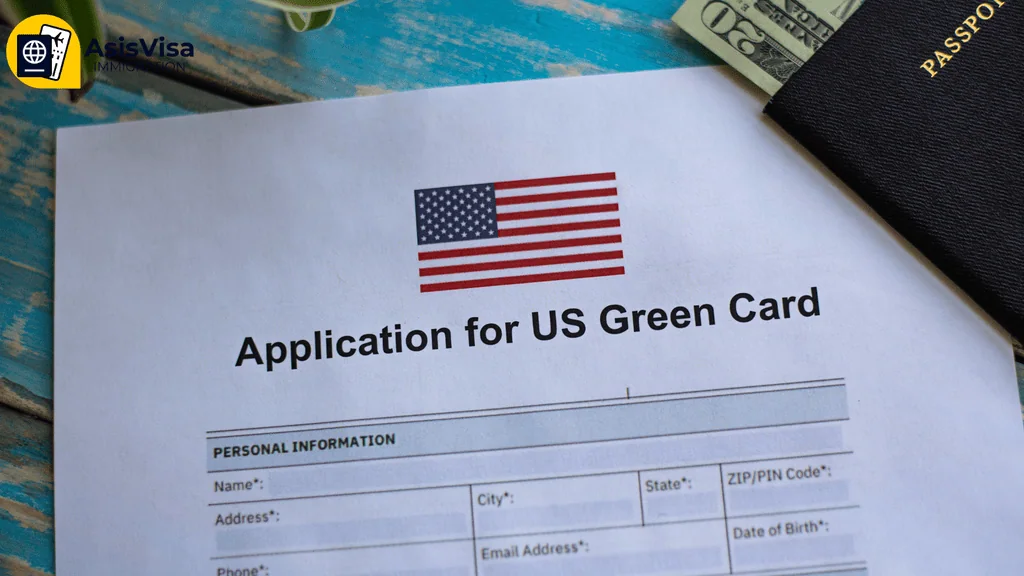
For many people, the goal of immigration is to obtain a Green Card. But the starting point isn't always permanent residency. Depending on their profile and circumstances, a person may begin with temporary status to study, work, develop their career, or invest, and later evaluate an immigrant category.
In this context, the concept of “bridge visa”. It is not an official immigration category nor does it guarantee a Green Card: it is a way of explaining a possible stage within an immigration strategy.
How does a Green Card strategy work?
A temporary visa and permanent residency are different things. Obtaining a visa or nonimmigrant status does not automatically entitle the person to a Green Card.
The process may involve several stages: starting with a temporary status, meeting the requirements of an immigrant category, and, depending on the case, continuing through adjustment of status within the United States or consular processing from abroad. Not everyone needs to go through each of these stages nor in the same order. The route depends on the immigration category and individual circumstances.
If you are still outside the United States
The initial objective can determine which temporary migration options make sense to evaluate.
Those who wish to study can explore the classification F-1. For certain job opportunities, there are categories such as H-1B, O-1 either L-1, each with specific requirements. A person looking to invest can evaluate E-2, if it meets the applicable conditions.
These categories are not similar. The F-1 visa is related to studies; H-1B to certain specialized jobs; O-1 to individuals who meet the extraordinary ability requirements; L-1 to certain intracompany transfers; and E-2 to investment in a U.S. business by nationals of treaty countries.
E-2 is a classification of non-immigrant, Therefore, it should not be presented as a direct or automatic path to permanent residency.
If you want to study in the United States
The ranking F-1 It allows you to study at authorized institutions, but it does not grant a Green Card.
Under certain circumstances, F-1 students may undertake practical training through CPT or OPT, provided they meet the corresponding requirements. CPT must be related to the program curriculum and OPT to the area of study.
Professional experience gained during studies can form part of a career path that may later allow for the evaluation of other immigration categories. However, studying, graduating, or using OPT does not guarantee eligibility for residency.
Example: An individual completes a master's degree on an F-1 visa and subsequently gains authorized professional experience. If their career path and circumstances meet the requirements for a visa category that would qualify them for permanent residency, they could be considered for that status later.
If you already have professional experience
A person who already has training, experience, or professional achievements can evaluate employment-based immigration categories without necessarily having to start with a student visa.
The main categories include:
- EB-1A: for individuals who meet the requirements of extraordinary ability.
- EB-2: for certain professionals with advanced degrees or people with exceptional ability.
- EB-2 NIW: This requires first meeting the EB-2 requirements and, in addition, demonstrating eligibility for the National Interest Waiver (NIW). The NIW allows applicants to request an exemption from the job offer and labor certification requirements when applicable.
- EB-3: Includes certain categories of professionals and skilled workers. It also requires employer sponsorship and permanent job certification.
A An approved I-140 does not equate to permanent residency. Depending on the category, other requirements must still be met, and it may be necessary to wait until an immigrant visa becomes available. The Department of State (DHS) publishes this information through the Visa Bulletin.
If you are already inside the United States
Here it is essential to differentiate change of status and status adjustment.
He change of status It allows you to request to move from one nonimmigrant classification to another, provided you meet the requirements and are eligible to do so.
He status adjustment It is the process that allows certain eligible individuals who are in the United States to apply for permanent residency through the Form I-485.
These are different processes, and neither is automatic. The possibility of adjusting status may depend on the category applied for, the mode of entry, the maintenance of status, immigration history, potential grounds for inadmissibility, and other factors.
Therefore, being physically in the United States does not automatically mean that a person can file an I-485.
You can also start from outside the United States
It is not mandatory to enter the United States first to initiate certain residency strategies.
When it is appropriate consular processing, A person who is outside the country can continue their immigrant visa process through the National Visa Center (NVC) and subsequently at a U.S. embassy or consulate.
In categories subject to numerical limits, visa availability is also relevant and depends on the applicable rules and the information published in the Visa Bulletin.
What should you check before choosing your path to a Green Card?
Before choosing a strategy, it is important to review:
Migration objective
Study, work, invest, or settle permanently.
Academic background
Titles and specializations.
Professional experience
Career path and functions performed
Achievements
Awards, publications, projects or other relevant elements.
Current status
Especially if you're already in the United States.
Immigration history
Entries, exits and possible breaches.
Form of entry to the U.S.
It can be decisive for certain options.
Family situation
It can influence the available alternatives.
Immigrant category
Determine which options might correspond to the profile.
Visa availability
When the category is subject to limits.
Prosecution
Evaluate whether status adjustment or consular processing is appropriate.
This list is for guidance only and does not replace an individual analysis.
Build your strategy based on your profile
A “bridge visa” is not a promise of residency. For some people, a temporary stay may be part of a path toward immigration status; for others, it may be possible to directly evaluate residency options from outside the United States.
The question is not only What visa can you apply for today?, but rather what immigration options might be compatible with your profile, your circumstances, and your long-term goal.
At AsisVisa we can help you evaluate your profile and explore which immigration alternatives might be relevant to your situation.
More to read
Change of status and paths to a Green Card: how to build an immigration strategy
Change of status and paths to a Green Card: how to build an immigration strategy Learn more...

Duration of Status: What does the pause in the new rule mean for F-1 students and J-1 visitors?
Duration of Status: What does the pause in the new rule mean for F-1 students and...

Pending asylum application: Can I obtain a Green Card through a professional route?
Pending asylum application: Can I get a Green Card through a professional route? Do you have asylum...