Myths and truths about the EB-2 PERM Visa

We've seen that there are many myths surrounding employer-sponsored employment visas. Today I'll debunk the most common ones. Take note!

Myth: Only geniuses or experts in their field can qualify for the EB-2 with Labor Certification.

TRUE: While the EB-2 requires a high level of skill or achievement, you don't need to be a genius. Professionals with advanced skills, academic degrees, or relevant work experience may also qualify.

Myth: Employment certification automatically guarantees Green Card approval.

TRUE: While labor certification is an important step, it does not guarantee visa approval. USCIS must still review and approve the petition, and additional issues may arise during that process.

Myth: The EB-2 is only for highly specialized workers in technology or science.

TRUE: While many EB-2 recipients are in STEM (science, technology, engineering, and mathematics) fields, you can also apply to fields such as education, business, arts, and more, as long as you demonstrate exceptional skills or an advanced degree.

Myth: Only large employers can sponsor EB-2.

TRUE: Employers of any size can sponsor an employee for EB-2, as long as they meet the labor and financial requirements set by the U.S. Department of Labor.

Do you know which degrees qualify for this type of visa? I'll tell you in the description!

Green Card without marriage: Learn about the EB2 NIW visa for professionals

You no longer need a job offer or to get married in the U.S. to obtain a U.S. Green Card. If you are a professional with five years of experience, a master's degree, a PhD, or the equivalent of one of these qualifications, you can apply for an EB-2 visa for national interest purposes, which will allow you to obtain permanent residency in the United States.

Who applies?
To apply, you must complete one of these two steps

To achieve an Advanced Grade, that is:
– Have a master's degree or a higher education (PhD) or an equivalent qualification.
– Hold a professional degree, bachelor's degree or equivalent, and more than 5 years of consecutive work experience related to your profession.

Demonstrate exceptional skill.

To apply at this stage, you must meet at least 3 of the following criteria:
– Earn a salary above the average for the population in your area.
– To be considered an authority or judge in their area of expertise.
– Have original contributions in academic or specialized journals.
– To belong to a select group of individuals who share the same merit in the area of performance.
– To have held a decisive position within an organization.
– To have published indexed academic or commercial material in their area of expertise.

Submitting the application inside or outside the U.S. Let me explain!
There are two ways to submit the application: through Adjustment of Status and Consular Processing.

Status Adjustment: This procedure is done when you are inside the United States, and you have a valid status that you can maintain while you make your application.

Costs: $715.00 USD + ($1,440.00 USD per applicant) + $300 (If it is a company with less than 25 employees) or $600 (if it has more than 25 employees) Federal Costs Status Adjustment.
Waiting time: 8 to 12 months approximately
Optional additional value: Premium Processing: $2,805.00 USD to have your application processed in 15 days.

Consular Process: This procedure is performed from your country of origin.

Costs: $715.00 USD + ($560.00 USD per applicant) + $300 (If it is a company with less than 25 employees) or $600 (if it has more than 25 employees) Federal Consular Processing Costs.
Waiting time: 2-3 years approx.
Optional additional value: Premium Processing: $2,805.00 USD to have your application processed in 15 days.

If you're eligible, you can get a Green Card for you and your family. Want to learn more? Find us on social media as @asisvisa

Investing or trading in the United States? Learn about the E1 and E2 visas

Have you ever wondered what visa you need to invest, do business, or expand your company in the United States? Understanding visa options can be quite a challenge, right? Don't worry, today I'll introduce you to two visas that will allow you to live, work, and expand your business in the U.S.

VISA E1
The E-1 visa is for certain nationals of countries with trade agreements, allowing them to travel to the United States and participate in international trade between their home country and the United States. While it does not require direct financial investment in a U.S. company, applicants must demonstrate that trade between the two countries is substantial.

VISA E2
The E-2 visa, known as the treaty investor visa, is available to foreign nationals who invest a significant amount of capital in a U.S. company. Similar to the E-1 visa, the applicant's home country must have specific bilateral treaties with the United States. This visa allows the applicant to work in the United States for the company in which they have invested and to bring employees to work for the business.

Below, I will present some similarities and differences between these visas so you can choose the one that is right for you:

Similarities between the E1 and E2 visas::

  • Both require applicants to be citizens of a country with a trade or investment treaty with the United States.
  • These are temporary visas that allow the primary holder to work in the U.S. for the corresponding business.
  • They can be renewed indefinitely, provided that the legal requirements are met and they do not automatically lead to a U.S. green card.
  • Spouses and children under 21 years of age may apply for authorization to work and study in the U.S.
  • They are generally processed at the U.S. Consulate or Embassy, although they can also be requested through USCIS if the applicant is already in the country.
  • They allow bringing certain executives, managers, or employees with specialized knowledge to the United States if they have the same nationality as the company owner.


Differences between the E1 and E2 visas:

  • Eligibility: The E1 visa is available only to citizens of countries with specific trade treaties, while the E2 visa is open to citizens of countries with investment treaties.
  • Investment requirements: The E1 visa does not require a direct financial investment in a U.S. company, while the E2 visa requires a substantial investment in a U.S. company.
  • Business plan: The E1 visa does not require a specific business plan, while the E2 visa generally requires one as part of the application process.
  • Business formation: The E1 visa does not require the creation of a company in the U.S., although it is recommended, while the E2 visa requires the formation of a company in U.S. territory.

If you found this information helpful, please share it with someone who might need it!

Work in the U.S. with an L-1 Visa

Interested in working in the U.S. for the same company you work for in your home country? Learn about the L-1 Visa, designed for employees with specialized skills or in executive and/or managerial roles. This visa allows the transfer of employees from a foreign company to a subsidiary, branch, or parent company in the U.S. Let's learn a little more about this visa together.

The L-1 Visa has two subcategories:
L-1 A, for employees in executive or managerial positions, and
L-1 B, for employees with specialized skills and knowledge.

Can an L visa be a path to a Green Card?

Many people wonder if the L visa is a path to permanent residency. To understand this, it's important to note that the L visa doesn't grant residency directly, but it can serve as a bridge to meet the requirements for another visa, such as the EB-1C, which leads to a Green Card.

A major advantage of the L-1A category is its ability to facilitate the transition to applying for permanent residence through the EB-1C. This allows the employer to bypass the standard labor certification process associated with other employment-based green cards. The EB-1C application focuses on the employee's international managerial or executive status and follows a process similar to that of the L-1A.

In the case of the L-1B visa, the situation differs. If an employer obtains an L-1B visa for an employee, they must consider traditional Green Card sponsorship and follow the standard labor market testing process to obtain Labor Certification before proceeding to the immigrant petition stage of the process.

How long does the L-1 Visa last and how much does it cost?

The L-1 Visa allows a authorized stay of up to 7 years in the United States, with the possibility of extensions in increments of up to three years.

For those who need a faster process, there is the option of premium processing, which involves a review in just 15 days, with an additional cost of $2,805.00 USD. It is important to note that this payment is not mandatory and is in addition to the standard application fee, which is $1,385.00 USD for Form I-129, plus $500.00 USD per applicant for the Anti-Fraud Payment.

For those who are not in an urgent situation, the following is available: regular processing, which may take 6 to 8 months. In this case, the standard application fee is the same as for premium processing: $1,385.00 USD for Form I-129, plus $500.00 USD per applicant for the Anti-Fraud Payment.

If you find this information useful, please feel free to share it!

O-1 Visa, your entry ticket to work in the United States

Do you dream of working in the US but think the O-1 Visa is only for showbiz stars? It's time to change that perspective! The O-1 Visa is your passport to a professional life full of possibilities. Imagine living and working in the US indefinitely, building your future without limits. You only have to meet three or more specific criteria, and best of all, we will guide you every step of the way.

What is the O-1 Visa?
The O visa is designed for individuals who have outstanding achievements in the sciences, arts, education, business, or sports, or who have achieved extraordinary accomplishments in the film and television industry. These individuals have also received national or international recognition. If you are a leader in your field and ready to take your career to the next level, this is your opportunity.

O-1 Visa Subcategories

O- 1A: For people with extraordinary ability in the sciences, education, business, or athletics (excluding the arts, film, or television industry).

O- 1B: For people with extraordinary ability in the arts or extraordinary achievements in the film or television industry.

O-2: For individuals accompanying an artist or athlete under an O-1 visa to assist at a specific event or performance. To accompany an individual under an O-1A visa, the assistance provided by the O-2 visa applicant must be an integral part of the activity of the individual under the O-1A visa. .

To accompany an individual under an O-1B visa, the assistance provided by the O-2 visa holder must be “essential” to the completion of the O-1B visa holder’s production. The O-2 worker must possess critical skills and experience with the O-1 visa holder that cannot be readily performed by a U.S. worker and are essential to the successful development of the O-1 visa holder.

O-3: For people who are spouses or children of the person applying for the O-1 visa or the O-2 visa.

How to become eligible for the O-1 Visa?
There are two ways to qualify for this visa. First, you can qualify with evidence that you have won a major award, such as a Grammy, Nobel Prize, or Olympic medal. For all other applicants, extraordinary ability is demonstrated by evidence of at least three (3) of the following factors:

  1. You have participated as a judge of other professionals' work in your field on panels, in competitions, or at awards ceremonies. For example: peer reviewing articles, serving on a judging panel in a business competition, or judging a topic within your area of expertise.
  2. Material published about your work in professional publications, major trade publications, or other significant media outlets. For example: articles in the New York Times, CNN, Forbes, etc. However, you can also meet this criterion with articles in smaller media outlets.
  3. Membership in associations that require outstanding achievements from their members, as judged by international experts. Example: An entrepreneur who is part of an exclusive organization for executives.
  4. You have made significant original contributions to your field. For example, you patented something your employer is using, or you initiated a new business process that has impacted your field.
  5. You hold or have held key or critical positions within a company with a distinguished reputation.
  6. You have authored academic articles in professional journals or other major media outlets.
  7. You have earned a high salary or other significantly high compensation. For example, a director who receives a significantly higher salary than the industry average due to their experience and unique skills.
  8. Awards or recognitions for excellence in their field, recognized nationally or internationally. Example: A journalist receives the “Simón Bolívar National Journalism Prize” in Colombia.

Benefits of the O Visa

  • There is no annual limit associated with the O-1 visa, meaning there are no restrictions on the number of visas that can be issued each year.
  • You can speed up the processing time to 15 days by paying an additional fee of $2.805 USD.
  • You can sponsor your spouse and children with the O-3 visa: Your spouse will not have work authorization, but will be able to go to school in the U.S. without needing an F-1 visa.
  • The O-1 visa allows for "dual intent," which offers the possibility of applying for permanent residence in the United States while holding an O-1 visa.

How long is an O-1 visa valid?
The O-1 visa is initially approved for up to three years, during which you can work in the U.S. and travel within and outside the country. After your first visa expires, you can continue to extend your status indefinitely in one-year increments.

The O-1 visa offers an incredible opportunity for those who have achieved great merit in their fields and wish to expand their horizons in the United States. While the process may seem challenging, proper guidance can simplify it.

Would you like guidance on your visa application process? Follow us on social media @asisvisa or message us on WhatsApp at +1 (786) 619 5937

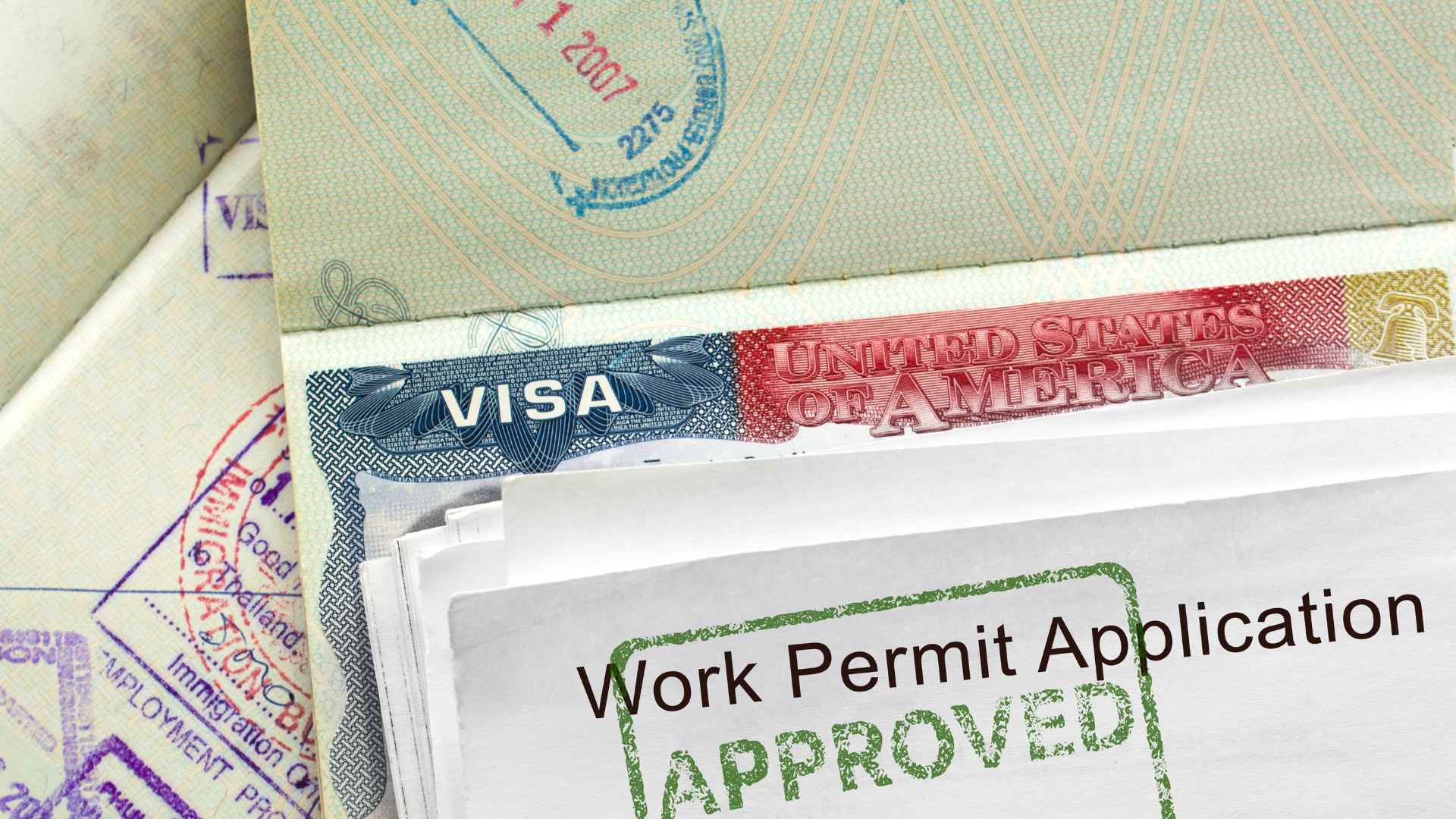
Work Permit in the United States

The process of obtaining an Employment Authorization Document (EAD), commonly known as a Work Permit, in the United States can be somewhat complex and sometimes confusing. However, understanding the requirements and steps to follow can make this process more bearable and successful.

Who is eligible?

To apply for a work permit in the United States, it is crucial to belong to an eligible category. These categories cover a wide range of situations, from refugees and asylees to DACA recipients or individuals with certain specific jobs. It is important to verify whether you meet the eligibility criteria before beginning the application process.

Steps to apply for a Work Permit or EAD

Once your eligibility is confirmed, the next step is to carefully follow the application process. Here is a list of steps to keep in mind:

  1. Read the instructions: The application form can be complicated. It is recommended that you seek legal assistance to avoid mistakes that could delay or even deny your application.
  2. Gather the required documents: This includes a copy of a government-issued ID and passport-size photos. Additionally, depending on your category, other specific documents may be required.
  3. Complete and sign Form I-765: This form is essential for applying for a Work Permit. Be sure to answer all questions accurately and completely.
  4. Pay the filing fee: The current fee is $495. It is important to attach the filing fee receipt to your application, although exemptions are available in certain cases.
  5. Make a copy of the form: Keeping a copy of your application can be useful for future reference, renewals, or in case of loss or theft of the document.
  6. Submit your form: You can choose to submit your application by mail or online, depending on your preferences and specific circumstances.
  7. Save your USCIS receipt number: This number is crucial for tracking the status of your application and receiving updates on its progress.

Awaiting approval: Once your application is approved, you will be eligible to begin working legally. In the meantime, you can look for job opportunities, but keep in mind that you cannot start any work activity until your Work Permit is approved.

Validity of the EAD

It has recently been established that the Employment Authorization Document (EAD) can be valid for up to 5 years, depending on your specific immigration status. This new rule applies only to applications filed on or after September 27, 2023, and does not affect EADs issued before that date. It is important to note that other immigration statuses may have different validity periods, and USCIS may automatically extend the validity of EADs in certain cases, such as for individuals with Temporary Protected Status (TPS).

EAD Renewal

To renew your Employment Authorization Document (EAD), you can apply starting 180 days before the expiration date. Filing early may allow your work authorization to be extended while your application is processed. It is crucial to pay attention to deadlines and follow the instructions provided by USCIS to avoid interruptions in your ability to work legally in the United States.

In summary, obtaining a U.S. work permit is a detailed process that requires meticulous attention to the specific requirements and steps. By carefully following the guidelines provided by USCIS and seeking appropriate assistance when needed, you can maximize your chances of obtaining this crucial document for working legally in the country.

TPS for Venezuelans: Everything you need to know

If you are Venezuelan and are in the United States without permanent immigration status, Temporary Protected Status (TPS) may be an option for you. This program gives you the opportunity to legally reside and work in the US for as long as your country is designated for this benefit.

Here we provide you with a complete guide on what you need to know about TPS.

What is TPS?
Temporary Protected Status (TPS) is a status granted by the United States government that allows foreign nationals to live and work legally in the country. This status is valid for 18 months and allows you to apply for a work permit and a Social Security number. Furthermore, you can renew it for as long as Venezuela remains designated as a recipient of this benefit.

When can I apply for TPS?
The timing for applying for TPS depends on whether you have had this status previously or if this is your first time applying.

If you already had TPS according to the March 9, 2021 announcement for Venezuelans, you can apply during the 60-day period between January 10, 2024 and March 10, 2024.

If this is your first time applying based on the announcement of October 3, 2023 (Venezuela 2023), you can do so during the 18-month period from October 3, 2023 to April 2, 2025.

How long will TPS be valid for if I am approved?
The validity period of TPS depends on when you submit your application.

If you renew under Venezuela 2021, TPS will be valid until September 10, 2025.

If you apply under Venezuela 2023, TPS will be valid until April 2, 2025.

It's important to note that the government may extend TPS for Venezuela. If you are an approved beneficiary during the current registration periods, you will need to renew your registration during the next available period.

What happens when my current work permit expires?
If you are a beneficiary of TPS Venezuela 2021 and your current work permit is about to expire, the Department of Homeland Security is automatically extending your permit until March 10, 2025. However, to maintain your TPS and your authorization to work, you must renew your TPS Venezuela 2021.

What makes you ineligible for TPS?
Not to reside continuously in the U.S. since March 8, 2021 (for Venezuela 2021) or since July 31, 2023 (for Venezuela 2023).

Not having been convicted of any serious crime or multiple misdemeanors in the U.S.
If you have had any run-ins with the law, it is important to obtain a Certificate of Disposition for each case and consult with an immigration law expert before applying for TPS.

Temporary Protected Status (TPS) offers an invaluable opportunity for Venezuelans in the United States without permanent immigration status. However, understanding the requirements and procedures is essential to effectively access this benefit. If you meet the established criteria, TPS can provide the stability and security you need at a crucial time in your life.


Types of Political Asylum in the US: How to Apply Correctly?

If you are or have faced persecution or serious threats in your country of origin due to your race, religion, nationality, membership in a particular social group or for having different political opinions, the Political Asylum process in the United States becomes a resource invaluable legal for you.

In the United States, there are two main procedures for applying for asylum: the affirmative process and the defensive process.

Affirmative Asylum:

This type of asylum is for people who are not facing removal or deportation proceedings. To qualify, you must have entered the U.S. with valid status or not have been inspected at the border. Additionally, you must file your asylum claim within one year of your last arrival in the country.

Defensive Asylum:

On the other hand, defensive asylum is requested when you are under removal or deportation proceedings. This means you are in removal proceedings before the Immigration Court with the Executive Office for Immigration Review (EOIR).

When is it classified as defensive asylum?

There are two main situations:

If you are referred by USCIS to an immigration judge after your affirmative asylum application has been determined to be ineligible.
If you have been arrested at a U.S. port of entry without proper legal documentation, in violation of your immigration status, or if you have been arrested by CBP attempting to enter the U.S. without proper documentation and are in deportation proceedings.

Credible Fear:

When an individual faces expedited removal proceedings and declares their intention to seek asylum due to a fear of persecution, torture, or return to their country, they will be referred to USCIS for a credible fear assessment. In this assessment, an officer will conduct an interview to determine whether the applicant truly faces a credible fear of persecution or torture.

If a credible fear is determined, USCIS may withhold the asylum application to consider the applicant's eligibility for withholding of removal and protection under the Convention Against Torture (CAT) in a second interview, known as an asylum merits interview. Otherwise, USCIS may issue a Notice to Appear before an immigration judge for consideration of the asylum case, withholding of removal, and CAT protection claims.

In short, the political asylum process in the United States is a vital legal resource for those facing persecution or serious threats in their home countries. We hope this information is helpful in your immigration process. For more content on this and related topics, follow us on Instagram @asisvisa.

Green Card through Marriage in the United States

If you're considering marrying a U.S. citizen or permanent resident, you may have considered the path to the coveted Green Card. This is one of the most common ways to obtain permanent residency in the United States and, eventually, citizenship. But how exactly does this process work? Is it legal to marry for the sole purpose of obtaining immigration benefits? Here's everything you need to know to make an informed decision.

Marriage in Good Faith: The First Crucial Step

Before even considering applying for a Green Card through marriage, you must be certain that your union is genuine and in good faith. This means your marriage must be real and cannot be solely for immigration purposes. Marrying for the sole purpose of obtaining a Green Card is considered fraud and can have serious legal consequences, including deportation from the United States. It is crucial to be able to demonstrate that your relationship is authentic and based on love and mutual commitment.

Benefits of the Green Card

The Green Card provides a number of significant benefits, including the ability to travel outside the country, work anywhere you want within the United States, and even apply for U.S. citizenship after a certain period of time.

Conditional Green Card

If you have been married for less than two years when you receive your Green Card through marriage, it will be "conditional." This means you can maintain your permanent resident status as long as you remain married to your spouse and your circumstances do not change in a way that makes you ineligible. It's important to note that you cannot renew a conditional Green Card based on marriage, but you can petition the government to remove these conditions within 90 days before your conditional Green Card expires. If you do not, you will no longer be considered a lawful permanent resident and could face deportation.

Requirements to Apply

Some of the fundamental requirements for applying for a Green Card through marriage include:

  • The petitioner must be a U.S. citizen and reside in the United States.
  • Marriage must be in good faith and genuine.
  • The couple must be legally married, either in the United States or abroad.
    The petitioner must have sufficient financial means to support the beneficiary spouse.
    It's important to keep in mind that these are just some of the basic requirements and that the process can vary depending on individual circumstances. It's advisable to seek legal advice or consult with an immigration expert for specific guidance on your situation.

Obtaining a Green Card through marriage can be a complex but rewarding process for those seeking permanent residency in the United States. However, it is crucial that the marriage be genuine and based on love and mutual commitment, and not simply a means to obtain immigration benefits.

Green Card through Adjustment of Status Achieve your American Dream!

Can you imagine living in the United States, enjoying its opportunities and lifestyle? It's not an unattainable dream! Through the Adjustment of Status process, those who hold nonimmigrant visas, such as students or temporary workers, can become permanent residents and take one step closer to the coveted Green Card.
The first step to achieving your American dream is understanding the adjustment of status requirements, which can vary depending on your immigrant category. Find out if you qualify for a specific category and start shaping your future without leaving the United States!

With Sponsor:
Do you have a U.S. company willing to back you? You're one step closer to achieving your goal! Through employment visas like EB-2, EB-3, or EB-1, you could obtain the coveted Green Card. It's time to let your talent open doors to new opportunities and a stable life in the United States.

To petition for yourself:
If you excel in the arts, sciences, or business, the path to permanent residency can be even more accessible. With the EB-2 NIW (National Interest Waiver) visa, you can showcase your exceptional skills and achievements without having to go through the cumbersome labor certification process. Get ready to open doors to your future in this country full of possibilities!

Family Request:
Both permanent residents and U.S. citizens have the opportunity to petition for their immediate relatives. However, it is important to understand the differences in the types of relatives each category can petition for. Citizens can petition for their spouse, unmarried children under 21, parents, and siblings, while permanent residents can only petition for their spouse and unmarried children under 21.

Process Steps:

  1. Visa presentation by your family member or employer.
  2. Determining the type of request, considering whether it is immediate or based on family or employment.
  3. Knowledge of the priority date, which marks the beginning of the process.
  4. Filing Form I-485 to request Adjustment of Status.
  5. Scheduling an appointment for biometric data.
  6. Possible interview, if required by USCIS.
  7. Receipt of the decision by USCIS, through a written notification.

Don't wait any longer to begin your journey to permanent residency in the United States! Learn about your options, follow the necessary steps, and make your American dream a reality with a Green Card through Adjustment of Status!