
The new rule that sought to eliminate the Duration of Status requirement for F-1 and J-1 visa holders has been temporarily blocked. Find out what is currently in effect and what you should do now.
Share this article on:
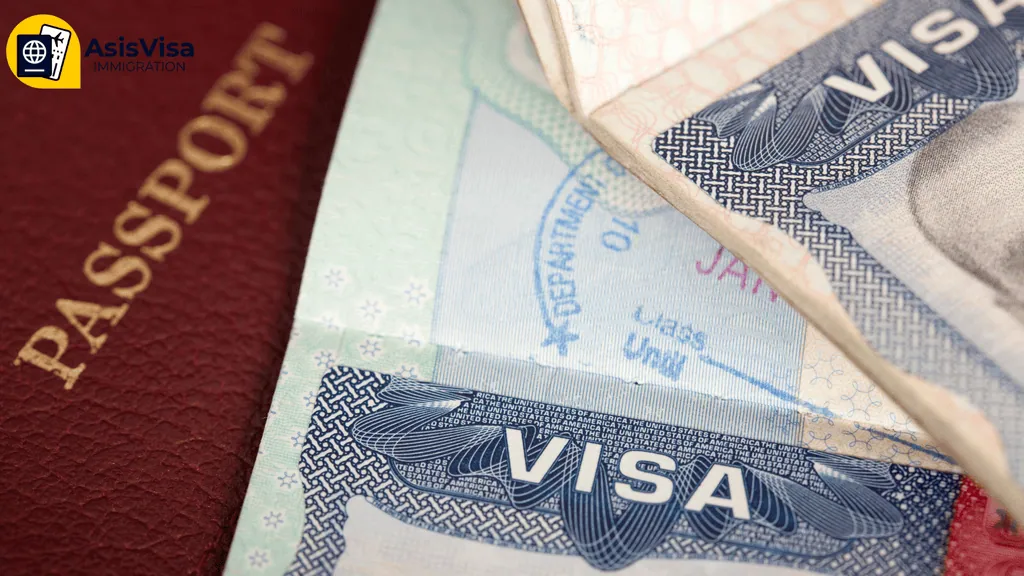
The new immigration rule that sought to replace the system of Duration of Status (D/S) The provision for international students, exchange visitors, and foreign media representatives did not come into effect on September 15, 2026, as planned.
On September 14, a judge of a tMassachusetts Federal Court It issued a preliminary injunction postponing the rule's entry into force and temporarily blocking its nationwide implementation while litigation continues. For now, the system of Duration of Status (D/S) remains in effect for the affected categories.
This is especially relevant for those with status. F-1 or J-1, because the proposed changes would have altered how long students can stay in the United States is determined and some academic procedures.
He Duration of Status (D/S) It is the system by which certain students and exchange visitors are admitted to the United States without a fixed departure date on their Form I-94.
Generally speaking, for an F-1 student, the D/S (Document/Season) is linked to the period required to complete their academic program and, where applicable, authorized practical training, provided they maintain the conditions of their status. For a J-1 visitor, it is related to the duration of their authorized program and the period permitted to leave the country.
It is important to distinguish visa and status. The F-1 or J-1 visa allows you to apply for entry into the United States; the status determines the conditions under which a person can remain in the country once admitted.
The Department of Homeland Security (DHS) published the final rule on July 17, 2026, under the title Establishing a Fixed Time Period of Admission and an Extension of Stay Procedure for Nonimmigrant Academic Students, Exchange Visitors, and Representatives of Foreign Information Media. Its effective date was set for September 15, 2026.
The rule sought to replace the D/S with fixed periods of admission, recorded by a specific completion date on Form I-94.
The change primarily involved:
Academic students.
Exchange visitors, including certain students, researchers, professors, and participants in other programs.
Representatives of foreign media outlets.
For F-1 and J-1 visas, the rule stipulated admission periods tied to the program, with a general limit of up to four years. Those needing to stay longer would have to request an extension of stay from USCIS.
In addition, changes for F-1 students were considered related to transfers between institutions, changes in educational objectives, and certain program changes. The rule would also have reduced the grace period after graduation for certain F-1 students from 60 to 30 days.
In other words, it wasn't just a matter of changing a date on the I-94. The rule would also have modified several procedures related to the academic standing and career path of certain international students.
In August 2026, a coalition of higher education organizations and unions representing faculty, graduate students, and journalists, among others, filed a lawsuit in the U.S. District Court for the District of Massachusetts. The case is called Presidents' Alliance on Higher Education and Immigration v. US Department of Homeland Security.
On September 14, 2026, the federal judge F. Dennis Saylor IV postponed the entry into force of the rule and ordered the Department of Homeland Security (DHS) and Immigration and Customs Enforcement (ICE) to halt its implementation while the litigation continues.
But there is an important nuance: the judge It did not definitively annul the rule. The request to permanently nullify the decision was denied, although it may be raised again during the litigation. Currently, there is a preliminary judicial pause.
For now, The Duration of Status system remains in effect.
This means that the rule, which was scheduled to take effect on September 15, is not currently in force. Therefore, modifications that depended on that new regulation—such as the general system of fixed admission periods and the new extension procedure associated with that system—are not in effect while the court order remains in place.
A student who currently maintains their F-1 status and meets the conditions of their program continues under the D/S framework.
For example, if your academic program ends in May 2027 and your I-20 reflects that date, the pause in the new rule does not, in itself, require you to request an extension from U.S. Citizenship and Immigration Services (USCIS) now. You must continue to meet the requirements of your status and consult with your Designated School Official (DSO) about whether you need to extend your program's end date.
The new academic restrictions provided for by the rule also did not come into effect while the order remained in force.
J-1 visitors also remain, for now, under the D/S system. This includes exchange program participants who maintain their program conditions and have the corresponding documentation.
However, F-1 and J-1 categories are not identical. The obligations depend on the type of program, immigration documentation, and the specific circumstances of each case.
The judicial pause does not eliminate current obligations to maintain status.
If you have an F-1 or J-1, it is recommended:
1. Keep your documents up to date.
Verify that your I-20 or DS-2019 accurately reflects your program and keep a recent copy of your I-94
2. Comply with the conditions of your program.
The existence of D/S does not mean that a person can remain in the United States without complying with the rules of their category.
3. Maintain communication with your institution or program.
F-1 students should stay in contact with their Designated School Official (DSO). J-1 visitors should contact their Responsible Officer (RO) or the appropriate contact for their program.
4. Do not submit paperwork simply because you assume the new rule is already in effect.
The paused rule does not, for now, create a general obligation to request the extension it proposed.
Yeah.
The decision of September 14th is preliminary, The case remains open. The court has scheduled a status conference for October 2, 2026. The decision may be subject to further legal proceedings, including a possible appeal. Therefore, the situation should be monitored with updates.
In other words: The rule was published, but its implementation is currently paused.
If you need guidance on how this situation may affect your immigration case, you can go to AsisVisa to review your circumstances and receive guidance on available options, without assuming that a general rule automatically applies to all cases.
You can start a virtual consulting by clicking and get guidance before making decisions about your immigration status.
Pending asylum application: Can I get a Green Card through a professional route? Do you have asylum...
From Approved Asylum to Green Card: What Should a Person Do After Obtaining a Green Card?.

F-1 and J-1: What changes for students in the United States from the 15th...